Gary Holcomb
Fictional. Generated by AI — not a real person, and no likeness of one is intended.
47, mechanic in Los Angeles · rolled by @colin.hasbrook · card — no film
History
who has worn him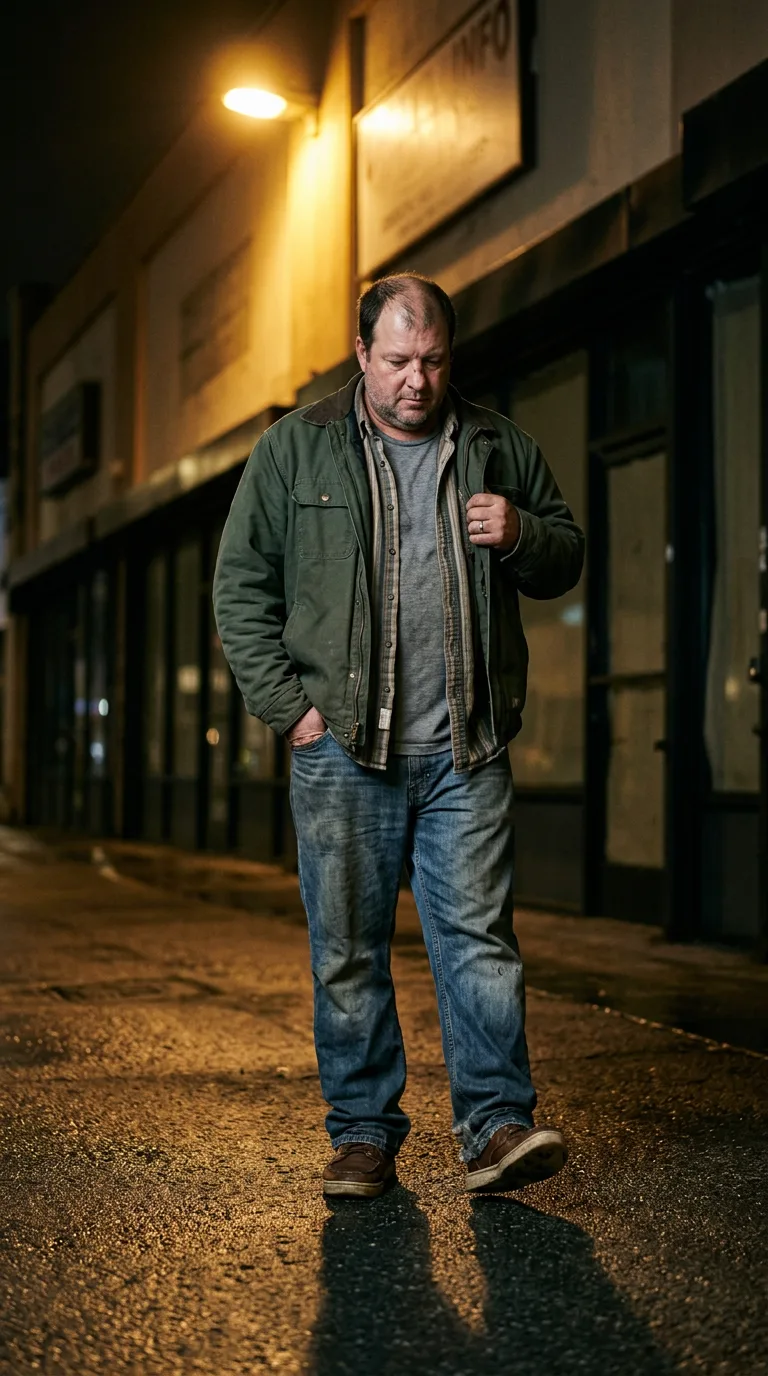
Rarest thing about him: Dating — rare, 1 in 14
Season 0seed 1792218702 · engine v10
Character card
lineage 2NZHHJ
His body-swap story
@colin.hasbrook, wearing Desmond Okafor, rolled the wheel on and woke up as Gary Holcomb, spent under a minute in him, then spun the wheel and woke up as Frank Kowalczyk
You are sitting in Desmond's kitchen in a body that isn't tired yet, and that's the problem.
It's Sunday afternoon in Boston, light coming flat and gold through the blinds, and you have been Desmond Okafor for maybe forty seconds — long enough to feel the compact strength of him, the boxer's economy in how he holds a coffee cup, the beauty mark he keeps catching in the toaster's reflection like it's someone else's face. He is good. He is, objectively, the best body you've wintered in for a while: 5'7" of coiled efficiency, hands that know how to hurt something on purpose. You spun for him an hour ago in some other man's evening and you don't even remember why anymore, which is the tell. That's always the tell. The wanting doesn't announce itself. It just gets quiet, and then the quiet gets loud, and you're reaching for the phone to pull up vessel.cards again before you've admitted you're doing it.
Three hundred and twenty-one times. You stopped telling yourself stories about why a long time ago. It isn't hunger exactly. It's closer to the itch a man gets checking a door he already locked.
You spin.
—
The street tips sideways and rights itself, and your foot — his foot — lands flat and sure on wet asphalt where a scuff should have been. Weight, real weight, more of it than Desmond ever carried, settles into your legs like sandbags finding a truck bed. A gut. A slight list forward at the shoulders that isn't posture so much as forty-seven years of gravity winning arguments. Cold, damp air on a face that feels wider, heavier at the jaw. Your hand — his hand — is already coming out of a jacket pocket toward the collar, an old habit finishing itself with nobody home to want it.
Streetlight. Wet shopfronts, dark. Two in the morning by the color of it, though something in the marrow of him is arguing it should be brighter, later — a body's clock fighting a man's, and you don't yet know why.
You turn left at the corner. Not because you decided to. Because his legs already had.
—
The jacket is what opens first — canvas gone soft at the elbows, a corduroy collar worn shiny — and it comes with the smell of degreaser and the ghost-ache of a shoulder that's thrown ten thousand ratchets. Gary Holcomb. The name arrives with the smell, the way names do, riding in on cheap solvent and coffee that's been on a burner too long.
The rest comes in through his hands, because his hands are what he is.
A wedding ring, thin gold, worn smooth — Denise, seven years now, second marriage, first one ended ugly and quiet in a Bakersfield courtroom he doesn't like to think about, though tonight, drunk, he'd thought about it plenty. Three kids scattered across two households and a fourth one Denise wants that he's not sure they can afford, not with the hole they're in — he doesn't look at the number anymore, just feels it, a low hum under everything, like the garage compressor left running in another room. Twenty-two years old and he was under his first transmission at nineteen and never once imagined himself anywhere else, and mostly that's fine. Mostly.
The shirt against his back — flannel, thin at the elbows, buttoned wrong by one, because he'd been three beers past careful when he dressed for a night that had started as one drink with Ray from the shop and become four hours he can't fully account for — gives him the morning in reverse: standing in the bedroom before Denise woke, pulling the flannel over the gray tee, working buttons his fingers already knew without his eyes, boots by the door already broken into the exact shape of his feet, twelve years of standing on concrete pressed into the leather like a memory of its own. His nose throbs faintly with old weather — broken at nineteen by a swinging tailgate, never reset right, and he stopped noticing the crook of it in mirrors around thirty-five.
Under it all: a body that aches in the lower back from bending over engine bays, strong through the forearms in a way gyms don't make, tired in the knees, a leg that has been bouncing under him — bouncing right now, actually, even mid-stride, some motor in him that never fully cuts off. Heavy, solid, built for lifting things that don't want to be lifted. Not fast. Not anymore. He hasn't smoked since his twenties and doesn't miss it, drinks maybe twice a month and tonight was one of those, and somewhere in the walking-drunk of him is the small mercy of Denise asleep, not worried yet, the kids fine, the shop closed till Monday, nothing he'd call a crisis. Just a man forty-seven years old walking the long way home under streetlights, turning a corner his legs know from some other night, some other reason, that isn't his own tonight anymore.
—
You stop under the next light and lift both hands into it, turning them — thick fingers, a knuckle that doesn't fully straighten, grease worked so deep into the creases it'll never wash all the way out.
"Huh," you say, out loud, to the empty street, in a voice heavier and rounder than the one you had an hour and a body ago. "Wrong way, Gary."
You laugh once, short, and keep walking left.