Frank Kowalczyk
Fictional. Generated by AI — not a real person, and no likeness of one is intended.
65, plumber in Chicago · rolled by @colin.hasbrook · card — no film
History
who has worn him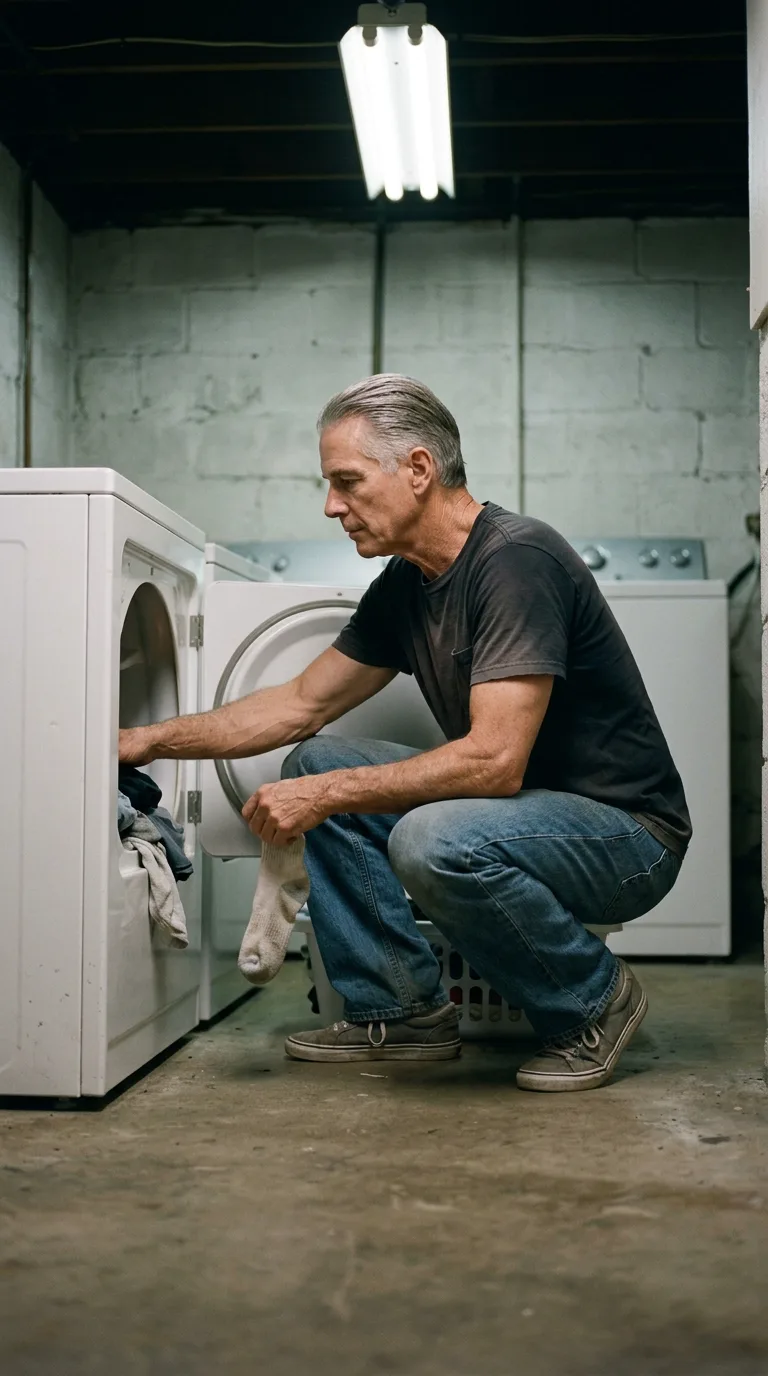
Rarest thing about him: Plumber — rare, 1 in 79
Season 0seed 836134814 · engine v10
Character card
lineage 2NZHHJ
His body-swap story
@colin.hasbrook, wearing Gary Holcomb, rolled the wheel on and woke up as Frank Kowalczyk, spent under a minute in him, then spun the wheel and woke up as Travis Bearclaw
Sunday morning in Los Angeles, and Gary Holcomb's knuckles are still fat and pink around the coffee mug, still healing from a nose that hasn't been broken in this life yet, because this life started less than a minute ago in a garage smelling of brake fluid. You know already this body is wrong for what you want. Not bad — heavy, strong, a mechanic's forearms — but the woman who lives here, whoever she is to Gary, is calling from another room in a voice that already sounds tired of him, and you didn't come back to the wheel to sit inside somebody else's Sunday fight before it's even started. You want quiet. You want your hands doing something they're good at, something nobody's yelling about. Three hundred and twenty-one men and you've learned this much: the good hour is never the first one. So you set the mug down on a counter that isn't yours, open the site on a phone that isn't yours, and spin.
The dryer door is warm against your forearm and there's a sock in your hand, one gray athletic sock, damp-warm, half-turned inside out, and your knees are down in a crouch that aches in a specific, familiar way you haven't earned yet. Fluorescent light hums white above you. Concrete floor. Cinderblock walls painted the color of dishwater. You pull the rest of the load out in both arms, warm cotton against skin, and drop it into a red plastic basket, and your body — his body — folds the first shirt before you've told it to, corners squared, sleeves tucked, fast as breathing.
It's the shirt that opens him. Not the shirt in your hands now — the one against your back, the plain dark t-shirt he put on this morning, and the moment it touches you, you get him getting dressed: the closet door that sticks, the smell of Irish Spring soap on his own skin, the way he stood in front of the mirror for exactly as long as it took to run a comb through wet hair, slicked back, no part, the way he's worn it since 1974. Frank Kowalczyk. Sixty-five years old and still doing that. Behind him in the mirror, Donna's side of the bed already made, because she's up before he is even on a Sunday, even his day off, because plumbers don't really get a day off, there's always somebody's water heater.
The jeans give you his knees — thirty-nine years of them on tile and concrete and under sinks, the left one clicking now when the weather turns, an old meniscus tear from a fall off a ladder on Ashland Avenue in '01 that he never got looked at because there wasn't a good week to. The work boots by the dryer, not on his feet right now, just sitting there, give you the boots he actually wears on the job, steel-toed, the leather gone soft and dark with age, and with them a whole day: kneeling under some stranger's sink in Logan Square, the smell of old pipe dope, a woman upstairs on the phone the whole time not lowering her voice, and him saying "gonna need to replace this whole trap, ma'am" in the patient voice he uses for people who don't know what a trap is.
The wrench isn't in his hand now but it's twenty feet away in a bag by the stairs, and even that far off it still speaks — the shape of it worn into his palm, forty years of the same grip, hands that know this without thinking the way other men know their own signatures. Hands that also, when nothing's asked of them, drum against his thigh, one leg bouncing under the table at his sister's, at Mass, at the doctor's, a motor that never fully idles even in a man who otherwise moves like he's got nowhere to be.
The concrete under your — his — bare feet in the boots-off moment gives you Donna, five years now, her laugh through the wall while he's down here doing this, a good five years, easier than the twenty-two before it. And under that, quieter, not touched by anything in this room but rising anyway the way old things do: Carol. The one from before Donna, the one he still thinks about on nights he doesn't tell anyone he's thinking about her, a name he hasn't said out loud in eleven years and won't say now either. He goes to Mass most Sundays but not today, laundry today, and it doesn't trouble him, God keeps office hours too.
He's kneeling on that ache in his knee, the drifting eye somewhere off to the left of whatever he's actually looking at, and his whole life is Chicago: brick, steel, the L train close enough that the whole building shudders on schedule, and he has never once minded it, has in fact found something in the shudder that feels like a heartbeat that isn't his own but keeps him company anyway.
The sock is still in your hand. You look down at it, and then at the rest of him — this hand, spotted, callused at the base of every finger, a plumber's hand, sixty-five years into its work and still steady — and you turn it over slow, the way you always do, checking the weight of a new life against your palm.
"Didn't used to fold this fast," you say to the empty laundry room, and your voice comes out lower than Gary's, older, and it doesn't scare you the way the first forty or so used to. You look up into the buzzing light like it might answer, but there's nobody down here to hear Frank Kowalczyk not sound like himself. There's a whole rest of a Sunday to get through, and no telling, not to you and not to anyone, how much of it you'll still be here for.