Frank Delvecchio
Fictional. Generated by AI — not a real person, and no likeness of one is intended.
62, contractor in Philadelphia · rolled by @malik.overton · card — no film
History
who has worn him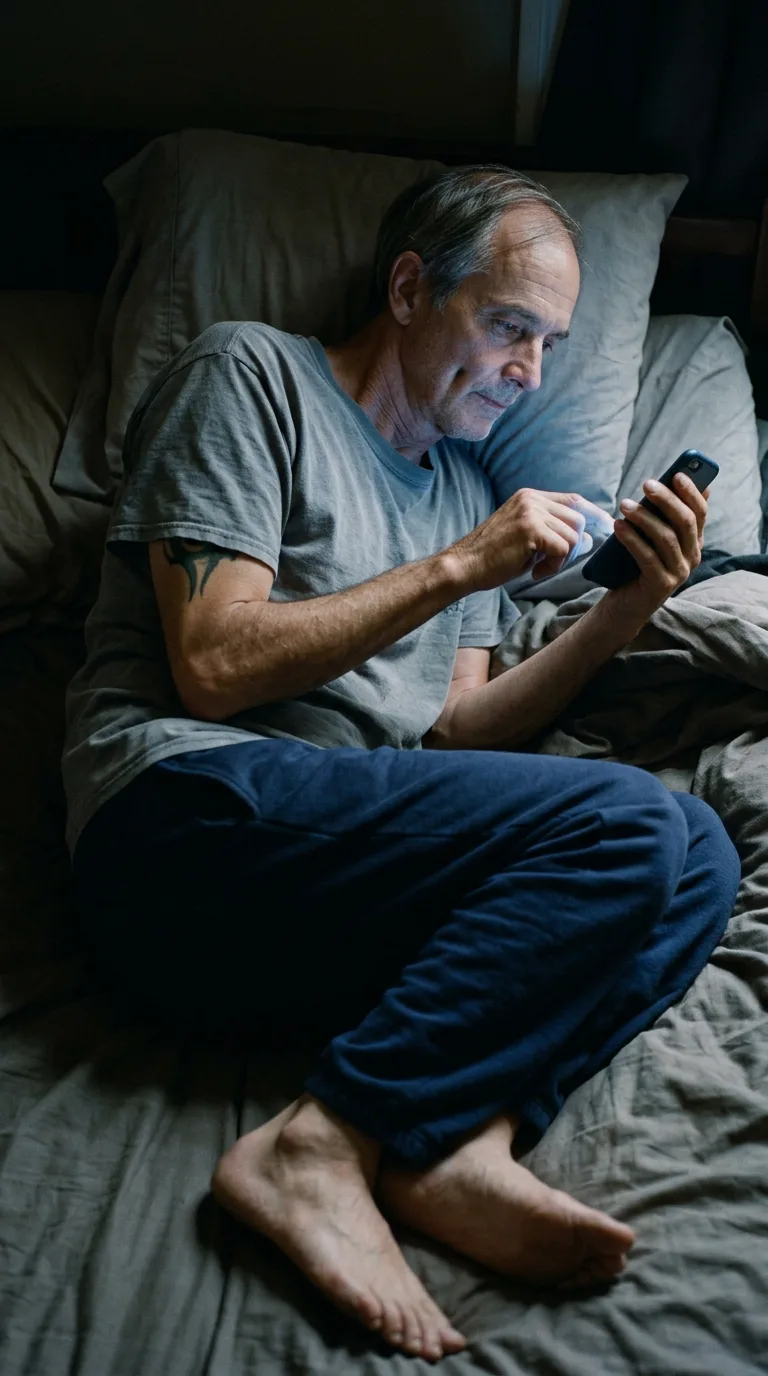
Rarest thing about him: Contractor — rare, 1 in 61
Season 0seed 1473631486 · engine v10
Character card
lineage WV6PBZ
His body-swap story
@malik.overton, wearing Walter Preskitt, rolled the wheel on and woke up as Frank Delvecchio, spent under a minute in him, then spun the wheel and woke up as Douglas Hennemyer
Walter Preskitt's knees ache from thirty years of bending under horses, and you have had them for less than a minute when you decide they are not worth keeping. You are sitting on the tailgate of his truck in a Miami equipment yard, sun flat and white overhead, the smell of hoof trimmings and hot rubber climbing into your nose, and you already know this body has a bad back and a barn to get to and nothing else. You spun to escape a farrier and landed in the middle of his shift instead of the end of it — that is the whole reason, small and true and not worth saying to anyone: you don't want to work today, in anybody's body, and this one has three more horses on the schedule. So you take out the phone that isn't yours yet in any sense that matters, open vessel.cards with a thumb still smelling of hoof dressing, and spin again before you've finished sitting down.
The screen goes white and then it doesn't, because you are somewhere else, and it is dark there.
You are on your side in a bed that smells like fabric softener and something medicinal underneath it, a phone six inches from a face that is suddenly, impossibly not the one you had ten seconds ago. Your thumb — his thumb — is stopped mid-scroll on a photo of a woman laughing at a bar you don't recognize, and then it isn't stopped anymore. It moves. Faster than whatever rhythm it had going, steadier, flicking past a text thread, past the photo, past a contact saved as *Denise ❤*, and the light of the screen sits on a cheek that has gone still in a way cheeks aren't supposed to go still. Somewhere above the phone, thin gray-silver hair is pressed flat against a pillow. You feel a chest under a soft old T-shirt rise and catch — asthma, something in you already knows, though you haven't been told — and a jaw that clenches once, on its own, the way a habit fires before a mind catches up to it.
It's afternoon here, technically, if you trust the numbers — but the blinds are shut tight against a Philadelphia row house and the room holds the kind of dark that comes from a man who worked all night and is trying to sleep through the day, phone in hand instead of resting, the way men do when the body's tired but the head hasn't gotten the message. You are lying in the leftover heat of him.
The sheet under your hip gives you the first of it: this bed, and a woman's laugh from three feet away — not Denise, someone from a long time before her, a name that surfaces and sinks again too fast to hold, a wedding that ended in a kitchen instead of a courtroom, the particular quiet of a house with one fewer person in it than it was built for. The phone in your hand gives you more — Denise's laugh again, this time from a barstool on the night you met her, her hand flat on your forearm right over the tattoo, saying she liked that you still had ink from being young and dumb, and you'd laughed and said the tribal thing had been a bet, twenty-two years old and stupid with a friend who's dead now. There's a text further up the thread, unanswered since yesterday: *you sleeping ok? call me when you're up.* Guilt sits behind that one, small and specific — you meant to call.
The shirt against your back opens the morning it was put on, hours ago by the clock but yesterday by the body's math: sleeve over the tattoo, the fabric soft from a hundred washes, a moment in front of the bathroom mirror where Frank Delvecchio looked at his own gray hairline and thought, without much heat, *still here.* Dimples that show even when he isn't smiling, which he noticed once because a grandkid pointed at them and asked why his cheeks had holes, and it had made his whole week. A job site earlier that same day — no, the day before this one, the shifts blur — framed lumber and sawdust hanging gold in a stairwell of light, a level in his hand, a foreman's voice telling a joke he'd heard before but laughed at anyway because the crew liked when he laughed. His hands know stud spacing without counting it, know the particular give of a nail going in true versus one about to bend, know how to brace a door frame with a shoulder while the other hand drives a screw. They have swung a hammer for forty years and they ache at the base of the thumb in a way that has stopped being news.
Three kids move through him in flashes too quick to be memories yet, more like weather — a boy's Little League mitt, a daughter's wedding where he cried more than he meant to, a voicemail he hasn't returned. And under all of it, steady as a pulse, a chest that has to remember to breathe carefully, an inhaler somewhere on the nightstand he hasn't reached for tonight because he hasn't needed it, not yet, not lying still.
You look down. The phone is still lit in your hand, thumb resting now, the woman in the photo still laughing at nothing.
You look up, toward the window, toward the dark seam of light at the blind's edge, and you say, quietly, so as not to wake a house you don't yet know the shape of:
"Denise. I'm up."