Douglas Hennemyer
Fictional. Generated by AI — not a real person, and no likeness of one is intended.
55, manager (mid-level) in Los Angeles · rolled by @malik.overton · card — no film
History
who has worn him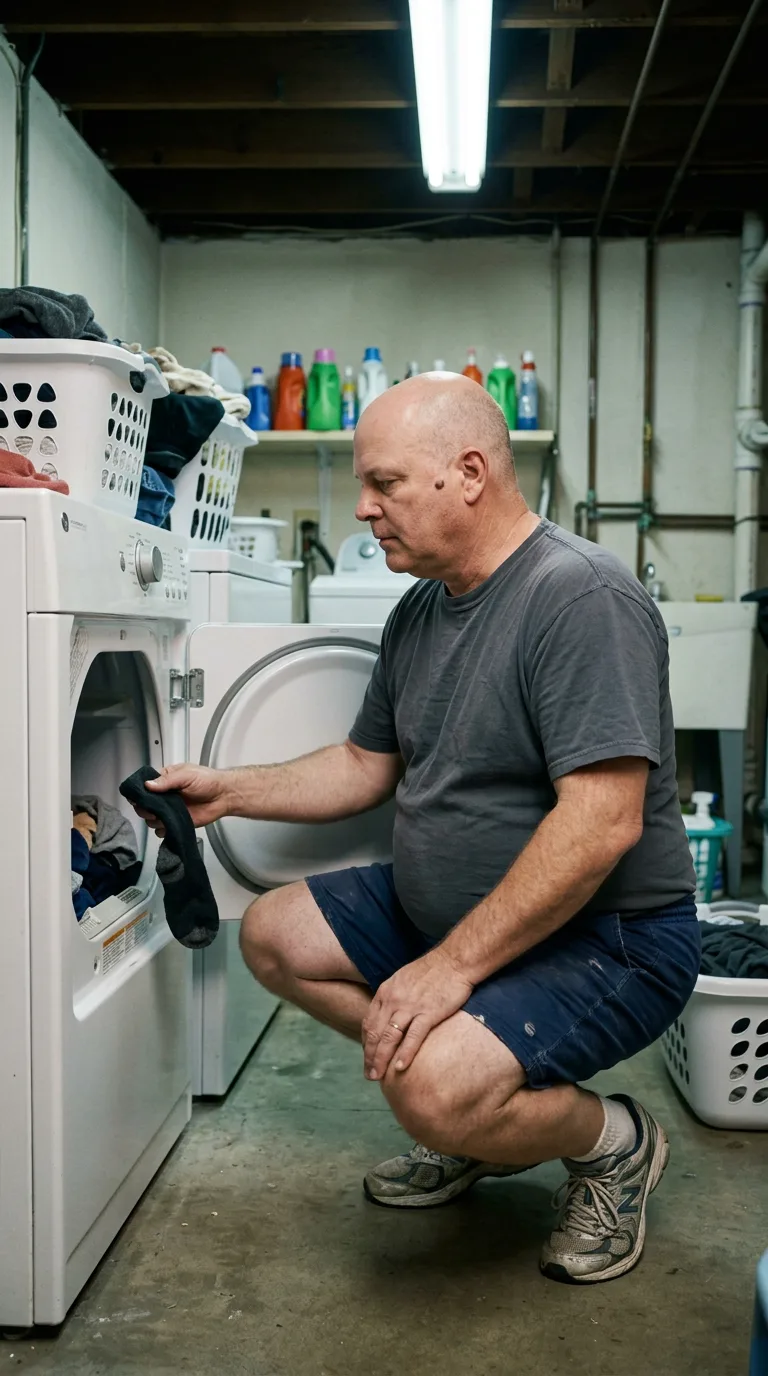
Rarest thing about him: Doing laundry — uncommon, 1 in 31
Season 0seed 2111464728 · engine v10
Character card
lineage WV6PBZ
His body-swap story
@malik.overton, wearing Frank Delvecchio, rolled the wheel on and woke up as Douglas Hennemyer, spent 1 minute in him, then spun the wheel and woke up as Colby Fontenot
Frank Delvecchio's knees are killing him on the ladder rungs he isn't climbing, standing instead in the spare room he calls an office, and the ache is the first thing you notice about being him — the dimples, the silver hair, the wiry frame that should feel lighter than it does. Less than a minute in this skin and already you know why you came back. Frank's hands shake faintly. Frank's lower back has a knot in it that Frank has had for six years and never sees a doctor about. You did not choose him for his knees. You chose him because the wheel is a door and you have learned to like doors more than rooms. Fourteen spins in, you have stopped pretending it's about the money, or the faces, or anything you could say out loud to somebody who'd understand it. It is Thursday, early afternoon here, sun coming in low and yellow through the blinds, and the wanting is just back, simple as hunger, and you open the laptop and there's the wheel, spinning before you've even finished deciding.
It stops on a bald head, a mole, a pair of khakis.
You are crouched. That's the first fact of the new body — knees bent, weight forward, a warm mechanical breath of dryer-heat on your forearm. A sock in your hand, gray-black, still hot. Overhead a fluorescent tube hums at a pitch that feels older than the room. Your body — his body, now yours — is heavier through the middle than Frank's, broader, a softness sitting low that doesn't apologize for itself, and your knees complain in a different key, a deeper, wetter ache that lives in both of them evenly instead of favoring one side. Somewhere behind your sternum there is the specific tiredness of fifty-five years standing up too much. It is the middle of the day here, light coming thin and gray through a basement window near the ceiling, and it should not be laundry-at-noon light, and it isn't quite — it's the light of a man who does the wash whenever the wash needs doing, schedule be damned, because nobody else's schedule matters to it anymore.
The sock is the first key. It turns and something opens: a hamper upstairs, eight shirts thrown into a drawer without folding, the low bachelor chaos of an apartment that answers to no one. Not this. This dryer, these movements — the way the load comes out and gets caught and sorted and squared with something close to ceremony — belong to a different feeling entirely, one that arrives a half-second later, fuller: the *want* to have it right. Corners squared. Whites separated though there's no one left to notice.
The shirt against your back gives you the morning. Pulling it over his head — this same navy polo, or its brother, from a stack of five identical ones in a closet that used to have a second half full of a woman's blouses and doesn't anymore — the little grunt getting the second arm through because the shoulder's been catching lately, a rotator cuff thing he keeps meaning to have looked at and doesn't, because doctors ask you how you're doing and he does not like the question. Belt cinched a notch tighter than it should be. Lanyard over the head last, ID card swinging, his own face looking back up at him off the laminate, a face he still sometimes doesn't recognize as fifty-five.
The mole on his cheek — you feel it now the way he does, which is to say not at all, except when someone's eyes catch there half a second too long in a meeting and he wonders if he should get it looked at.
The ring line on his finger opens slower, deeper — not a flash but a long room. Eleven years married. Carol. A house in Sherman Oaks that went to her in the settlement, fair and square, no drama in the courtroom, plenty of it in the years before. One daughter, grown now, who calls on Sundays out of love and out of guilt in a ratio he's stopped trying to work out. He hasn't worn the ring in three years and his fingers still go looking for it sometimes, worrying at the bare skin like it's a hangnail. Right now, not thinking about it, they want to turn a ring that isn't there — an old tic, a habit outliving its object — and you feel that phantom motion twitch through his hand even crouched here at the dryer.
The dryer door, warm under your palm, gives you Thursdays specifically — how he does this instead of paying for a service now that it's just him, how there's a dignity in it he'd never say aloud, how the church he goes to on Sundays would probably tell him dignity isn't the word, humility is, and he'd nod and privately think they're the same thing when you're the one folding. He hasn't had a drink in nine years. Never smoked. His knees and his lower back are the closest thing he has to a vice, aching in exchange for nothing, no pleasure to blame it on.
You feel the money in the room too, oddly — not as a number but as a texture, the unhurried way his shoulders sit even doing this, a man who does not need to be doing this and does it anyway, laundry as the last unmanaged corner of a life otherwise run by other people during the day, in a glass-walled office two floors above people who call him boss and don't know about any of this.
The basket fills. You straighten — his knees announce themselves, a bright complaint traveling up through both — and set the last shirt down squared, corners even, nothing like the eight crumpled ones in a drawer eleven hundred miles away that will now stay crumpled, Frank's problem, if Frank is even still anyone's problem to have.
You look at your hands. Broad, sun-spotted at the knuckle, a pale stripe where a ring used to sit, already turning as if to close around a band that isn't there.
You lift your eyes off them, into the low fluorescent light, and say, to no one, "Okay."
Just that. The way a man says it to a room when he's decided, for now, that this is where he's standing.