Walter Preskitt
Fictional. Generated by AI — not a real person, and no likeness of one is intended.
61, farrier in Miami · rolled by @malik.overton · card — no film
History
who has worn him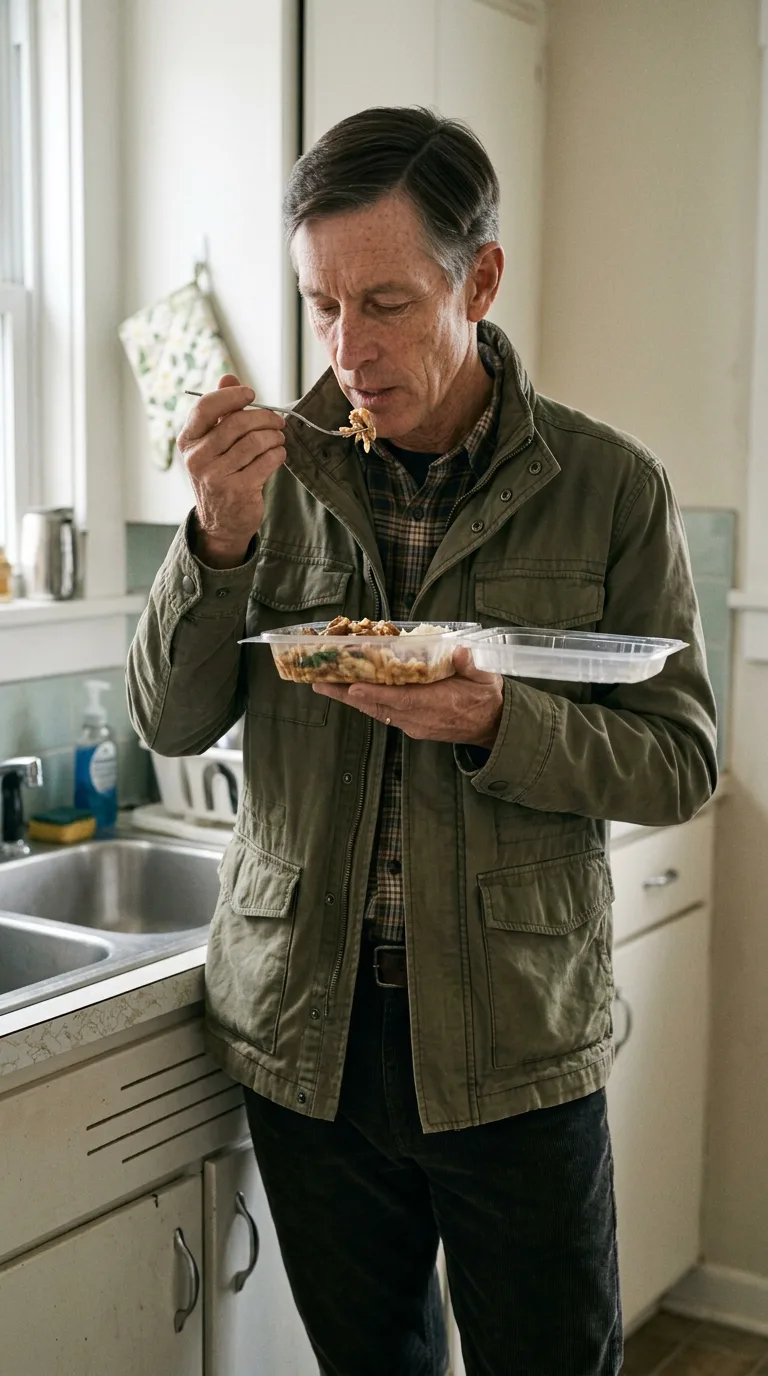
Rarest thing about him: Covers the gray — rare, 1 in 10
Season 0seed 1930687956 · engine v10
Character card
lineage WV6PBZ
His body-swap story
@malik.overton, wearing Malik Overton, rolled the wheel on and woke up as Walter Preskitt, spent under a minute in him, then spun the wheel and woke up as Frank Delvecchio
Malik's knees ache from the truck seat, that's the first thing — a deep old bone-tired ache that isn't Malik's fault, it's the body's, and you are sick of it in a way that surprises you. Seventeen hours in this one, and it should be enough, a young strong body with a badge and a radio clipped to the shoulder, and for a while it was enough. But there's a trail map open on the dash you can't read without the reading glasses this body doesn't need yet, and a text from a woman named Denise who thinks you're her son, and the boredom of it sits in your chest like swallowed water. You want the wheel not because Malik failed you. He didn't. You want it because wanting is the only thing that has never once gotten smaller no matter how many men you've worn. You open the site on the phone with his own thumbprint. You pay. You spin.
The fork is halfway to your mouth and then it is not your mouth, not your hand, not your thought that put it there. You feel the stop before you understand it — a small skinny wrist, the tendons in it pronounced, the fork's weight suddenly unfamiliar though it was in the same hand a half-second before under different management. You set it down on the lip of the container. Coat still on your shoulders, heavy canvas of it, the kitchen light flat and yellow against a window gone fully dark outside — dark at an hour that some other version of you knows should still be bright, if you thought about it, which you don't yet, because you are busy being nobody in particular, a fork resting on tinfoil, breath moving in and out of a chest that feels papery and light after Malik's muscle.
The coat comes off because the shoulders want it off — an old habit finishing itself before you've caught up to owning it. Cold aluminum counter edge under one forearm. You sit. The stool underneath you is hard and its complaint travels straight up into a lower back that has opinions, sharp and specific, a old-man ache that lives just left of the spine and has lived there so long it barely registers as pain, more like weather.
The shirt is what opens first — flannel, worn thin at the elbows, and through it comes a Tuesday, some Tuesday, hundreds of them folded into one: standing at a dresser in gray predawn light, Miami already warm through the window screen before six a.m., pulling this same shirt over a plain black tee because the yard's cold that early even here, even now. Buttoning it one-handed while the other hand finds keys on the dresser. Denim next, worn soft, and with it comes the smell of hoof shavings and hot iron, the particular ring of a shoe struck against the anvil, four, five, six times, a rhythm your arms know without asking your head. Chronic burn low in the shoulders from forty years of holding a horse's leg between your knees and swearing at it gently. You feel how his body knows this work the way it doesn't know sentences anymore, some tasks gone past memory into just being him.
The wedding band. You feel it before you see it, the left hand finding it on its own, thumb turning it once, twice, a habit so old it isn't even comfort anymore, just rotation, like a planet. Through the ring — a wedding, folding chairs on grass, her in ivory looking amused at something he'd said, decades of it compressed into the gold: her voice through a bathroom door telling him to hurry, her hand on his back at 2 a.m. after a shoeing job went wrong and a horse caught him in the ribs, the quiet unbothered rhythm of a marriage that isn't loud anymore because it doesn't need to be. And under that, further down, another hand entirely — younger, a girl who is not his wife, a screen door somewhere in another decade, a version of him that almost went a different direction and didn't, and some nights still wonders. It comes and goes fast, guilty and soft, gone before you can hold it.
The counter under your forearms is the same counter from thirty years of standing exactly here. The container in front of you — something with chicken, something his wife left labeled in the fridge before her night shift, a fork's worth of it still good after the fork forgot itself for a second. You eat in even mouthfuls, not tasting so much as arriving, each bite bringing the day back at you sideways: a horse that fought the nail, his knees screaming going down and getting up off the ground eleven separate times since sunup, the particular Miami light through stable dust, salt air even out here inland from the coast, a text from his wife he hasn't answered yet glowing on a counter phone. Fifty-eight years old going on sixty-one, freckles that never faded off a face that spent four decades bent over animals in the sun, gray coming in at the roots that he colors over every six weeks in the bathroom mirror because she likes it, not because he cares.
You finish the container. Set the fork down for real this time, tines against foam, a small clean sound in a kitchen gone quiet around you.
You look at your hand — his hand, thin-fingered, the ring loose enough to spin, a burn scar pale across one knuckle you didn't put there and don't remember and never will, because there is nothing left in here now to remember it for you. You turn it over once in the dark window's reflection, freckled, veined, older than any hand you've worn yet.
"Long day," you say, to the window, to nobody, in a voice with thirty years of Ohio boyhood ironed flat out of it by decades of somewhere else.
Somewhere behind you, in another state, in a body already going cold on him, Malik Overton keeps sitting exactly where you left him.