Frank Delahanty
Fictional. Generated by AI — not a real person, and no likeness of one is intended.
55, mail carrier in New York · rolled by @marco.villagrana · card — no film
History
who has worn him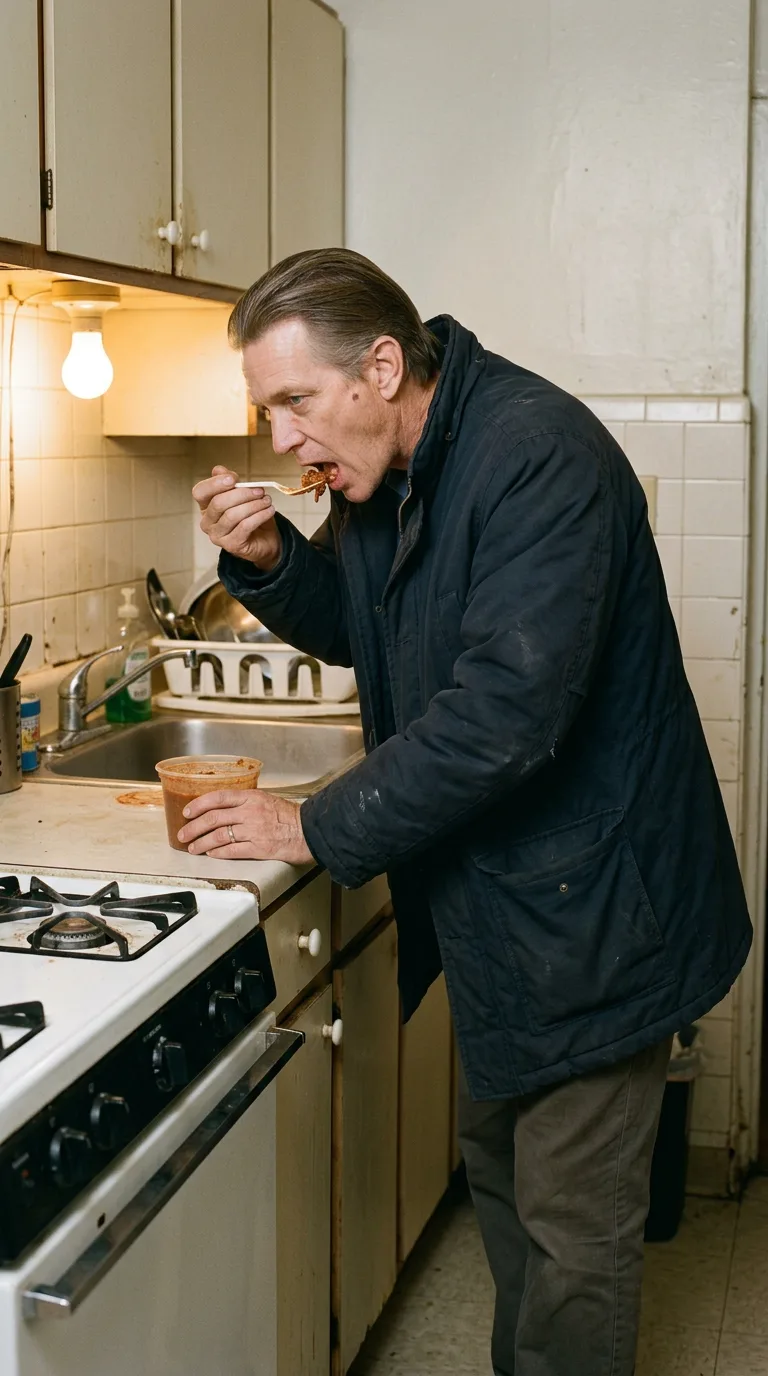
Rarest thing about him: Smokes when he drinks — rare, 1 in 36
Season 0seed 551207763 · engine v10
Character card
lineage LJL8SV
His body-swap story
@marco.villagrana, wearing Marcus Tillery, rolled the wheel on and woke up as Frank Delahanty, spent 4 minutes in him, then spun the wheel and woke up as Liam Foscarini
Marcus Tillery's hands are good hands. Thick fingers, callus across the palm from strap and dolly, four minutes old under a Saturday sun that hasn't figured out it's already lost him. You stand in a stranger's kitchen in Ohio that isn't yours either, and you feel the ache settle into shoulders you didn't build, and you think: no. Not this one. Not the mover with the bad knee already complaining after four minutes of standing still. There's a restlessness that has nothing to do with him and everything to do with you — the itch that was there before Tillery, before the ninety-three before him, the thing that never once let a body be enough just because it worked. You don't examine it. You never do. You open the laptop that isn't yours on a counter that isn't yours, and the wheel is already loading, already spinning light across a stranger's knuckles, and you let go of Marcus Tillery mid-breath, the way you always let go, like closing a door on a room you were never really furnished in.
The fork stops an inch from your mouth.
It comes back down, sets on the counter with a small definite click, and something underneath you exhales — not your breath, his kitchen, his light, one bulb hanging bare and orange over a sink full of one dish, one spoon, one glass. Brooklyn night presses at the window, wet-black, sodium-colored, and you are sixty-one inches taller than you were a half-second ago in every way that counts, wearing a coat still buttoned against cold you drove out with your body and never took off inside. The container is warm plastic in your left hand. There is a ring on that hand. You did not put it there.
The coat is the first thing that gives itself up, sliding off the shoulders because your shoulders — his shoulders — already know the motion, muscle memory older than thought, and with it comes a flash: a locker room smell, a supervisor's voice, seventeen years of the same gray coat hung on the same hook, Frank, you're covering Ridgewood, and the flat irritation of a route memorized so completely his feet do it without him. Frank Delahanty. The name arrives with the coat, the way names do, stitched into a collar he isn't wearing but remembers washing.
You sit, because his body wants to sit, and the counter's edge presses cool against the heel of your hand — his hand — and that's another door: this exact counter, twenty-two years of it, a Formica pattern gone soft and grey at the corner where his hip rests every night. The apartment came after Diane left with the good couch and the kid photos she said she'd copy and never did. He'd almost married again — didn't, not on paper, just Carol now, seven years steady, who doesn't ask why he still eats standing up like a man expecting to be called back out. Two kids somewhere in their twenties, one who calls, one who doesn't, both of them his in the jaw and the way they go quiet when they're angry instead of loud.
The fork is still in your fingers and it brings the whole day back at once, sleeve by sleeve, the way the shirt came on that morning — the same chambray blue, buttons done one-handed while the coffee went cold, the mail bag's strap already worn into a permanent groove across the left side from decades of the same shoulder taking the same weight. His body is fifty-five in every joint: the knee that clicks going down porch steps, the lower back that announces itself by four in the afternoon, the forearms still strong as a younger man's from ten thousand days of the same motion — reach, sort, hand off, walk. His jaw is tight, has been tight for an hour without him noticing, the muscle there clenched from something he never lets all the way up into words — a woman two blocks back who looked at him too long, or nothing, or everything. He doesn't drink. He wants a cigarette he isn't having tonight. He is, underneath the ache and the cold and the quiet, a Catholic man doing an examination of conscience he'll never call that, over canned sauce eaten out of the pot because Carol's at her sister's and cooking for one feels like a punishment.
You eat it in his same even mouthfuls, looking at nothing in the black glass of the window, and the mole on his cheek sits there under your borrowed attention like something you should reach up and touch, except his hand is done with the fork now and sets it in the empty container with a small clean sound, final.
You look at the hand. Turn it over. The ring catches the one bulb.
You lift your eyes into the dark window instead of the room, because that's the only mirror there is, and you say it to the glass, quiet, like a man talking himself back into his own kitchen:
"Okay, Frank."