Liam Foscarini
Fictional. Generated by AI — not a real person, and no likeness of one is intended.
33, mechanic in Detroit · rolled by @marco.villagrana · card — no film
History
who has worn him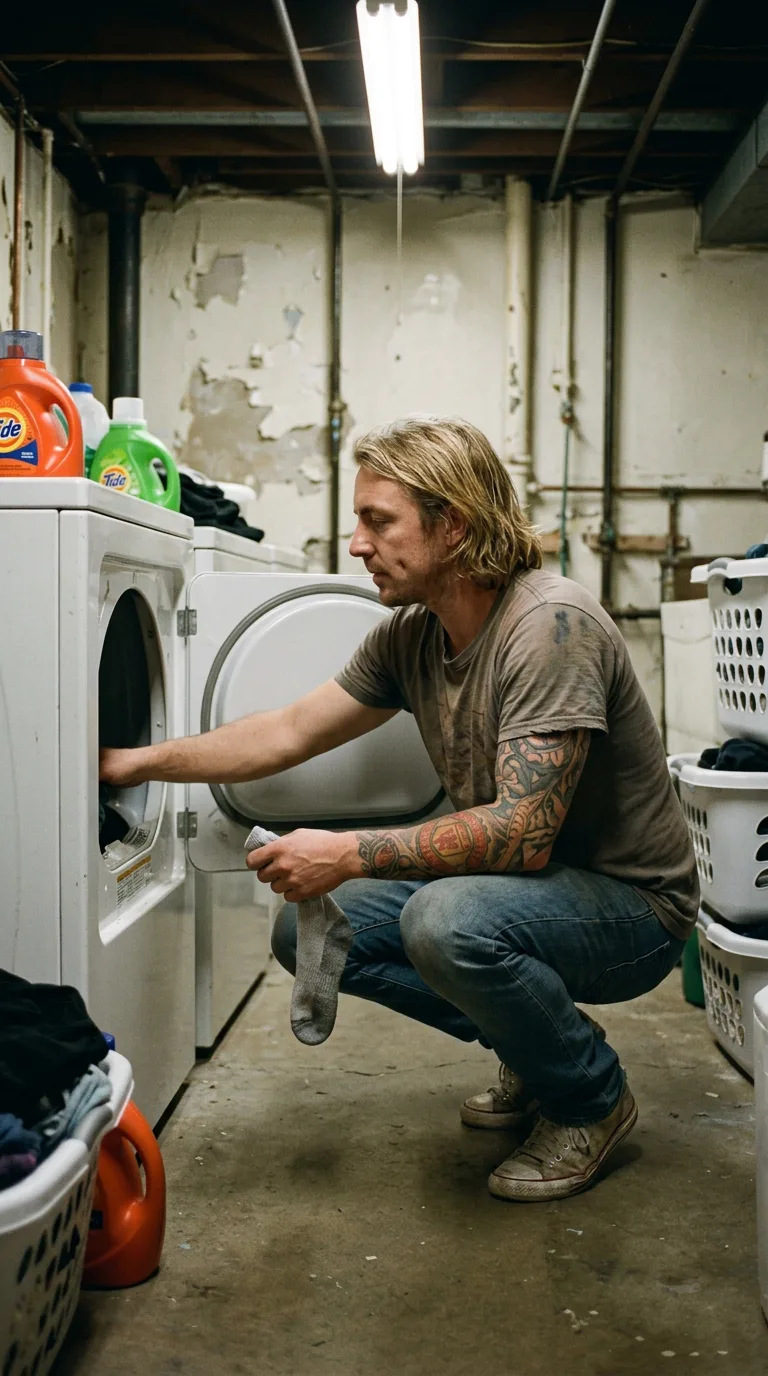
Rarest thing about him: Orthodox Christian — rare, 1 in 66
Season 0seed 1780537268 · engine v10
Character card
lineage LJL8SV
His body-swap story
@marco.villagrana, wearing Frank Delahanty, rolled the wheel on and woke up as Liam Foscarini, spent 5 minutes in him, then spun the wheel and woke up as Raymond Tsukamoto
Frank Delahanty's apartment smells like instant coffee and shoe polish, and you have exactly three minutes of history in it. The blue pile carpet under Frank's feet. The mail satchel by the door, empty, its strap worn pale where a shoulder has lived on it for twenty years. You didn't do any of that living. You walked in on the third minute of somebody else's marriage.
But you know where his phone is. You know the passcode, because Frank's fingers still remember it even though you're the one moving them. And when you open it, waiting at the top of a long, quiet thread, is a name: Liam. A photo from eleven months ago — the two of them at a bar in Hamtramck, Frank's arm slung around a shorter man with dimples so deep they look carved, a Manchester United crest inked down his forearm catching the flash.
You know this man. Not from Frank's memory — from your own. Two spins ago, you wore a body that stood next to Liam Foscarini at a christening, shook his hand, felt how hard his grip was for someone so compact. That was you, in another skin, a long time before Frank. The wheel doesn't forget its own guests even when it hands them back out.
Something in you — call it appetite, call it the itch that never fully quiets — wants to go back and finish the thing you started that day. Frank's hand is already moving toward the door, satchel forgotten, three minutes not nearly enough to have felt anything real in this life. You don't decide so much as arrive at the decision already made, the way you always do. You open vessel.cards on Frank's cracked screen, and the wheel is already spinning before you've admitted why.
—
The dryer is warm against your forearm and a gray sock hangs from your fingers, and then the fingers are yours, and the sock is not something Frank Delahanty ever touched.
You are crouched. Low to a concrete floor. A fluorescent tube buzzes somewhere above a head that is shorter than Frank's by half a foot, and the shirt on your back is thin and damp under the arms with a day's sweat. Everything about this body sits closer to the ground, denser, coiled. Your knees complain faintly at the crouch — thirty-three years old and already they complain — and a laundry basket waits at your hip, half-loaded, towels folded in it with a precision that startles you before you understand it isn't your precision at all.
—
The shirt gives it to you first — not this shirt, the memory of the shirt, cotton against a back that has worn a hundred just like it: mornings in a two-bay garage on a wide gray Detroit street, sleeves rolled to the elbow so the ink doesn't catch grease. Liam. You know the name now the way you know your own — no, more than that, the way he knows it, from the inside, stitched to a chest pocket in white thread. LIAM. Somebody's wife embroidered that, years back, a joke gift that stuck.
The tattoo comes next, hot under your touch as your other hand brushes it reaching for the basket — the crest, red and gold, done in one long Saturday when he was twenty-two and heartbroken over a woman named Deirdre who left for Chicago and never once looked back, and he got it because his father wore the same scarf to every match for thirty years before the heart attack took him at fifty-eight, and Liam wanted something of the old man that wouldn't fade off a shirt in the wash. That's the one thing he never says out loud to anyone, not even to Sam upstairs, who he loves, who he has loved for four years now in the unspectacular way of two people who make each other dinner and split the cable bill and don't examine it too hard.
The socks in the basket — his, hers, a stray one that's neither — bring the morning back whole: waking at six, Sam still asleep, him pulling on the jeans from the chair because they still had a good day of grease-resistance left in them, the shirt after, sleeve by sleeve, name patch cool against his chest before his own warmth caught up to it. He'd bitten a nail down to nothing standing at the mirror, tasted the polish-remover bitterness Sam keeps threatening to paint on his fingers, and thought about Frank — good old Frank, out east, who he hasn't called back in three weeks, and felt the small guilty itch of a friendship going quiet without either of them deciding it.
The concrete under his boots is always cold no matter the season. His blood pressure medication sits in the cabinet upstairs, one pill he forgets more mornings than he takes. A drink tonight, maybe two, with Sam on the porch if the sky clears. He crosses himself without thinking most nights before sleep, a habit older than he can place, older than the tattoo, older than Deirdre.
You are standing in all of it now — his height, which is less than Frank's and less than whatever you wore before that; his forearms, wiry and quick; the dimples that sit in his face even doing nothing, an accident of bone that has gotten him out of trouble his whole life. You know how his hands set a socket wrench without looking. You know how they shake faintly after too much coffee. You know, from years and years of practice that are his and not yours, exactly how to fold a fitted sheet in four moves.
—
You pull the last towel and drop it in the basket, and only then do you look down at your own hand — his hand, the nails bitten to the quick, a healed nick across one knuckle from a fan belt that got away from him in April.
You turn it over once, like you're checking it's real.
Then you lift your eyes to nothing in particular, and you say, quiet, almost to Frank, wherever he is right now in New York, not knowing any of this happened:
"Sorry I went quiet, man."