Francis Delvecchio
Fictional. Generated by AI — not a real person, and no likeness of one is intended.
63, retired in Philadelphia · rolled by @colin.hasbrook · card — no film
History
who has worn him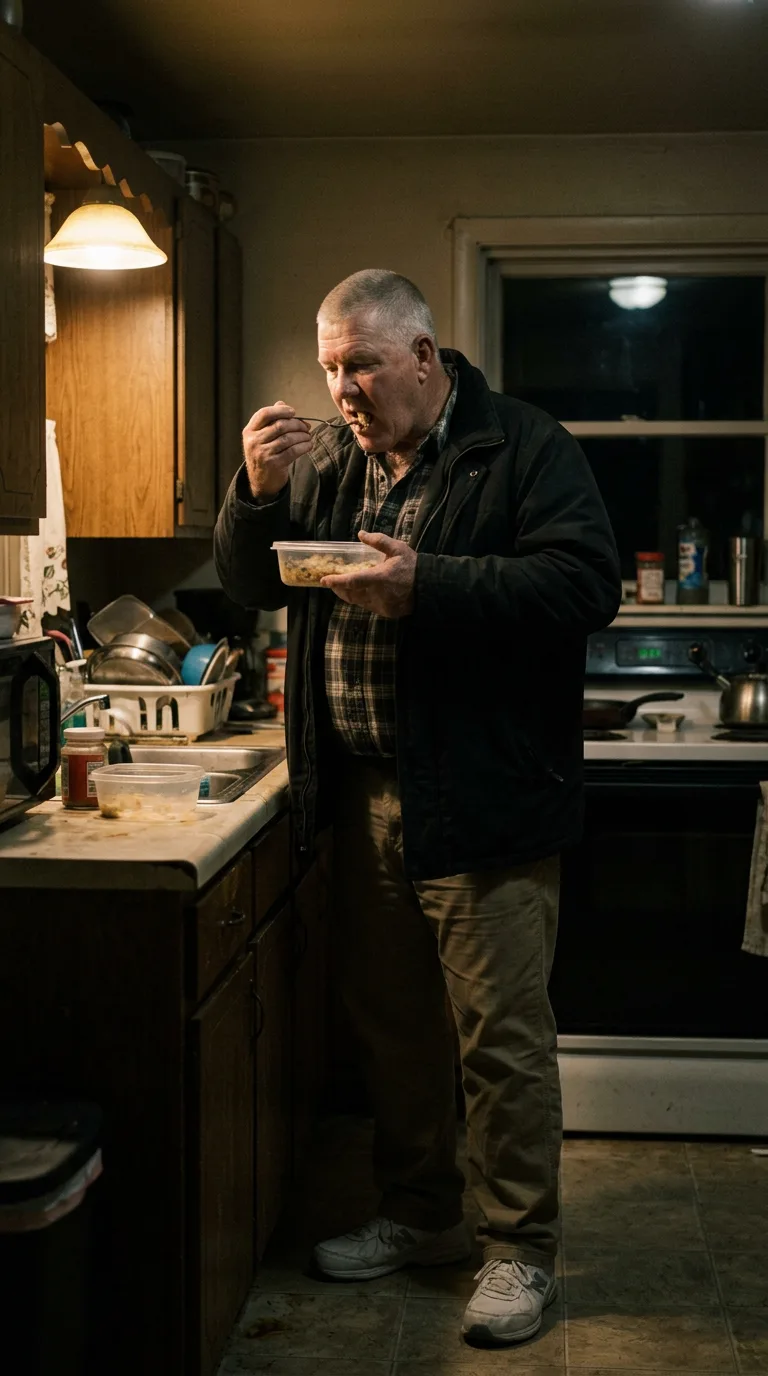
Rarest thing about him: Eating standing up at the counter — common, 1 in 31
Season 1seed 1046151368 · engine v11
Character card
lineage 2NZHHJ
His body-swap story
@colin.hasbrook, wearing Dwight Muncaster, rolled the wheel on and woke up as Francis Delvecchio, spent under a minute in him, then spun the wheel and woke up as Miguel Osante
Dwight's kitchen smells like the diaper pail nobody emptied and the coffee going cold since two. You have been him less than a minute and already you know the whole shape of the thing: the baby monitor crackling on the counter, the wife's voicemail still not returned, the particular exhaustion of a man who signed up for a smaller life than he wanted. It is evening here, late enough to be alone with a laptop, and the porch light is off because nobody's coming. You spun this body eight days ago and it was fine. It is still fine. That is the trouble with it — Dwight is fine the way a waiting room is fine. You find yourself standing over the sink not eating, not sleeping, just standing, and you think: not this again, not tonight, and your thumb is already on the site before you've admitted it. Comfortable is not the same as content. You want, for four minutes or four years, to be a man whose day is over instead of one whose day never really starts.
You pay. You spin. Dwight's kitchen goes and does not come back.
The fork is already in the air when you get there, a bite of something orange and starchy stalled an inch from a mouth that isn't asking permission anymore. You feel it land — the fork's weight, cheap tines, the container's plastic give against a broad thumb — and then you feel everything else: shoulders wide as a door, gut sitting solid and low, knees that have opinions about standing this long. The coat is still on. Somewhere behind you a window holds nothing but your own kitchen light thrown back at you, because outside it is almost midnight and nobody in this city is looking in.
The fork goes down on the counter, unhurried, the way a man sets down a thing when the appetite for it has simply left. You feel your own — his — shoulders shrug the coat back, and it slides down your arms and you catch it without thinking, hang it without thinking, the muscle already knowing the hook is second from the left.
The coat gives you the first of it: rain, an hour ago, a walk to nowhere in particular because the apartment gets small at night and the legs still work fine even if not much else does. Sixty-three and the knees ache going down stairs, not up — that's new this year, that's a thing he's mentioned to no one, because there's no one home to mention it to.
The plaid shirt under your palm when you smooth the collar gives you a morning three days back: buttoning it one-handed in a bathroom mirror gone soft with steam, hazel eyes flat and patient in a face that shaved itself the same way it has for forty years, no rush to it, no audience for it either. He dressed himself slow that morning because there was nowhere he had to be, the way there is nowhere he has to be most mornings now, since the pension started and the guys at the depot stopped calling to see if he wanted overtime he couldn't take anymore anyway. Thirty-one years driving a SEPTA bus down Broad Street. The shirt remembers his hands more than the mind does — how they still reach for a farebox that isn't there, how the right one flexes once, twice, like it's counting fare, whenever it's idle.
The container in your other hand gives you the freezer it came from, a stack of them, Sunday's effort portioned into weekdays because cooking for one felt like a chore and cooking for a week felt like a plan. Marinara, penne, a little too much garlic — his mother's recipe, wrecked slightly in translation over sixty years, and he doesn't mind that it's wrong, he minds that there's no one left who'd know it's wrong. A wife twenty-two years, gone eleven now, not to death, to a slow drift that ended in paperwork and a handshake that was somehow the saddest part. No kids. He used to say that without weight and it took him a decade to notice the weight had been there all along.
The counter under your forearm is worn pale where a thousand mornings of coffee mugs sat sweating, and touching it gives you Sunday Mass at seven because the later one fills up with families and he stopped liking to sit alone in a full room; better to sit alone in an empty one. The rosary in the nightstand two rooms over you can't touch yet but you feel its shape anyway, a phantom in the wrist, from decades of habit.
Your feet, in shoes that have walked more miles than the bus ever logged, know this floor by its cold spots. The body is heavy in the good way and the bad way both — strong across the back still, useful hands, but the fat sits low and honest and the knees complain and there is, distantly, always, a low hum of quiet that used to be a marriage and is now just Thursday.
You lift your eyes off the container. The window gives you nothing back but your own face, a stranger's face, older than any you've worn, and you look at your hands — his hands, wide, spotted faintly at the knuckle, a callus gone soft at the base of the right index finger where a steering wheel used to live.
You turn one hand over slowly under the kitchen light.
"There you are," you say, to no one, to the window, to the man who isn't in there anymore to hear it.