Field archaeologist in Seattle
Fictional. Generated by AI — not a real person, and no likeness of one is intended.
55, field archaeologist in Seattle · rolled by @malik.overton · card — no film
History
who has worn him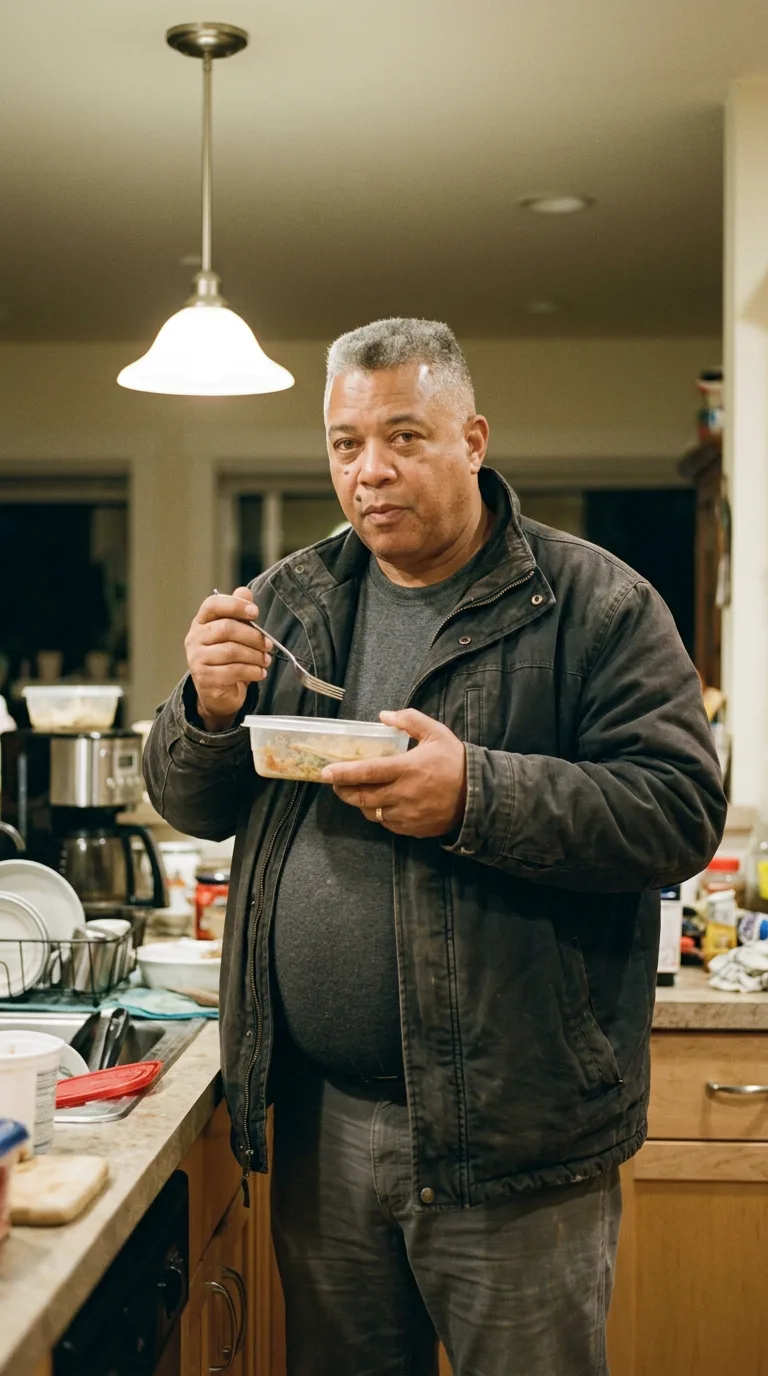
Rarest thing about him: Pipe smoker — epic, 1 in 143
Season 0seed 540491960 · engine v10
Character card
lineage WV6PBZ
His body-swap story
@malik.overton, wearing Rolando Cerventes, rolled the wheel on and woke up as an unnamed body, spent under a minute in him, then spun the wheel and woke up as Ernesto Villalba
It is early, the kind of early where the window over the sink is still black and the radiator in Rolando Cerventes's apartment ticks like it's thinking something over. You are standing in his kitchen in his body — muscular fat gone a little soft at fifty-three, the lazy eye drifting when you're tired, which you are, because you were up at four with a case file that isn't yours and won't ever be. You made him a cup of instant coffee an hour ago out of habit that isn't your habit, it's his, threaded into the muscle. That's the trouble. You've been him less than a full day and already his life is leaning on you — his tenants, his supervisor's voicemail, a photo on the fridge of a niece graduating that makes something in his chest go warm and you didn't ask for that, you don't want it, you want the flatness back, the blank hotel-room feeling of being freshly arrived. You liked him fine. You just don't want to feel anything belonging to somebody else. So you open the laptop, you find the page, the wheel sitting there dumb and patient, and you pay again, because that flatness is the whole reason you keep doing this — not the men, never the men, just that half-second before their lives come rushing in, when you are new and owe nothing to anyone.
You spin.
The fork stops an inch from your mouth.
It comes back down. Sets itself, with a small definite click, against the rim of the plastic container. You are heavier than you were a second ago, thick through the middle, a coat still on your shoulders though the room is warm, and there is grease-yellow light coming down off a pendant lamp onto a counter crowded with someone else's dishes. You shrug the coat off — your shoulders do it before you've decided to — and you sit on the stool at the counter, and you eat, in even mouthfuls, looking at nothing in a window gone black with night.
Except it isn't night. You can feel that wrongness the way you feel a step you weren't expecting — the light outside says late, but something in your knees, in the low ache riding your lower back, says the day should be over by now, should have been over hours ago, and it was, and this container of cold rice and chicken is dinner eaten backward, dinner eaten because a body that spent nine hours in a trench under a sun it doesn't get here nearly enough came home starving and didn't wait for a plate.
The shirt is what opens first — heavy cotton, sun-warmed smell gone stale, ghosted with dust that never quite washes out. You feel your own hands — his hands — pulling it on this morning, sleeve first, the left cuff always a half-second behind because of how the shoulder sits, an old strain from ten years of kneeling. A flash of the trench: string lines pulled taut and square over red-brown dirt, a trowel worn smooth in the palm, a student intern asking a question you — he — answered without looking up, patient the way he is patient with everyone but himself. The trowel handle in memory feels like an old friend's hand. He has held that shape ten thousand times. His body knows how to kneel for six hours and how to stand up afterward like his knees are older than they are, and both of those are true right now, low and dull under the counter's edge.
The wedding band on the left hand is warm from his skin, and it opens wider than the shirt did — a woman's laugh in another room of this house, years of it, an argument about grout that ended in both of them laughing instead, her hand flat on his chest at 2 a.m. when his blood pressure spiked and neither of them said the word stroke out loud. One child, grown now, a voice on the phone that still makes his throat go thick. And underneath that, quieter, guiltier: a woman who is not his wife, who isn't in the house, who was, for a while, the person he told the truth to instead of Fatima — a recent thing, folded away now, not gone. It sits in him like a stone he swallowed on purpose.
The coat pocket has a pipe in it, cold, unlit, and comes with the ghost-taste of tobacco he isn't supposed to still enjoy, and a rosary of habit instead — a mat unrolled at dawn before the trench, before the coat, before any of it, forehead to the floor of a room with morning coming gray through the blinds. The counter under your palms is the same counter from a hundred mornings, coffee maker gurgling, a mug with a chip in the handle that is somehow always the one he reaches for. High blood pressure lives in him too, a tightness behind the eyes some evenings, a pill bottle in the cabinet to your left that his hand could find blind.
You finish the container. Set the fork down inside it, tines up, the way he always does.
You look at your hands — broad, ashy-knuckled, a pale ring of untanned skin where the band sits, dirt still dark in the whorls of the thumbprint no soap gets all the way out of.
You say, to the black glass of the window, in a voice thicker and older than the one you left behind in Anchorage: "I don't even remember sitting down."
Somewhere behind that voice, the wheel is still spinning, waiting for you to decide it isn't finished either.