Rolando Cerventes
Fictional. Generated by AI — not a real person, and no likeness of one is intended.
53, social worker in Anchorage · rolled by @malik.overton · card — no film
History
who has worn him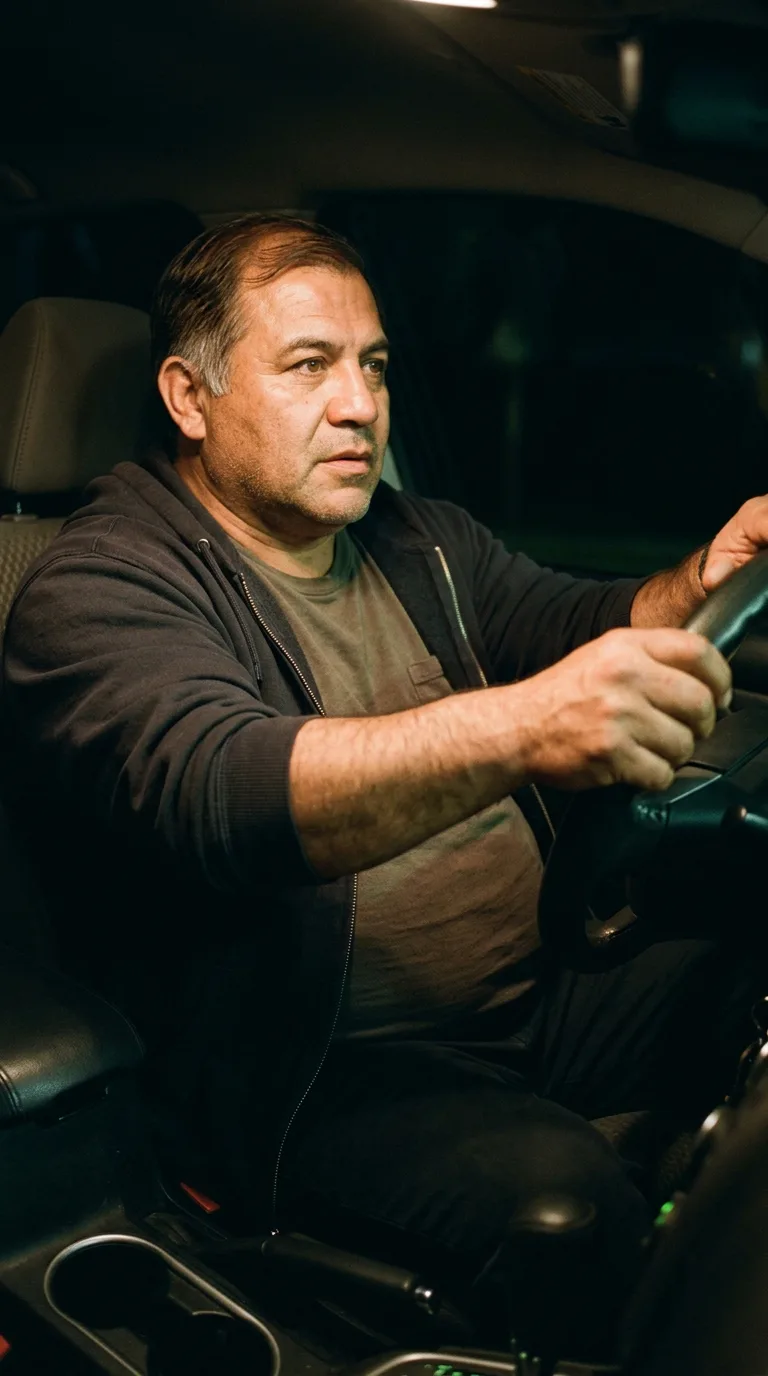
Rarest thing about him: A lazy eye — rare, 1 in 66
Season 0seed 1248889503 · engine v10
Character card
lineage WV6PBZ
His body-swap story
@malik.overton, wearing Colby Straathof, rolled the wheel on and woke up as Rolando Cerventes, spent under a minute in him, then spun the wheel and woke up as an unnamed body
Colby Straathof's arms are already sore, and you have only been in them for sixty seconds. You feel it the way you feel everything in a new body at first — like trying on somebody else's shoes and finding they already have somebody else's blisters. Skinny, twenty-six, freckled forearms cold in the morning light, hanging off the back rail of a truck that smells like a dumpster's memory. This is not why you spun again. You spun again because sixty seconds in, you already knew: this one is going to be a long haul of a life, months of early alarms and heavy bins and a supervisor named Gail who will find fault with the way he lifts, and you did not take the wheel thirty times to sit still in a body that aches and asks for coffee it hasn't earned yet. You want to be somewhere else already. That's the whole reason, and it's enough.
You pull the phone up one-handed, the site loads too fast for something so enormous, and you spin without a second thought, still holding the rail with Colby's borrowed hand.
The truck, the cold, the rail — gone mid-grip. What replaces it is warmth, dashboard warmth, a wheel under both palms at ten and two, a body wider and heavier and shorter, arms gone thick and tired in a different way, a way that has been thick and tired for fifty-three years instead of twenty-six. The car is moving. It keeps moving. For a half-second there is nobody steering it at all, and then there is — you feel the whole vehicle answer to a foot you didn't ask to move, drifting a foot toward the centerline before some old reflex under your new skin pulls it home in one smooth correction. Both hands come off the wheel like they've been slapped there and resettle lower, wider, a driver's hands finding a shape they already know. The turn signal clicks on. It is for an exit that means nothing to you and everything, apparently, to some muscle that isn't yours yet.
Outside the windshield: black highway, no dawn in it at all, snow banked white-blue at the shoulder in headlight wash. Alaska cold arriving through a window seal even with the heater running. A dash clock reading an hour that has no business being called morning anywhere you've lived, and isn't, not here — this is still deep night in Anchorage, whatever the calendar wants to call the day.
Your hands are on the wheel and they are not thin and freckled anymore. They are broad, brown, thick-knuckled, a wedding-band tan-line missing because there was never a ring — and the second your palm shifts on the leather, something comes loose in you that isn't you at all.
It's the hoodie first — you feel its zipper cold against your throat, and with it comes an evening: pulling it on over a gray T-shirt in a mudroom that smells like wet boot liners, half-listening to a voicemail from Marisol, the girlfriend, her laugh caught in the message before she hung up on herself, embarrassed. You feel the specific fondness of that — a woman who apologizes for her own laughing — and under it, quieter, an old ache shaped like a different name: Denise, gone four months now, whose replacement mug is still in his cabinet because throwing it out felt like a decision he wasn't ready to make. Both women sit in his chest at once, the way exes and current girlfriends do in a man who is not cruel, just slow to let go of what he's already had.
The wheel gives you more — decades of it, hands returning to ten and two on this same stretch of road on nights when the shift ran long, home three miles out, always three miles out, the last three miles of every double he's worked since Bartlett High let him go find something steadier. Social work. You get flashes of doorways: a woman on a walkway in the Mountain View complex, afternoon light amber and low across cracked concrete, waiting with a manila folder against his ribs for someone to buzz him in, his blazer too warm for June, his shirt collar damp. Waiting rooms. A boy he pulled out of a bad apartment eleven years ago who is a grown man now with a paycheck and a photo of his own kid taped inside a locker somewhere — Rolando doesn't know that part, never will, but the not-knowing sits in him like something he carries anyway.
Your own — his own — scalp itches under thinning hair dyed a flat, ordinary brown, and your hand rises off the wheel without permission and drags once over it, heel of the palm to crown, an old unconscious tic that isn't asking your leave. Through that motion: a bathroom mirror at 6 a.m., a woman's box dye kit on the counter because salons in this town run forty dollars he doesn't need to spend on gray nobody's paying him to hide but him. The part combed low, dragged across, the pale scalp showing through anyway in the fluorescent light, and no shame in it, just Monday.
Your chest is heavy and warm under a coat you remember buttoning at a thrift store rack, feeling the fabric for wear before the price. Your blood thrums a little too hard against your ears — pressure his doctor keeps saying needs watching, a pill he takes some mornings and forgets others, a body that carries weight the way rivers carry silt, patient and unbothered. Your left eye tugs a fraction outward as you try to find the road again, an old drift no glasses ever fixed, something kids at the office used to ask about before better manners caught up with them.
You feel how strong this body is under the softness — forearms that have hauled banker's boxes of case files up three flights more times than you'll ever be told about, hands that know a steering wheel and a doorknob and a filing cabinet drawer better than they know rest.
Then the highway keeps going the way highways do, indifferent, and you finally look down at the two hands on the wheel — thick, brown, a life's worth of small weather written into the knuckles — and you turn one over like it's a foreign coin.
"Okay," you say, out loud, to the empty dark car and the wrong-signaled exit still blinking amber ahead of you. "Okay. Let's see how long you last."