Ernesto Villalba
Fictional. Generated by AI — not a real person, and no likeness of one is intended.
46, bartender in New York · rolled by @malik.overton · card — no film
History
who has worn him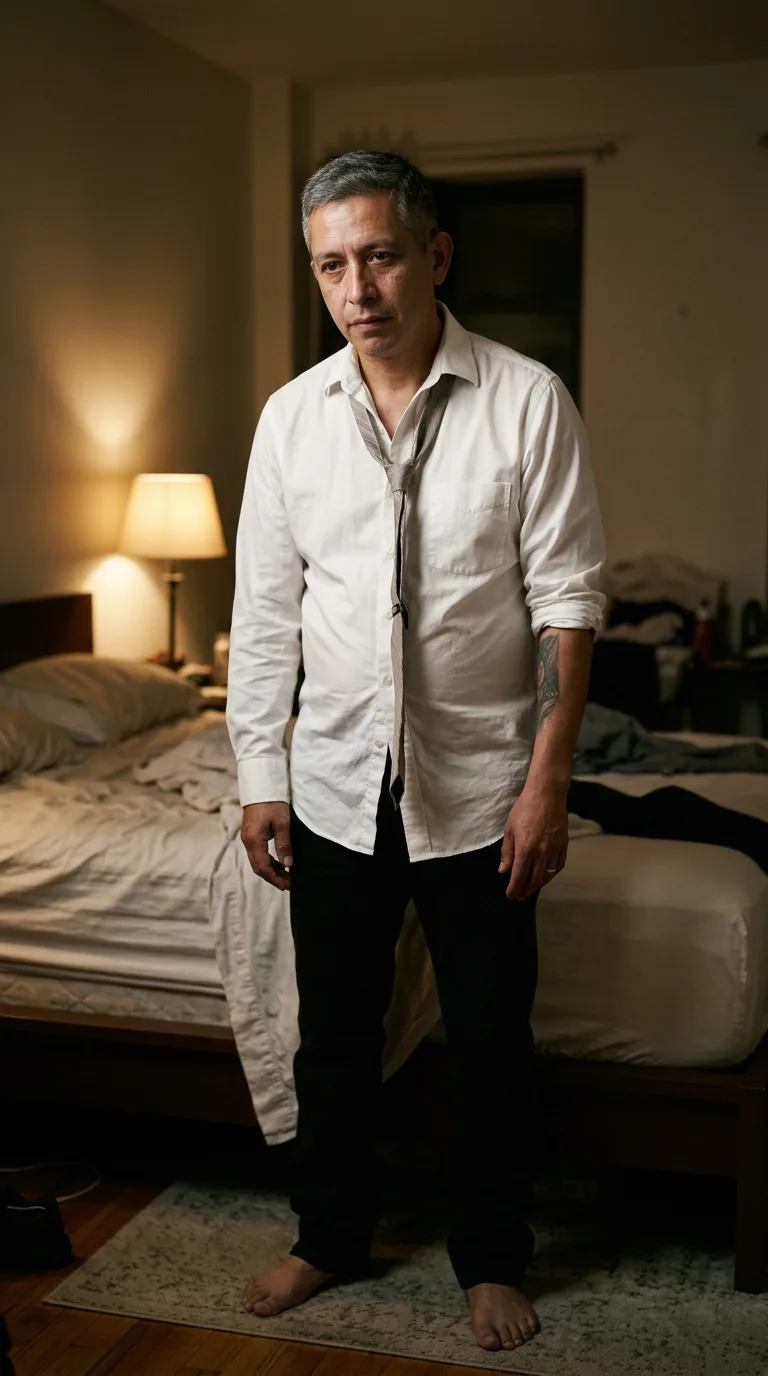
Rarest thing about him: A pack a day — rare, 1 in 17
Season 0seed 470491540 · engine v10
Character card
lineage WV6PBZ
His body-swap story
@malik.overton, wearing an unnamed body, rolled the wheel on and woke up as Ernesto Villalba
You are standing in a trench you have been standing in for eleven days, and the trowel in your hand belongs to a man who is fifty-five, heavy in the shoulders, gray at the temples, a beauty mark under his left eye like a period at the end of a sentence he never gets to finish. It is the middle of the morning in Seattle. Somewhere under this tarp is a scatter of nineteenth-century glass nobody but you and two grad students will ever care about, and that is the whole problem: you have been careful and patient and correct for three weeks in a body that is careful and patient and correct by nature, and you are so bored you could scream inside his skull and never disturb the calm on his face. He has a good back. He has decent knees for his age. He has absolutely nothing left to give you. You wipe the trowel on your thigh, walk to the tent, and open the site on your phone with dirt still under fingernails that are not, have never really been, yours. The wheel loads. You do not think about the man underneath the loading screen, because there is no man yet, only a shape the machine hasn't drawn.
You spin.
The trowel is gone. There is a shirt-button between two fingers, half-turned, and a rib cage under your palm that is thinner than the one you had a breath ago — you can feel it now, the give of it, softer at the middle, a little loose the way muscle goes when a man stops running from anything. The button finishes turning almost on its own, your hand simply knowing where the hole is. You are looking down at a chest with a scatter of moles you didn't put there, at a tie hanging crooked and unfinished at the collar, and past it, a bedroom that is not gray canvas and pine duff but lamp-light and a rug going threadbare at the corner and a bed with the sheets shoved back on one side only. It's the middle of the day here, you'll understand in a second, and this man is dressing like it's the middle of the night. Your throat has a tightness in it that isn't fear, not yet — it's just how these lungs sit, a whistle two breaths down that hasn't decided to become anything.
The tie is the first thing you touch on purpose, and it comes apart in your hands and reties itself in a four-in-hand your fingers have apparently done ten thousand times, snug and a little fast, and with it comes the bar — not this bar, an idea of a bar, mirror behind the well, taps sweating in June — and a boy, twenty-two maybe, teaching himself this exact knot in a gas station bathroom mirror the morning of his first real shift, hands shaking not from nerves about the job but because he'd smoked through breakfast again and his chest was doing this thing it does. Ernesto. The name arrives with the memory, quiet, the way your own name never has to arrive. Ernesto Villalba, and this is his tie, and his hands, and his goddamn lungs, which is why the shirt smells faintly of an inhaler's plastic even under the fabric softener.
The shirt itself, plain white, unbuttoned to the sternum a moment ago and now going right — his fingers correcting a mistake they didn't consciously make, and the flash that comes with the cotton against your back is his wife's voice from the doorway an hour that hasn't happened yet in this house's clock, some morning eleven years gone, laughing, you missed a button, mi amor, you'll go out looking like you dressed in a hurricane, and him laughing back because it was true, it was always true, buttons were never the thing his hands were good at. His hands are good at other things. You feel it in the calluses along the pads, the specific dead patch on the right palm from a bar rag wrung out four hundred nights a year, the memory of a shaker cold enough to ache, ice in three-second pours he could do with his eyes shut. You feel a wedding band on the left hand and get, whole and sudden, a wedding — not white, not church, a backyard in Sunset Park, a cousin's guitar, her dress catching on a folding chair and both of them laughing too hard to fix it before the photo. Twenty years married roughly, give or take, you don't get the number, just the weight of it, worn smooth as the ring itself.
The tattoo on the upper arm is under sleeve, out of reach, but your shoulder knows it's there anyway, a portrait in black and gray, and what surfaces isn't a picture but a name he doesn't say anymore except to the mirror on bad nights — an old girlfriend, before the wife, before any of it, inked into his skin when he was twenty-six and stupid and sure it would always hurt this much. It doesn't, mostly. Mostly it's just skin now. Mostly.
Your jaw is already clenched — his hands aren't doing anything, hanging at his sides while the rest of you dresses itself, but the jaw's been tight since before you arrived, an old habit worn into the joint, and behind it: two kids, a boy and a girl, a photo taped inside a cabinet door at a bar you've never seen, the specific relief of a Tuesday when both of them slept through the night. A phone call about tuition he hasn't told his wife about yet. The particular fatigue of loving people you are always slightly failing to have enough money for. Scraping by, his life says, in every drawer and every bill, and his shoulders carry it the way skinny-fat shoulders carry things, softly, without complaint, going soft themselves from thirty years of standing on a mat behind a bar instead of a body that ever got to rest.
Your chest whistles again, thin, familiar, his — asthma living low and constant, a pack a day stacked on top of it like a dare he makes with his own lungs every morning and always wins, barely. Not now, though. Now the breath comes fine. Now everything in him is quiet and finished and correctly buttoned, tie snug, and you are standing in a lamp-lit room at the foot of an unmade bed in the middle of a Monday that is night for him and morning for you, holding still inside a stranger who does not, will never, know he handed you the last few seconds of being only himself.
You look down. The hand at the end of your arm has freckles scattered like grounds at the bottom of a cup, over knuckles that don't belong to any dig site, any trowel, any version of patient you've ever been. You turn it over once, palm up, like you're checking it for a tab you don't remember running.
Then you lift your eyes to the mirror over the dresser, and you say, quiet, testing the new weight of his own voice in his own throat:
"Okay. Let's see what you've got, Ernesto."