Eugene Matsuo
Fictional. Generated by AI — not a real person, and no likeness of one is intended.
46, lifeguard in New York · rolled by @colin.hasbrook · card — no film
History
who has worn him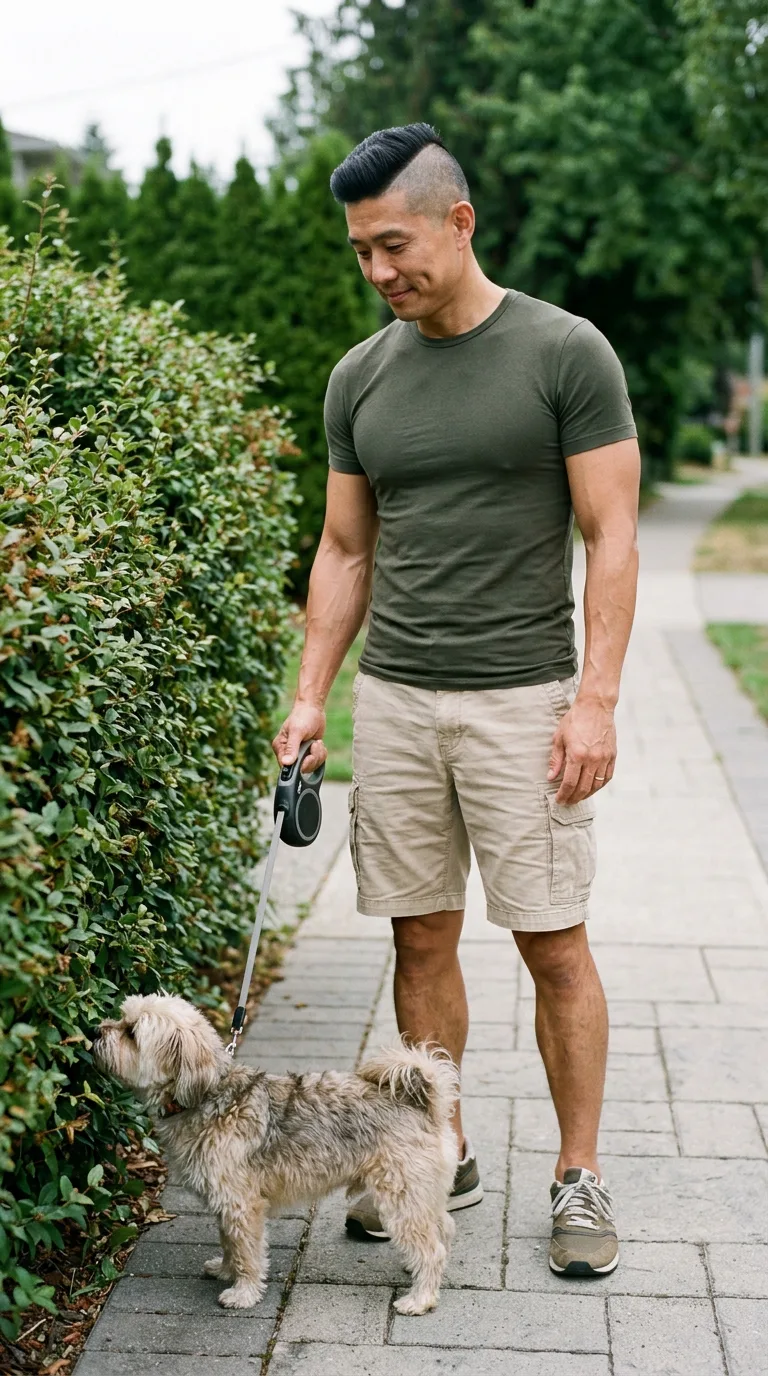
Rarest thing about him: An undercut — rare, 1 in 78
Season 0seed 1404284657 · engine v10
Character card
lineage 2NZHHJ
His body-swap story
@colin.hasbrook, wearing Martin Salcedo, rolled the wheel on and woke up as Eugene Matsuo, spent under a minute in him, then spun the wheel and woke up as Marcus Redding
The florist's shop smells like refrigerant and cut stems, and you have been standing in the dark of it for eleven months now, in a body that isn't yours, holding a pair of shears that Martin Salcedo's fingers know better than yours ever will. It is the middle of the night in Philadelphia and everyone in this life is asleep — the shop closed, the wife upstairs, the kids at their mother's for the week — and you are down here again, at the counter, on the site, because Martin's back doesn't ache the way the last one's did, because the flowers stopped being interesting around month four, because you have spun four hundred and forty-five times and the only thing that has never once gotten old is the half-second before the wheel stops. You tell yourself it's boredom. It's always at least partly boredom. You put your thumb on the spinner and you go.
There is a hedge in front of you, wet-leaved, and a small dog nosing into it at the end of a leash that has gone taut and then, in your hand — his hand — slack. The dog's ears go back. It looks up past the hedge at a face that is no longer entirely deciding anything, and you feel the leash before you feel the rest of him: cheap plastic housing, a thumb resting on the retractor button out of habit. You wind it in twice, take up the slack, and the dog has to trot to catch the new pace, confused, glancing back at a stride it doesn't recognize on a man it does.
It's the middle of the night here too, but it doesn't fit the daylight in his face from a photo you haven't seen yet — because this is New York, and he is a lifeguard, and lifeguards who are walking dogs at this hour work a shift nobody envies, the reservoir or the night pool or nothing at all, insomnia dressed up as responsibility. The dog is a texture first — leash, weight of it, the give of a body five foot seven and compact and hard everywhere at once, a low ache low in the back that has clearly been there for years, patient as furniture. Then the shirt. Olive green, thin cotton, and it comes to you in his hands, not yours: this morning, a hamper, socks balled inside sneakers by the door, the automatic economy of a man dressing without looking because he's done it eleven thousand times. Sleeve, other sleeve, the collar snagging for half a second on the ear the way it always does. A wife's voice from the kitchen — not urgent, just present, asking if he fed the dog before he takes it out. Two kids' backpacks by the stairs, one Velcro'd sneaker still to be found.
The shorts — cargo, khaki, a slight looseness at the waist where he's lost a little weight this year without trying — bring back a stand fifteen feet up on wet sand, whistle heavy and cold against his sternum in the picture you haven't touched yet but somehow already know the weight of, because his chest remembers it even here, blocks from any ocean. The whistle isn't on him now. Its ghost still is. Sunscreen smell baked permanently into a lanyard he wears even off duty sometimes, out of habit, out of not knowing who he is without it. Years of that stand: kids he's pulled out of undertow, a teenager he did CPR on once at nineteen who is thirty now and still sends a card at Christmas. Pride that never once got loud about itself, because the dimples do all his bragging for him — even angry, even asleep, they sit there, and people read kindness into a face that is sometimes just tired.
The wedding band is a small thing, plain, and it opens wider than the shirt did: a woman he still, after fourteen years, turns to look at first in any room. Two kids. A back that hurts more than he tells her. A big night out once or twice a month, never more, because Sunday mornings are for pancakes and neither of them likes who they are hungover. He has never smoked, tried it once at twenty-two and hated it, never went back. No church, no prayer, nothing after this that he's ever let himself worry about — this is the whole of it, and it has mostly, quietly, been enough.
His right hand, not on the leash, finds its way to his mouth for half a second — the corner of a nail, a habit older than the marriage, older than the job, some nervous tell from a childhood you don't have access to yet — and you feel him catch himself doing it and stop, the way he's stopped himself ten thousand times before.
The dog paws again at the hedge. Somewhere above the trees, this same hour, sits heavy and wrong on him, the wrongness of standing outside at an hour a lifeguard should be face-down asleep before a morning shift — but there is no morning shift tonight, there is only this sidewalk, this dog, this leash, and you, arriving into all of it at once, the way water arrives into a shape it didn't choose.
You look down. The hand on the leash is not the hand you had an hour ago gripping shears in a cold shop in another city; it's broader, shorter-fingered, a plain gold band catching the sodium light. You turn it over once, like checking it's real.
"Good boy," you say, to the dog, in his voice, because it's the only thing in reach to say, and it comes out gentler than you meant it, dimples cutting in on a face that isn't doing anything else at all.
The dog wags, unconvinced, and waits to see who's walking it now.