Ernesto Villalba
Fictional. Generated by AI — not a real person, and no likeness of one is intended.
63, welder in Rural Texas · rolled by @colin.hasbrook · card — no film
History
who has worn him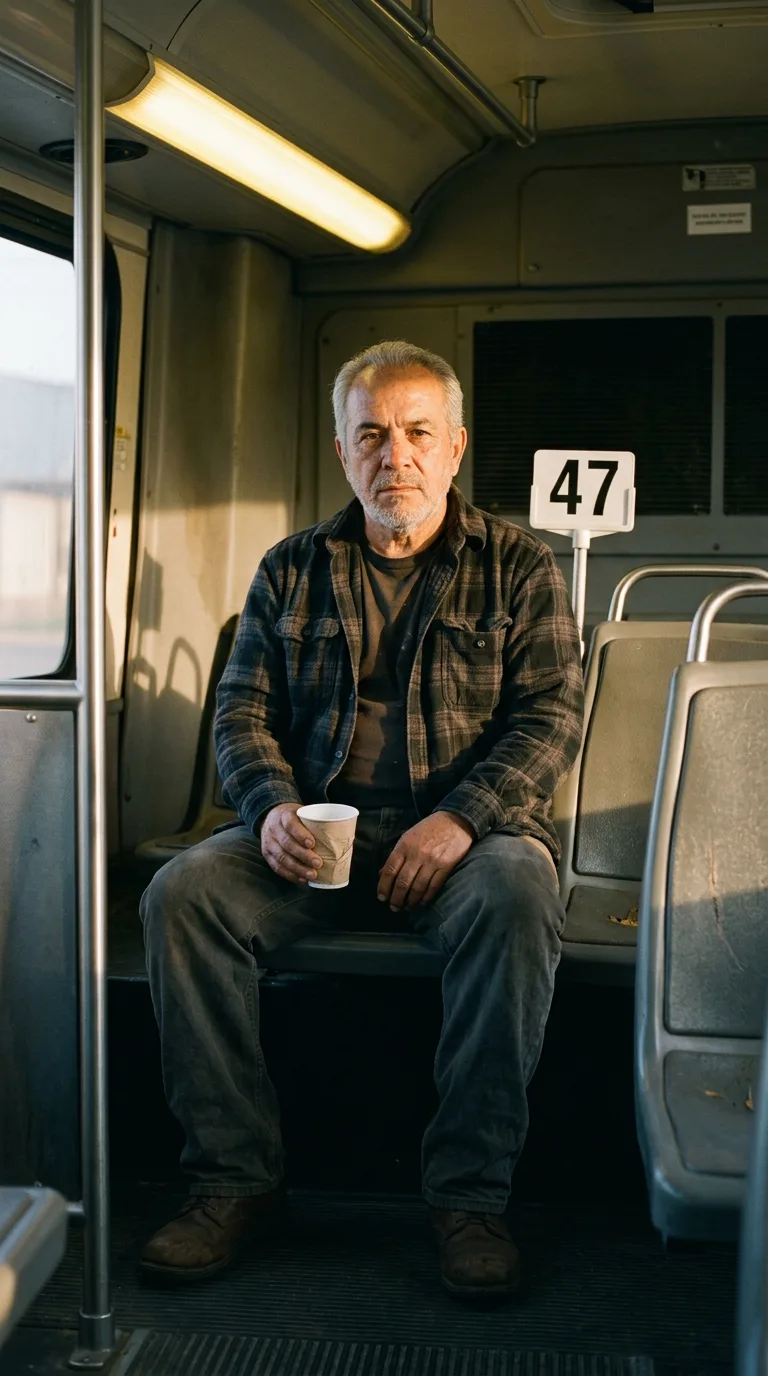
Rarest thing about him: In a waiting room — common, 1 in 77
Season 1seed 317282229 · engine v11
Character card
lineage 2NZHHJ
His body-swap story
@colin.hasbrook, wearing Douglas Renner, rolled the wheel on and woke up as Ernesto Villalba, spent under a minute in him, then spun the wheel and woke up as Marlon Whitfield
You are Douglas Renner for the eight hundred and fortieth time, and you have been him for less than a minute, and already the feeling is back — that itch behind the sternum, the one that has nothing to do with Douglas's decent tired body or his decent tired restaurant or the walk-in cooler he was about to go check the temps on. It is not boredom exactly. It is the opposite of boredom. It is the fact that a laptop is open on the little desk in the manager's office, and the site is already in the browser history because you never close the tab, not really, not in eight hundred and forty lives, and the wheel is right there doing nothing while you stand in a man doing everything right. Being good at being someone does not stop you wanting to not be him. You sit down anyway, in his chair, in his back that aches a little at the base, and you spin because a Thursday evening in El Paso is exactly the kind of hour when nothing is asked of you and everything is possible, and that has always been enough of a reason.
The room comes first — fluorescent, humming, a strip light too bright for the hour — and then the weight of him drops onto you all at once, heavier through the middle than Douglas, shorter, the chair under you a hard plastic scoop instead of an office Aeron. A paper cup sweats in a hand that is not shaped like the hand you had four seconds ago — thicker fingers, a burn scar's ghost of callus along the side of the thumb though the skin itself is unmarked, just worn smooth there like a coin. The number board across the room clicks from 47 to 48 and his knee — your knee now — stops bouncing on that exact click, like something in him had been counting. You set the cup down. You fold the hands. You do not look up when a voice near the desk says a name that is not Douglas Renner and is not anything yet, to you.
It comes in through the flannel first — worn soft at the elbows, a shirt he's owned long enough that the plaid has gone the color of a fence left out in weather — and it isn't a picture so much as a temperature: five-fifteen this morning, dark still, the shirt off a hook on the back of the bedroom door where it lives because he never bothers with a closet rod, and his hands — Ernesto's hands, you have his name now, it comes with the shirt somehow, threaded into the fabric like his mother's stitching would have been if she'd ever hemmed it — buttoning it one-handed while the coffee maker ticks in the kitchen. He does this every morning there's a shift, has done it for forty years minus the ones he spent at his father's shop before this one, minus nothing else, because there is nothing else. No wife's voice down the hall. No kid's cereal bowl in the sink. He noticed that lack once, sharply, around fifty, standing in this same kitchen on his birthday with a cake he'd bought himself from the H-E-B, and then he let it go the way you let go of a hot piece of stock once it's done taking your shape — not because it stopped burning but because you learned where to hold it.
The jeans against your legs bring the shop: forty years of it, the flash-bright stitch of a bead running clean under his hood, the particular pride of a corner joint nobody will ever see because it's going inside a stock trailer's frame and out into some rancher's life for the next thirty years, doing its job in the dark the way he has. Freckles prickle under the strip light on a nose that has been out in this sun his whole life, on cheeks that have, and you feel how little he thinks about them, how they are just his face, the thing his mother had too, God rest her, though he doesn't believe in the resting, hasn't believed in much of anything since he was maybe twenty-five and it simply wore off him like paint off a gate. He quit drinking somewhere in his forties without much ceremony — just noticed one year he'd stopped wanting to, the way the itch behind your sternum right now is a thing he has never once in his life felt, not for a drink, not for a woman he let go without much of a fight, not for anything, because wanting harder than what's in front of him was never a shape his life had room for.
The chair, the paper cup's warmth gone lukewarm, the boots on the linoleum — all of it says *waiting room*, and under that, distantly, carried in through the soles the way vibration comes up through a shop floor: he is not at the shop right now. It's evening where his body is, the end of a Thursday, and by every rhythm his forty years have worn into him he should be four hours into a night shift under the sodium lights with the sparks still ticking off the slab, not here, not clean, not with his knee bouncing under a number board. Something about a doctor. Something a supervisor said last week about the cough. He doesn't want to think about it and so, obligingly, the memory doesn't finish arriving — it just sits there at the edge of him like a shape in the dark of the shop after the lights go out, waiting for a hand to find the switch.
You look down at the hands folded in your lap — his hands, blunt and freckled and sure of themselves in a way Douglas's never were, a welder's hands set now uselessly still on top of a knee that has finally stopped moving. You turn the right one over slow, like checking it for damage that isn't there, and something that isn't quite Ernesto's own low, gravel voice and isn't quite yours either comes out of his mouth into the fluorescent quiet of the room.
"Forty-eight," you say, not to anyone, just to hear whose voice answers back.