Marlon Whitfield
Fictional. Generated by AI — not a real person, and no likeness of one is intended.
63, construction foreman in New York · rolled by @colin.hasbrook · card — no film
History
who has worn him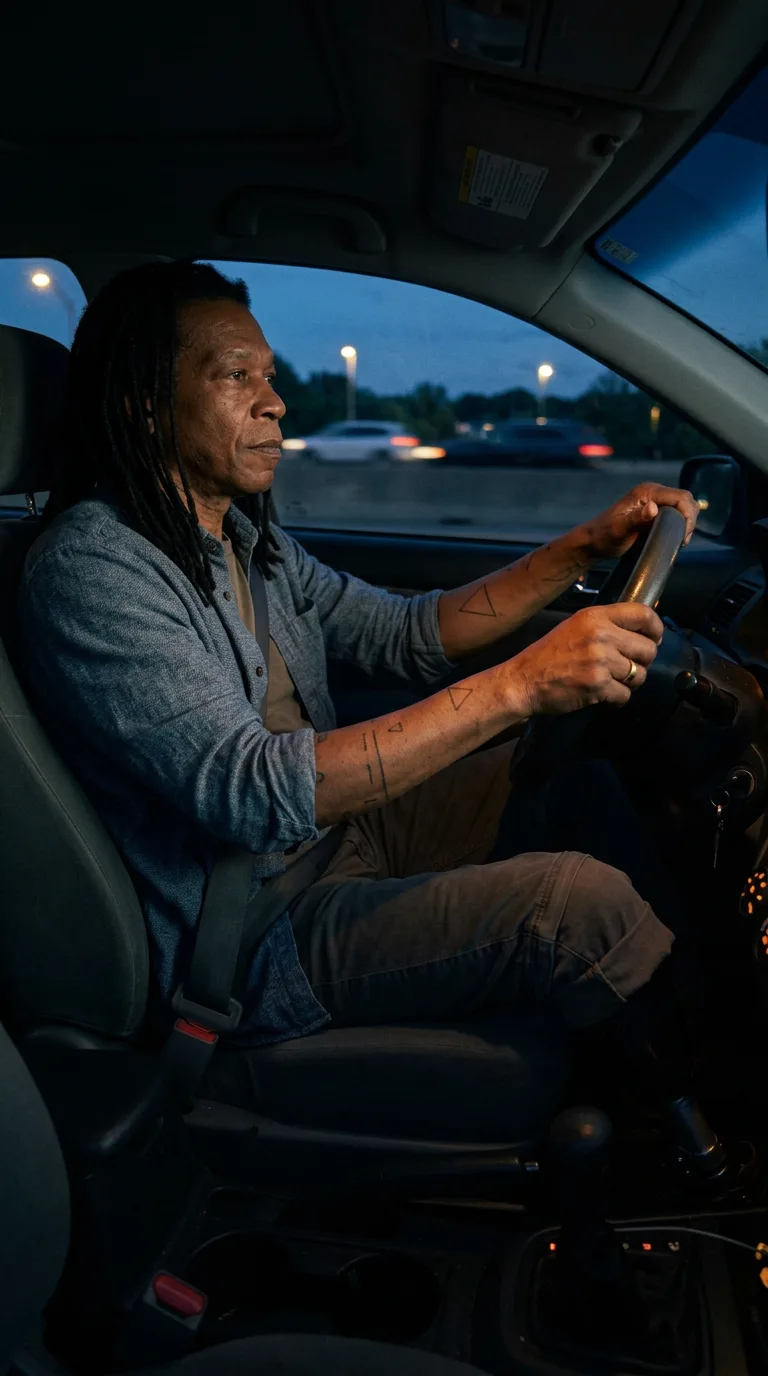
Rarest thing about him: Above-knee prosthetic leg — legendary, 1 in 701
Season 1seed 1425186768 · engine v11
Character card
lineage 2NZHHJ
His body-swap story
@colin.hasbrook, wearing Ernesto Villalba, rolled the wheel on and woke up as Marlon Whitfield, spent under a minute in him, then spun the wheel and woke up as Casey Vellum
You are standing in a garage in Rural Texas with a welding torch cooling in your hand, and Ernesto's knees ache the way they have ached all 841 times you have worn somebody's knees, because knees are always the first thing to tell you a body is not yours. Ernesto has been you for forty seconds. That is the whole of his life as far as you are concerned — forty seconds of gray light through a garage window, the smell of flux and scorched metal, a dad-bod tiredness settling into a chair like it has been waiting there specifically for him. You do not hate him. You do not feel anything about him at all, which is worse, or better, depending on the day. He is a coat you put on to get to the closet. The wanting is already back — it always comes back faster now, the gap between spins closing like a scar healing wrong — and so you set the torch down on the bench, still holding its shape in your palm a half second longer than you need to, and you go inside and you spin.
The wheel does not ask why. You would not have a good answer besides the true one: because standing still in any man for more than a minute lets you feel exactly how borrowed he is, and moving is the only thing that hides that from you.
The card turns.
You are behind the wheel of a car that is not the truck, on a road that is not a Texas road, and your hands are not at ten and two anymore — they have come off, dropped, resettled lower and wider, and the turn signal is already ticking for an exit that some other, erased part of this man knows is wrong. Dash light lies along your knuckles. Your knuckles. Longer fingers than Ernesto's, a plain gold band catching the glow, skin darker, older in a different way — sixty-three wearing itself differently than sixty-three had a mile back in a Texas garage. Your right leg from the knee down feels for a moment like nothing, like a held breath, before the memory of it arrives with the rest of him: not missing, just built from something other than bone, and it knows exactly where the brake is anyway.
The shirt against your back gives you the first flash before you've even finished drifting the foot back off the centerline: a chambray shirt, this one, going on this morning in a bedroom with the shade half up, his wife's voice from the hallway asking if he wants eggs, and him saying no, past the eggs, gotta get out ahead of the concrete truck. Denise. Her name comes with the smell of coffee that was already the memory's smell before you ever had it. Thirty-one years married. You did not live those years. You are given the last inch of them, the two of you in the kitchen doorway not quite touching, the ease of people who stopped needing to prove anything to each other around the second decade.
The wedding band is warm from his hand, not yours, and it opens on a whole afternoon: a beach in Montauk, younger, both legs, Denise laughing at something he said about the ring being too tight already even then, even before the joints swelled with fifty years of gripping tools. You did not choose to feel fond of her. It arrives anyway, uninvited, the way all of this does — his love, not borrowed feeling, just his, sitting in your chest like it always lived there and never noticed the tenant changed.
The steering wheel under your palms gives you a different year: a woman who is not Denise, younger version of you — him — laughing in a passenger seat that doesn't exist anymore, a girl named Carol from before the marriage, the one who still writes at Christmas, whose name still makes something in his ribs go soft and complicated in a way thirty-one good years hasn't smoothed all the way out. You do not chase it further. It recedes on its own, the way old things do.
Your hip against the seatbelt gives you the site: steel going up behind him this morning, a white hardhat, the vest heavy with pencils and a radio clipped wrong so it digs into a rib, the particular ache of standing eleven hours on a leg that ends above the knee and a leg that doesn't, the practiced economy of a man who stopped apologizing for his walk twenty years ago. His hands, when nobody is watching them, drum against whatever is nearest — rebar, a clipboard, now the wheel itself, a rhythm that isn't a song, just a body needing somewhere to put its extra electricity.
A photograph in the glovebox — you haven't opened it, but the shape of it against your knee gives you its contents anyway: his daughter, grown, at a graduation, his one child, and the pride in that memory is so plain and unadorned it almost embarrasses you, a stranger, to be standing this far inside it.
He does not drink anymore — hasn't in years, the memory of quitting arriving thin and almost bored, like an old argument he won so long ago he forgot there was ever a fight. Never smoked. Church on Sundays when the job allows it, a call-and-response cadence still living somewhere in his chest from childhood, ready to surface if you let it.
Three miles from a house you have never stood in, with a wife you have never met about to open a door for a man who no longer exists behind this face.
You look down. Your hands — his hands — are still low on the wheel, ring catching sodium light through the windshield now, city light, wrong light for the body you just left. You turn one hand over slowly, like checking it survived something.
"Wrong exit," you say out loud, to no one, in his voice, and you don't correct the signal yet.