Emilio Casares
Fictional. Generated by AI — not a real person, and no likeness of one is intended.
34, astronomer in Nashville · rolled by @colin.tarwater · card — no film
History
who has worn him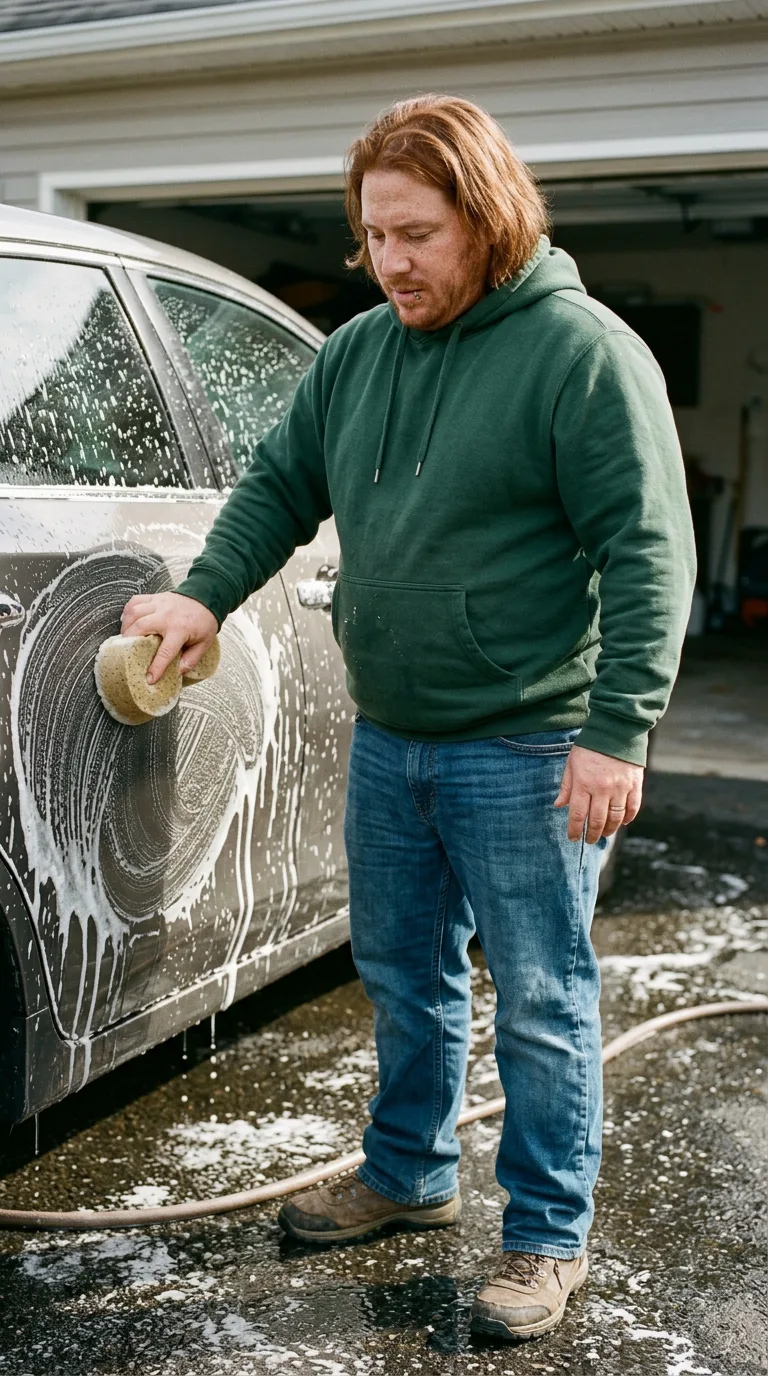
Rarest thing about him: Lip — rare, 1 in 212
Season 1seed 1405819494 · engine v11
Character card
lineage COEU7T
His body-swap story
@colin.tarwater, wearing Marcus Feeney, rolled the wheel on and woke up as Emilio Casares, spent under a minute in him, then spun the wheel and woke up as Marco Bautista
Marcus Feeney's kitchen smells like coffee gone cold an hour ago, and you are standing in it wearing his dad bod and his beauty mark and his eighty pounds of comfortable regret, and you are bored out of your skull.
It isn't his fault. He's fine. New Orleans is fine, the drafting table by the window is fine, the wife who isn't yours to keep or lose is fine. But you spun him yesterday too, and the day before, and there is a particular flatness that comes from being a mechanical engineer with good posture and nowhere urgent to be, and you have eighty other lives folded up behind your eyes like unused tickets, and the itch is not about Marcus at all. It's about the drawer at the bottom of everything you are now, the one that never closes. You paid for it once. You keep paying for it.
You open the laptop on his own kitchen counter, log into vessel.cards with his fingers on his own password, saved, and you spin.
The wheel doesn't care that it's the middle of a Tuesday, that Marcus has a meeting in forty minutes he will now simply never attend. It spins its two-second spin and it gives you a man mid-afternoon somewhere else, and the last thing you feel as Marcus Feeney is his hand still loosely on the mouse, and then you are not anywhere near a mouse.
You are outside. There's a hose running somewhere near your feet, a sound like rain that isn't rain. Your hand — smaller than the one you just had, thicker through the knuckles in a different way — is wrapped around a sponge, and the sponge is heavy with suds, and you are mid-stroke on a car door, silver, a wide soapy arc already laid down and drying pale at its edges. Your body is shorter, stockier, a solid unlovely weight low in the hips, and there is hair at your jaw that itches, and something small and metal sits cool against your lower lip. The stroke you were making — his stroke — finishes on its own, some obedient leftover momentum, thumb tucked in, wrist circling small and neat, like a man who has done this ten thousand times and thinks about something else while he does it. Behind you the swirl marks in the soap stop. You didn't tell your hand to stop. It just did.
For a second there's nothing but the porch light of another man's afternoon: hose-hiss, a lawnmower two yards over, church bells maybe, far off, though it's a Tuesday and that can't be right — until you remember, distantly, in a feeling that isn't yours yet but is arriving, that some men keep their Sunday even on a Tuesday, in their heads if nowhere else.
Then the sponge itself gives you something. Foam and rubber and the smell of the citrus soap, and underneath it, unbidden: a boy's hands, smaller, doing this same motion on his father's truck in a driveway outside of Nashville, twenty-some years back, his father saying *small circles, mijo, you'll cut through the wax if you go big* — and the pride of getting it right, and the sun on the back of his neck, and this is Emilio, his name arriving the way his own name always does for a man, without ceremony, just there, the way you know your own hand is your own hand.
The jeans against your legs open a year — worn soft at the thigh from the observatory chair, the one bolted near the eyepiece platform, and you feel the catwalk under boots that aren't these boots, cold iron grating, the dome slit open above him to a sky so dark and close it felt like it was resting its chin on the roof of his skull. He loved that job with something close to reverence, actual reverence, an Evangelical boy who grew up being told God made the stars and grew up to spend his nights charting exactly how far away they were and never once feeling the two things fight each other. His wife thinks it's romantic, when she thinks about it at all, which these days is less than either of them says out loud.
The wedding band on the left hand, plain gold, gives you the wedding itself in a flash too bright to hold — her dress, her mother crying, his mother not there, an old fight nobody ever repaired — and gives you, quieter, more often, the specific weight of coming home at four in the morning smelling of cold metal and dark and finding her awake anyway, waiting up out of something that used to be worry and is now closer to habit. And under that, further down, an old ex-girlfriend's laugh in a bar that doesn't exist anymore, a version of himself at twenty-six who thought he'd end up somewhere else entirely, with someone else entirely, and the small permanent ache of a life that went fine instead of going the way he pictured.
The lip ring gives you nothing but the memory of getting it done at nineteen against his mother's wishes and keeping it thirty-four years past the point where it meant anything at all, just because taking it out felt like losing an argument he'd already won.
The hoodie against your back — green, soft, going at the elbows — gives you this morning precisely: standing in the bedroom half-dressed, the wife already gone to work, pulling it over his head one arm at a time, the smell of the dryer sheet she buys, the little grunt he makes lifting his arms because his shoulders are heavy now in a way they weren't ten years ago, the jeans next, one foot and then the other, sock, boot, boot, the laces double-knotted out of habit from a childhood spent on ladders. A body used to being strong in a dumb, patient way — able to carry a sky's worth of paperwork up four flights, able to stand a whole night shift on his feet, unable anymore to bend all the way to tie a shoe without a small private complaint from his lower back that he never mentions to anyone, least of all her. Freckles hot under a sun he can feel now sliding warm across his forearms. Two days of stubble prickling under your — his — own palm when you drag it, without meaning to, across your jaw.
You are heavy in this body the way you are heavy in truth, all of it, the drink he has most nights and never talks about with the same seriousness he talks about God, the marriage that is fine, actually fine, unlike Marcus's fine, this one has weather in it, real weather — and none of it is yours, and all of it is, now, sliding into place like a key finally cut to fit.
You look down. The sponge. The soap. This hand, thick-fingered, freckled, a wedding ring dulled with car wax, not the hand you had this morning in Marcus Feeney's kitchen, not any hand you've worn before out of eighty, and you turn it over once in the light like you're checking it's real.
"Que locura," you say, out loud, to no one, in his voice, and you don't know yet if that's him talking or you borrowing his tongue to say it, and you lift your eyes off your own palm toward the house, toward wherever the hose keeps running behind you, and you hold there, not deciding anything, because you don't have to decide anything yet.