Efraín Molla
Fictional. Generated by AI — not a real person, and no likeness of one is intended.
47, nurse in New York · rolled by @ernesto.villaroel · card — no film
History
who has worn him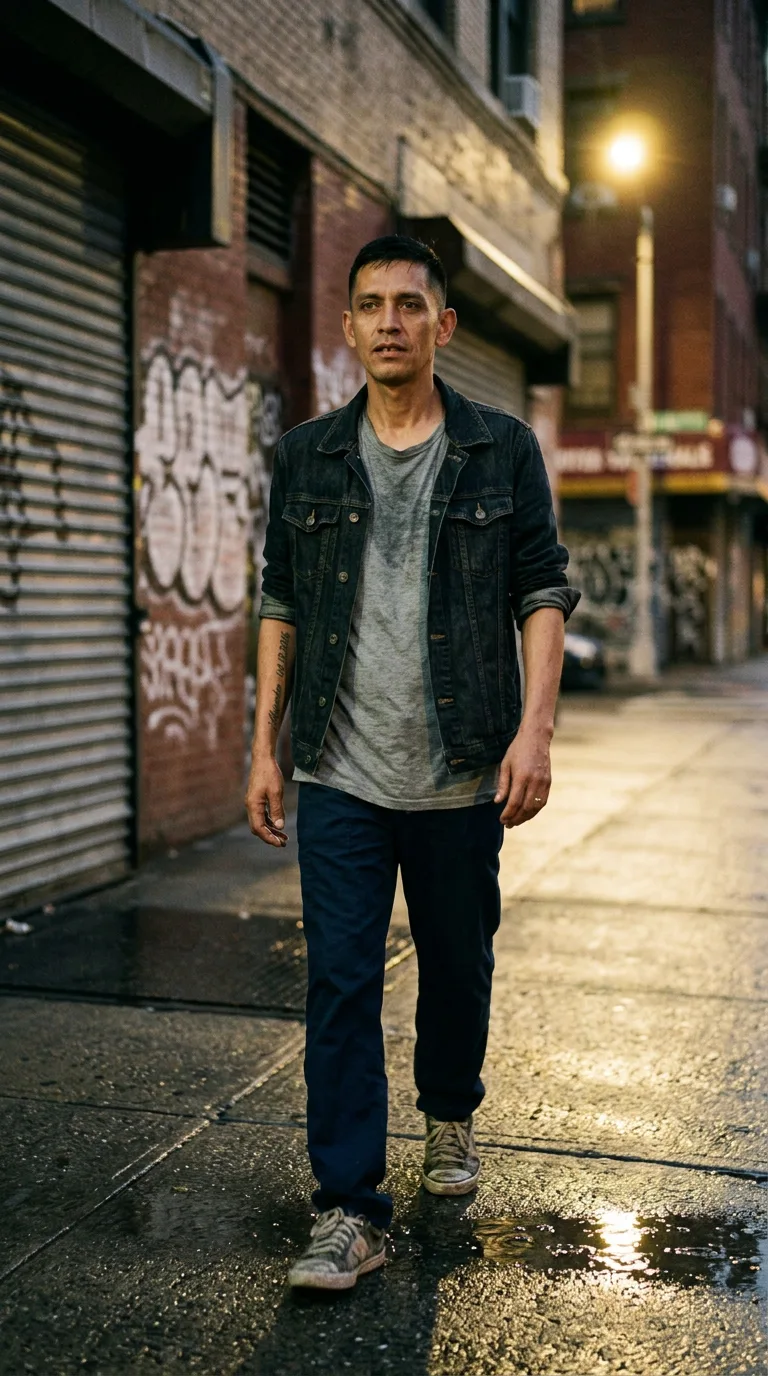
Rarest thing about him: Skinny — rare, 1 in 27
Season 0seed 624850704 · engine v10
Character card
lineage JWSE6J
His body-swap story
@ernesto.villaroel, wearing Marlon Stackhouse, rolled the wheel on and woke up as Efraín Molla, spent 4 minutes in him, then spun the wheel and woke up as Warren Iseda
You are Marlon Stackhouse, standing in the dark of his kitchen at some ungodly hour, and the ice maker just dropped a load into the bin with a sound like a small landslide, and that is the thing that decides it. Two minutes in this body and already you know its inventory: a bad knee from years of pushing pallets, a phone with fourteen unread texts from a sister who wants money, a refrigerator that hums too loud. It is fine. It is a body that works. But it is not new anymore, hasn't been new since the second you landed in it, and the wanting that sent you to the wheel the first time is already scratching at the inside of your skull, telling you there is no reason on God's earth to stand here in a stranger's kitchen listening to ice fall when you could be anyone else, anywhere, right now. You open the laptop on the counter. The site loads the way it always loads, patient, gray, the wheel already spinning lazily in place like it knew you'd be back. You do not think about Marlon again. You spin.
The street tips and rights itself and you are not falling anymore. Your hand is flat against the cold wet flank of a parked Corolla, and your body — his body, small, light, nothing to it — has already caught its own balance without you asking it to. A shoe scuffs once against the curb, out of habit, and then does not scuff again. You feel how short the strides are, how the knees work quick and close together, how the leather jacket hangs open over a chest that rises fast, this man's lungs already a little tight, a little whistly, at the bottom of every breath. Two in the morning. Sodium light on wet asphalt. You turn left at the corner, and somewhere in the wiring of him a voice that is not yours, that will never speak again, does not even notice.
The jacket is the first thing that talks to you. Denim gone soft at the elbows, and when your — his — fingers curl at the cuffs you get a flash: a closet door, gray morning light, a woman's voice from the next room saying *you're not wearing that to work, it smells like the bar,* and him laughing, low, saying *I'm not going to work in it, I'm going out in it after,* and her not knowing yet that after would run this long, this late. Efraín. The name arrives with the memory the way names do, already known, already worn. Efraín Molla, forty-seven, and the shirt under the jacket — thin gray cotton — gives you the rest of the morning: pulling scrubs on afterward in the locker room at the hospital, navy cotton going over his head, the ID badge clipping to the V of the collar with a little plastic click he's done nine thousand times, the lanyard settling against a chest that never got any bigger no matter how many years he worked twelves. Small hands. Sure hands. Hands that find a vein in the dark without looking, that know the weight of a med cart, that write in a chart under bad light without the letters shaking even after sixteen hours on shift and two vodka sodas after.
The tattoo on the inner forearm burns cold where the jacket sleeve brushes it, and that one comes in whole and heavy: *Alejandro — 04.12.2016.* Not the wife. The first one. A boy born too early, in a NICU Efraín didn't work in but walked past every day for a year afterward, because some penance has to be paid on foot. The date isn't a birth so much as a goodbye, four days of it, his wife Marisol's hand crushing his in a chair too small for either of them. There are three more kids now, older, loud, alive, asleep in a Brooklyn apartment right now with the TV left on for the youngest — but the tattoo isn't for them. It's for the one who didn't get years. You feel Efraín's private arithmetic: how he still tells himself Alejandro would be eight now, how he does the subtraction every single year like a rosary.
The wedding band is warmer, ordinary, worn thin at the underside from twenty years of scrub gloves going on and off. Marisol, church basement, her sister crying louder than her mother. Good years, mostly. Some very bad shifts he came home from and drank instead of talked, and one year — the ex-girlfriend's face surfaces here, uninvited, sharp — one year before Marisol, a woman named Celia who still texts him sometimes, still asks about his mother's health, still lives four blocks from the hospital so that some nights, drunk, walking the long way home like tonight, his feet just go past her building on principle, on something less than principle, and he stands across the street for one cigarette and then keeps walking. Nothing happens. It has never once happened. But the wanting to be twenty minutes from where he actually needs to be — the long way, the wrong turn, the corner that is not his corner — that's an old habit with a name in it, and tonight it is the habit doing the walking, not him, and neither of you fully in charge of it.
The asthma sits behind all of it like a held note — his chest a little tight even now, even calm, the pack a day he won't quit sitting in there like sediment. His feet, when you feel down into them, are small and quick and know this pavement, know exactly how many blocks to the pharmacy that's open all night, know the gap in the curb by the bodega that's been broken since before either of you were anybody.
You lift the hand with the ring on it. Turn it over under the streetlight, gap-toothed breath fogging faint in the cold, watching the tattoo catch the sodium glow like it's lit from underneath.
"Who left the ice on?" you say, to nobody, in a voice with an accent that isn't yours yet and already is, and you don't know if you mean Marlon's freezer three thousand miles and one lifetime away, or something else entirely, and you start walking again, the wrong way, toward a woman's building you have never seen and already, somehow, miss.