Warren Iseda
Fictional. Generated by AI — not a real person, and no likeness of one is intended.
52, bartender in San Francisco · rolled by @ernesto.villaroel · card — no film
History
who has worn him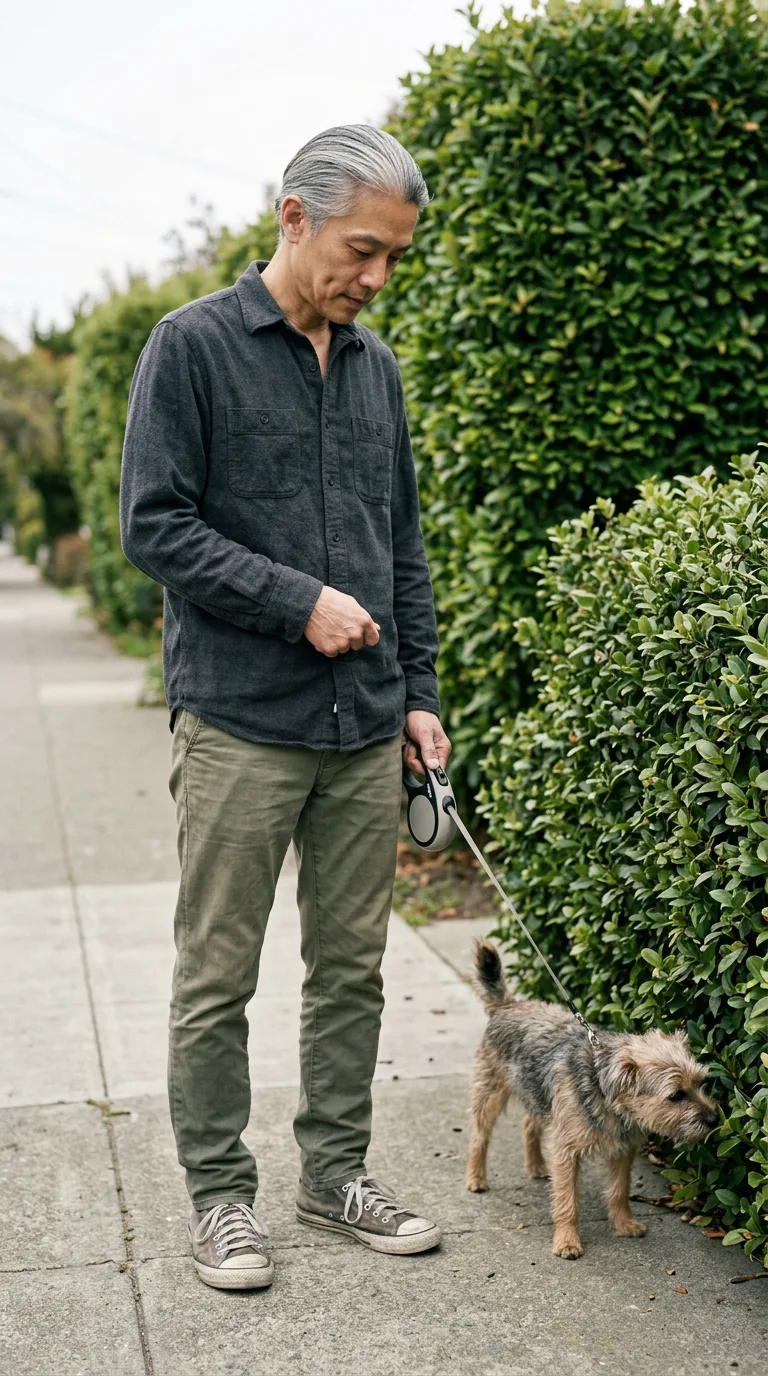
Rarest thing about him: Skinny — rare, 1 in 27
Season 0seed 591950080 · engine v10
Character card
lineage JWSE6J
His body-swap story
@ernesto.villaroel, wearing Efraín Molla, rolled the wheel on and woke up as Warren Iseda
You have been Efraín four minutes and already the hands are wrong. They are small, quick, chewed at the nail beds worse than yours ever were, and they smell like a hospital corridor at 3 a.m. — antiseptic, coffee going cold on a nurse's station counter. You are sitting on the edge of somebody's made bed in Queens, in scrubs that are not yours, and the body under them is short and green-eyed and gapped at the front teeth, and it is not that it's bad, it's that it is *his*, still, underneath you, like wearing a coat that keeps remembering whose shoulders it was cut for. Efraín had a shift he was dreading in six hours. You can feel the dread sitting in his chest like a swallowed stone, and it is not yours to carry, and you did not spin the wheel to inherit somebody's Tuesday. You open the site on a phone that is not yours either. The wheel is already spinning before you've finished deciding, which is its own kind of answer.
The leash goes slack in your hand and then it isn't your hand.
It is wider through the palm, older, the skin at the knuckles gone crepey and dry the way skin does past fifty, and it is winding a retractable leash — twice, three clicks — while a small dog with ears back looks up at you like it already knows something changed. Cold light. A hedge. San Francisco air, wet and gray even at this hour, and it is this hour, not the hour you left, though your body doesn't know that yet, only that it's dark and everyone on this street is asleep behind curtained bay windows and you are standing outside in someone else's Saturday.
The shirt is what opens first — gray flannel, worn thin at the elbows, and just from the weight of it on your shoulders you get a flash of a closet, folding doors that stick, a hand — his hand, before it was your hand — pulling this exact shirt off a hanger in the dark so as not to wake her. *Her* arrives with the shirt: a woman still asleep in that bed behind the bay window, one arm thrown over where he'd been, and the specific tenderness of easing out from under a blanket at an hour that isn't morning so much as the far end of night, because the dog was pacing by the door and somebody has to. There are kids somewhere in that house too — the memory doesn't hand you their faces so much as their volume, years of it, cartoons and a dishwasher running and a girl's voice saying *Dad* in three different octaves across three different ages — and underneath that, quieter, an ex-girlfriend's name attached to no grievance at all, just a settled, sanded-down fondness, the kind that outlives what caused it.
The leash handle gives you the bar. Not this dog-walk, the other thing his hands do all day — a rag over one shoulder, bottles inverted into a speed rail, the particular economy of movement a man gets after thirty years of not spilling things. You feel the calluses along his palm that aren't from the leash at all, they're from citrus, from ice, from wringing out bar towels a thousand nights running, and none of them are asking to be paid attention to, they're just there, doing their job the way his hands have always done their job without him watching them do it.
The sneakers on his feet remember a whole life of standing — the low ache that lives permanently in the arches now, fifty-two years old and skinny enough that nothing pads the bone, a tiredness that isn't tonight's, that's decades deep and mostly ignored. He never drinks what he pours. He thinks of it, sometimes, the way you'd think of a language you understand but don't speak — close enough to smell, never enough to want.
The dog paces, hits the end of the leash, and something animal in him — muscle memory, not thought — corrects the lean of his own body without being told. His mouth is already doing the thing it does at rest, the dimples pulling in at the corners like the face is fond of something it hasn't decided yet to be fond of, some private low-grade contentment that outlasts whatever mood is layered on top of it. You feel it happen on your own borrowed face and it is strange, wearing an expression that isn't a decision.
You look down. The hand around the leash is not the hand you had four minutes and one lifetime ago — this one is bigger, weathered, the nails bitten to the quick without him ever once deciding to bite them, and you turn it over slowly under the streetlight like it might tell you something further, and it doesn't, it's just a hand, a stranger's hand that is now the only hand you have.
The dog whines, low, at the hedge.
You lift your eyes off your palm, into the dark hedge-lined street, and say, to no one, in a voice you didn't choose and don't yet fully trust: "Okay. Okay — let's go home."