Douglas Nakada
Fictional. Generated by AI — not a real person, and no likeness of one is intended.
61, pharmacist in Houston · rolled by @colton.weyburn · card — no film
History
who has worn him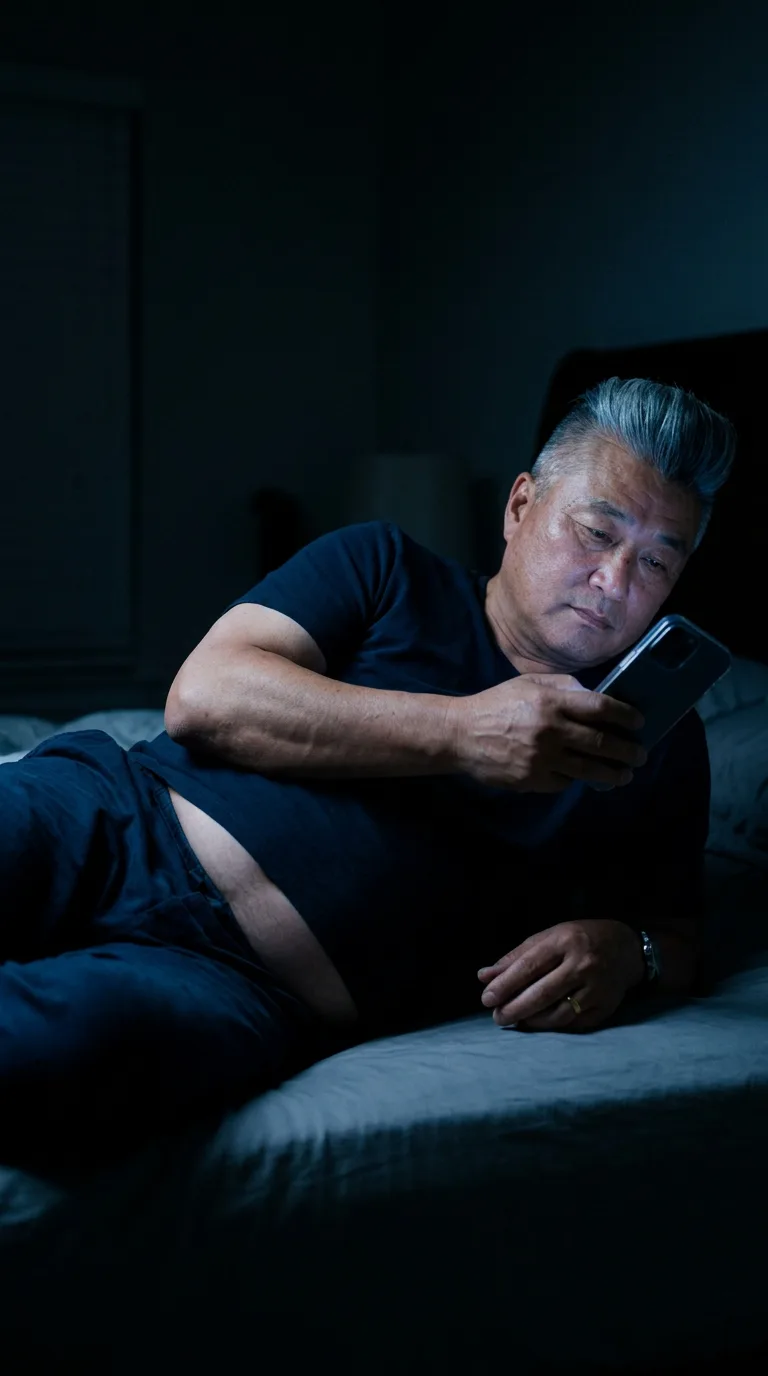
Rarest thing about him: 6'1" — rare, 1 in 54
Season 0seed 96271482 · engine v10
Character card
lineage GSHCK1
His body-swap story
@colton.weyburn, wearing Dale Merchant, rolled the wheel on and woke up as Douglas Nakada, spent 1 minute in him, then spun the wheel and woke up as Marcus Delacroix-Reyes
Dale Merchant's hands smell like chlorine even when they're clean, and they have smelled that way for four minutes, which is how long you've been him this time — a water treatment operator with a gap in his front teeth and a double-wide he keeps too cold, standing in his own kitchen at eleven at night on a Tuesday, holding a phone that isn't yours either. You spun for him three lives ago and told yourself it would be interesting, and it was, for about the length of one shift. He works nights. He is always tired. The refrigerator hums the same note it hummed the last time you were somebody else standing in front of it. You did not come back to the wheel because Dale did something to you. You came back because he is exactly what the site's little wheel described him as, and no more, and you have started to be able to hear the seams in a man, the place where the description runs out. You want to be surprised by the inside of somebody again. You open the app. The wheel spins the way it always does, colors dragging into a blur, and it lands, and there is no ceremony to it, no countdown — just Dale's kitchen letting go of you the way a hand lets go of a rope.
You come up into a thumb already moving.
It is faster than the man's own scroll had been a half-second before, and steadier, catching the rhythm mid-stride the way you catch a bicycle someone else was pedaling. Blue light lies along a cheek that is not Dale's cheek, wider, older, softer at the jaw, and a nose that meets the bridge of the phone-glow at a small crooked angle you didn't do and didn't choose. You're lying on your side. There's a gut resting against the waistband of dark sweatpants, warm, breathing on its own without being told to. The room is dark and air-conditioned into a kind of hush that has nothing to do with Ohio, and somewhere outside a compressor unit kicks on, cicada-loud, and you understand before you understand anything else that this is Texas, and it is later here, or earlier, depending which clock you trust, and this man was already in bed at an hour that means nothing to you yet.
The shirt is what opens first, because it's against your back, worn cotton gone soft, and it gives you a hand — his hand — buttoning nothing, because it's a T-shirt, but reaching for it off the closet door this morning, off a hanger among six identical navy shirts, all bought the same day at the same store because his wife told him once that navy did something for him and he never questioned it again. The memory comes in warm and ordinary: a bathroom mirror, fluorescent, his own face in it older than he expects every single day, the surprise of it lasting exactly as long as it takes to look away. He'd stood in that light and thought, not for the first time, that the hair had won some private argument with the rest of him — sixty-one and still worth the fifteen minutes with the comb, still worth setting it up and back the way he liked it in his twenties, because some vanities outlive their reasons.
The waistband gives you a hospital gown from three years back, that specific papery whisper, an infusion chair, his wife's hand on his forearm not saying anything because there was nothing to say that helped. That memory doesn't linger — it surfaces and submerges, the way the good ones and the bad ones both do when there's this little time — but it leaves something behind anyway, a residue in the muscle: relief, low-grade and permanent, worn the way people wear a ring.
The ring. Left hand, plain gold band, and touching the phone with the same hand brings up a wedding thirty-some years gone, a woman in a dress the color of the inside of a shell, his mother crying for reasons that were only partly about him. Long marriage. Not without weather in it — a name comes with the memory, unbidden, a woman from before the wedding, a softness he still keeps in a drawer of himself he doesn't open around his wife, an old want gone gentle with age, no threat to anything, just proof he used to be someone who wanted things loudly. And a child, one, grown now, a phone call he keeps meaning to return, guilt so familiar it barely registers as guilt anymore, just weather too.
Your jaw finds it on its own — a slow working motion, back molars, gum he doesn't remember unwrapping, a habit older than the marriage. Never smoked. Barely drinks. Church on Sundays, and Wednesday too when the pharmacy schedule allows it, a God he talks to mostly in the car. His hands, when you feel for what they know without being told, know pill counts, the particular two-finger flick that spins a bottle cap loose, the weight of a stapled white bag handed across a counter to somebody's worried daughter. A whole life built out of exactness, dosages, the small mercy of getting a decimal point right for a stranger every day for thirty years.
Under all of it, the body: soft through the middle in a way that used to embarrass him and now mostly doesn't, shoulders still wide from some younger version of himself, a low ache behind the sternum that isn't the cancer, the cancer is quiet now, just an old ache that is only tiredness, only Tuesday, only eleven at night with the day's whole weight finally allowed to land.
You look at the hand still holding the phone. Not Dale's hand — thicker through the knuckle, a wedding band catching the screen's light, a small crooked scar of a nose above it in the black mirror of the dark screen when you finally let the thumb stop.
You turn the hand over once, like checking it for something.
"Wrong side of the bed," you say, to no one, in his voice, and you don't mean it about tonight.