Douglas Merchant
Fictional. Generated by AI — not a real person, and no likeness of one is intended.
54, delivery driver in Atlanta · rolled by @colin.hasbrook · card — no film
History
who has worn him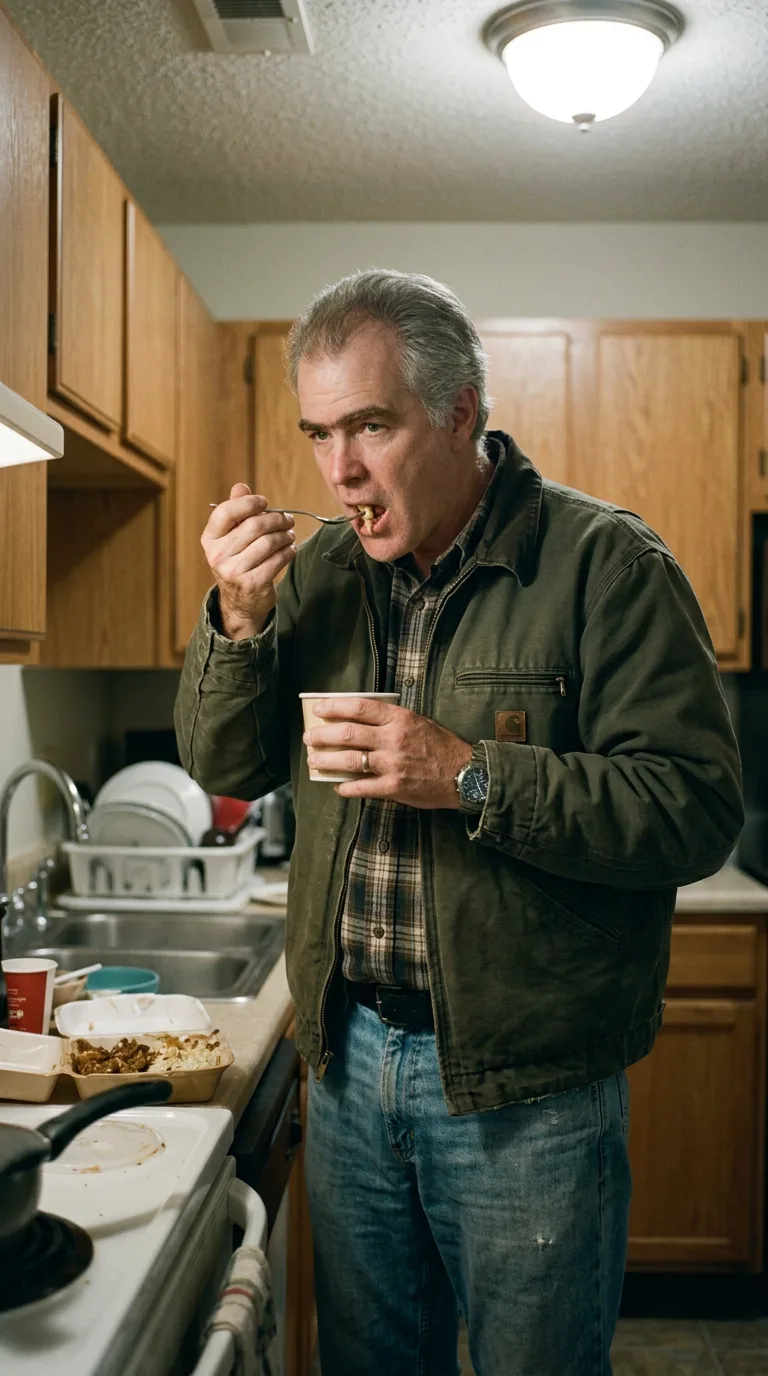
Rarest thing about him: Another world religion — legendary, 1 in 397
Season 0seed 501518536 · engine v10
Character card
lineage 2NZHHJ
His body-swap story
@colin.hasbrook, wearing Charles Renfroe, rolled the wheel on and woke up as Douglas Merchant, spent under a minute in him, then spun the wheel and woke up as David Ouyang
You are Charles Renfroe for less than a minute, standing bald and freckled in a retired man's living room in Las Vegas, and it is already not enough. You spun into him last time thinking a big Black body with money in the bank and nowhere to be would finally feel like winning, and instead it feels like sitting in a waiting room. His knees ache pleasantly. His hands, when you look down at them, are somebody else's hands doing nothing. Fifty-four seconds ago you were a small heavy man named Kevin Cho, a teacher in Queens, and before that — before all four hundred and three other men — you were something you don't examine too closely anymore, a person with a grievance that outlived the reason for it. Kevin Cho beat you at something once, a lifetime ago when the stakes were a school and a girl and a title that didn't matter, and you have never once let yourself finish being angry about it. You wore him. You know now that his knuckles crack the same way twice, that he keeps a photo of a rival's face in a drawer he never opens — no. That was the other way around. You are the one with the drawer. Somewhere in Kevin Cho's house, in a life you left less than a minute ago, there is a folder with a man's name in it, and the man's name is Merchant, and it has been there since before either of them owned a house at all. You are standing in Charles Renfroe's slippers thinking about him, and that is answer enough. You go to the site. You spin.
The fork is between the counter and his mouth and then it is simply on the counter, set down by a hand that is not deciding anything, and you are five foot ten and fifty-four and the kitchen light is the flat yellow of a bulb that should have been replaced a year ago. The coat is heavy on your shoulders in a warm room. You shrug it off without meaning to — his body doing what it does at the end of a night before you've caught up to wanting it — and you sit, and the chair takes your weight the way a chair takes weight it has taken ten thousand times before, familiar in the base of the spine, in two disks that complain about it in a language you don't speak yet.
The fork keeps going. Even mouthfuls, into a body that does not know you're new. That's the shirt talking — polyester-cotton, sweated through once today already and changed out of, this is the going-home shirt, softer, plaid, and it is telling you about closets. A walk-in in a house on a cul-dc-sac, the kind with a ceiling fan that ticks. Douglas Merchant's hands know this shirt's buttons in the dark. This morning — his morning, hours behind the one you left — he stood in front of that closet in the uniform shirt first, brown, breast pocket, and did the buttons up from the bottom because his eyes are going and he trusts his fingers more than his eyes now; the top button always fights him, the collar a half-size small since he stopped being able to pretend the thirty-two-inch waist was coming back. The unibrow in the mirror. He has stopped noticing it the way you notice a doorframe you've walked through eleven thousand times. His wife noticed it thirty-one years ago and told him she liked that he didn't primp, and he took that as a compliment and never plucked it and here they still are.
The belt — leather, worn shiny where the scanner holster rides — brings the van. Eleven hours of it today, a heat that sits on Atlanta in August like a hand on the back of your neck, packages stacked wrong by some warehouse kid, a woman on Chastain who tips in cash every single time and one on Defoors who screamed at him over a delayed mattress like he'd built the highway himself. His feet know the van's step-down, the specific give of the floor mat gone soft in the middle. His back knows which boxes to lift with the knees and which ones he lifts wrong anyway because he's tired by three. There's a stitch low on his right side today, dull, familiar, the stone working its way through him the way it has three times before, and he has learned not to mention it to Marisol until it's bad enough to mention.
Marisol. The wedding band on the hand holding the fork brings her whole, not partial — nineteen years, a wedding in her cousin's backyard in June, her father's blessing said over both of them in words Douglas learned by phonetics and never fully by meaning and said anyway because it mattered to her that he tried. Two kids upstairs somewhere in this house, teenagers now, doors closed, music low. He does not go up when he gets home this late. He eats standing at the counter in his coat like a man who hasn't decided yet whether he's allowed to stop being at work, and tonight — like most nights — nobody comes down, and some part of him that isn't quite loneliness and isn't quite peace just eats.
And under it, plain and physical and yours now: fifty-four years of a body that gets up anyway, a stomach that takes food fast because food has always been a thing squeezed between other things, a mouth already starting, without him ordering it, to worry a thumbnail down before the fork's even back up. Kidney stones sit low and dull and unbothered tonight. The unibrow sits heavy over eyes tired in a completely ordinary way. None of it hurts enough to be a story. It's just a Monday, ending.
You look at the hand. It's still got the fork in it, container half gone, ring catching the bad kitchen light. You turn it once, like it might explain the forty years, like Douglas Merchant standing at his own counter had anything at all to do with Kevin Cho, which — you understand now, holding his hand up to the dark window — he didn't. He never did. That was never the point of coming here.
"You don't even know who I am," you say to the window, to no one, in his voice, and it isn't clear anymore, even to you, which one of you it's about.