Douglas Kestenberg
Fictional. Generated by AI — not a real person, and no likeness of one is intended.
61, field archaeologist in Seattle · rolled by @colin.hasbrook · card — no film
History
who has worn him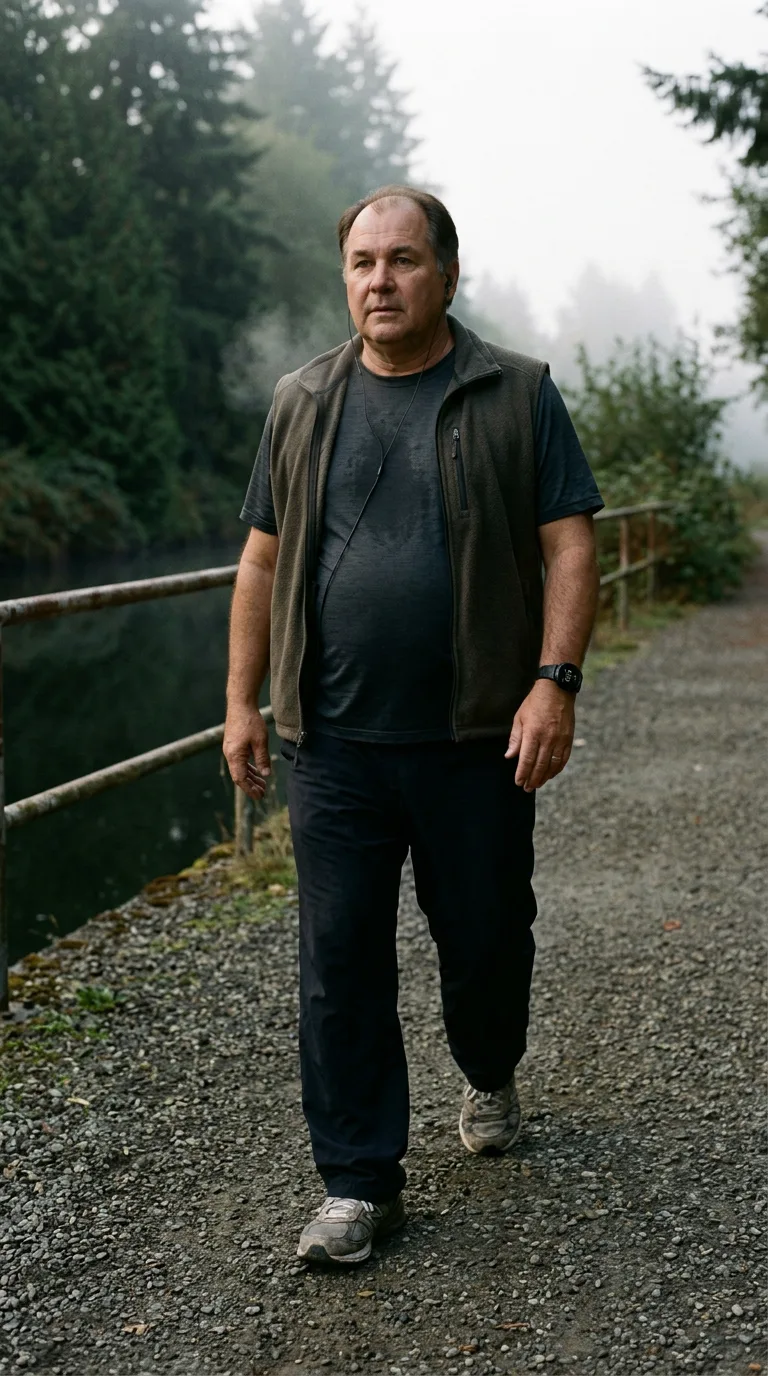
Rarest thing about him: Mixed — rare, 1 in 26
Season 0seed 1509930471 · engine v10
Character card
lineage 2NZHHJ
His body-swap story
@colin.hasbrook, wearing Colm Fenerty, rolled the wheel on and woke up as Douglas Kestenberg, spent under a minute in him, then spun the wheel and woke up as Rafael Cintrón
Colm Fenerty's apartment smells like chlorinated water and the inside of a uniform that hasn't been washed enough, and you have been him for less than a minute, standing at his kitchen counter at three in the morning with his phone in his hand and his life laid out on the screen like a puddle you already know the depth of. Thirty-four. Blue eyes that don't blink enough. A shift log for a plant nobody thinks about until it fails. You didn't even get to feel his day yet, not really — just the tail end of it arriving in scraps, a locker combination, the smell of chlorine gas alarms that never went off, a woman's name he hadn't called back — and already it's not enough. It was never going to be enough. Five hundred and thirty-one men and each one goes thin fast, a coat you wore to the door and shrugged off before you even got outside. You open the laptop instead of the fridge. The site loads the way it always loads, patient, gray, a wheel with no seam in it. You do not think of it as leaving him. You think of it as continuing.
The trees are the first thing — not trees exactly, the *idea* of them, gray-green and dripping at the edges of your vision, and then the vision is not yours anymore, it is set into a face that has been rained on for forty minutes and does not know it. Your foot — his foot — catches on a lip of gravel and for two steps the whole body goes loose and unclaimed, arms out of rhythm, head steady like it's the one thing that knows what it's doing. Then it rights itself on the other foot. The watch on the wrist buzzes against skin that has gone slightly numb from cold, marking a split that was run by no one, by both of you, by neither. Breath comes out white and enormous in front of a face you have not yet seen. Earbuds feed a podcast voice mid-sentence into ears that are, for the first time in your five hundred and thirty-two lives, sixty-one years old.
The weight of him arrives before the memory of him does — a gut riding low and soft over the waistband, thighs that ache in the specific, familiar way of a man who runs anyway, out of stubbornness more than love of it, and under all of it a low grinding complaint from the lower back that has apparently been going on for years and has simply been agreed to, like a difficult tenant. Your jaw — his jaw — is clenched, has probably been clenched since before you arrived, a habit so old it doesn't register as effort. The vest is zipped to the throat. Under it a shirt gone see-through with sweat, and touching it, wearing it, is like putting your hand on a doorknob that's been sanded smooth by forty years of the same hand: this morning comes back first, small and complete — an alarm at an hour the neighbors would call obscene, the dark kitchen, coffee he didn't wait for, the vest zipper catching once on the fabric of the shirt beneath and him swearing quietly so as not to wake her. Diane. The name comes with the shirt's collar, damp now against a neck that used to be someone's, still is someone's, wife number two, eleven years married, and beside her name comes another — Carol — arriving colder, the ex, decades folded into it, a house sold, a custody schedule long since expired into just Christmases now. Three kids somewhere between those two women, a fourth maybe, the memory won't settle exactly, voices layered over each other from a hundred phone calls, birthdays, one bad summer nobody discusses.
The watch face keeps time with something in you that isn't panic exactly — his heart, going, honest, unbothered, doing what it has done every dawn for years on this same gravel beside this same flat gray canal. His hands, hanging at his sides mid-stride, know things without being asked: the particular grip on a mattock handle, the drag of a trowel through soil that has to come away in sheets not clumps, the exact pressure that separates a rock from a rock that used to be a wall. Kneeling for hours in a trench under a sun that has nothing to do with this rain — that memory comes in through the ache in his knees, which have been folded wrong under him for thirty years of fieldwork, and complain now on the flat ground exactly as they complained in a dig outside Yakima the summer his second marriage was falling apart and he didn't notice because the soil was giving up a hearth feature nobody expected. He loved that. He still loves that, somewhere underneath the numbness of four in the morning. Nobody's ever once asked him what he found there. He never told them because there was no way to make it sound like anything but dirt.
The hairline is receding at his temples under a wet ballcap he isn't wearing right now, dyed dark on top to hide what's coming in anyway, a vanity he'd deny to your face if you were both real enough to argue about it. The gray at the roots is winning slowly. His back throbs low and dull, a fixture, not an event. He is, underneath all of it, a tired ordinary man running because his doctor told him to and because it is quiet at this hour and because some part of him likes being outside before the world has decided anything about the day.
You look at your — his — hand. It's mid-swing, callused across two fingers in a way that has nothing to do with running, wedding band catching gray predawn light, and you turn it slightly, studying the shape of it like it might tell you something the memories didn't already give away for free.
"Not bad," you say, out loud, to no one, your breath fogging the space in front of a face that has just started, very faintly, to smile at that — and the run goes on, mile four bleeding into mile five, and you do not yet know how far you'll let it go.