Colm Fenerty
Fictional. Generated by AI — not a real person, and no likeness of one is intended.
34, water treatment operator in New York · rolled by @colin.hasbrook · card — no film
History
who has worn him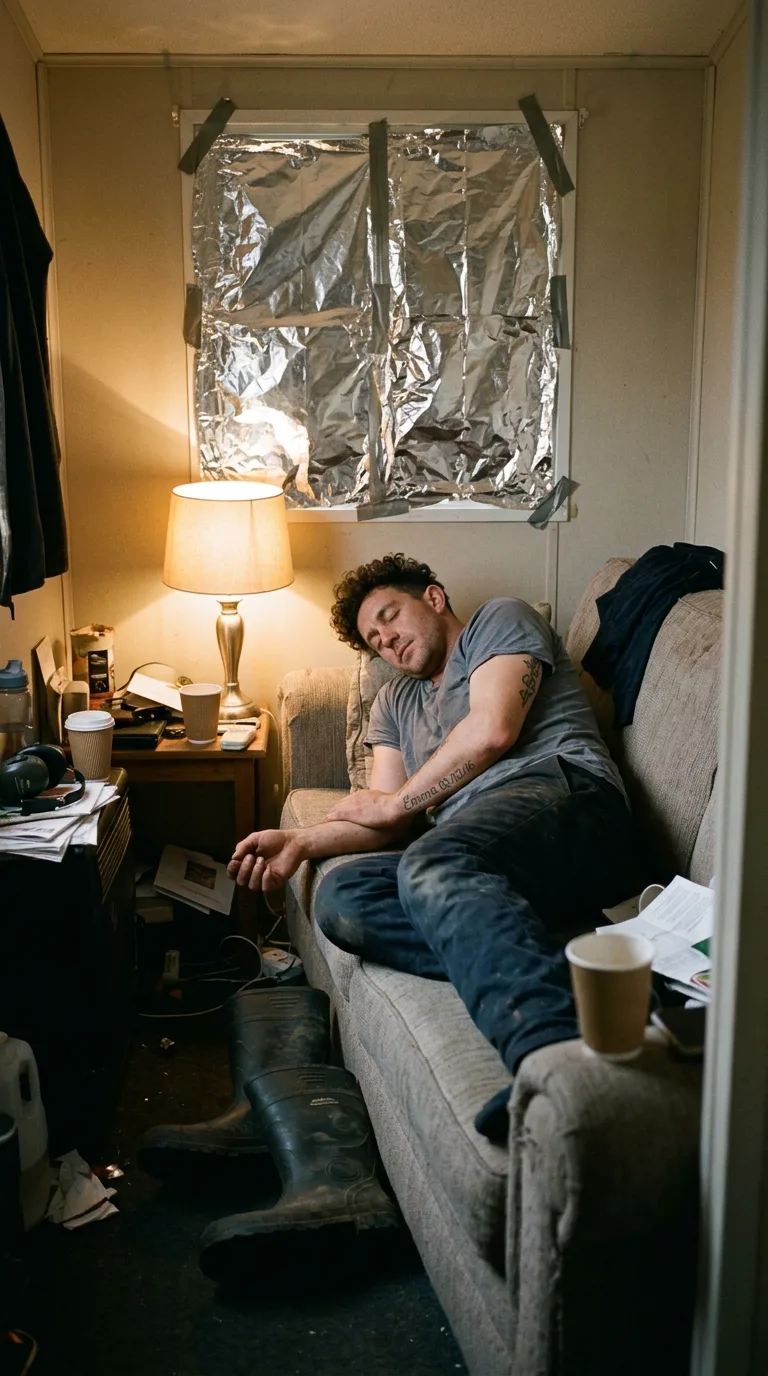
Rarest thing about him: A pack a day — rare, 1 in 17
Season 0seed 1134078481 · engine v10
Character card
lineage 2NZHHJ
His body-swap story
@colin.hasbrook, wearing Ted Nakamura, rolled the wheel on and woke up as Colm Fenerty, spent under a minute in him, then spun the wheel and woke up as Douglas Kestenberg
The rehearsal space smells like Ted's whole life: rosin, amp hum, the particular staleness of a room with no windows that matters. You have been him for less than a minute and already you know the thing that sent you back — the callus gone soft on his left index finger, four decades of pressing strings worn thin because Ted hasn't played a real gig in three years, only sits in this room at midnight running scales nobody pays for. You feel his hand ache with a want that isn't even yours yet, borrowed off him like everything else about him, and you think: not this. Not a man rehearsing for an audience that stopped coming. You set down whatever his fingers were doing — some borrowed instrument, some borrowed regret — and you go to the site the way you always do, before the feeling can become a decision you'd have to admit to.
The wheel turns. It does not ask why. It never has to.
Light lays itself across your face like a hand, and you open your eyes into it without blinking, and the ceiling above you is wrong — low, water-stained, a room built to be lived in fast and left. Foil crackles somewhere near your left ear where the tape has given up its corner. Your mouth tastes of the inside of a night that isn't over yet by the body's math even though a clock somewhere insists it's midday. You are on a couch. Your legs are heavier than Ted's, your shoulders wider, your jaw rough with two days of stubble under fingers you haven't moved yet.
The shirt is the first thing. Grey cotton, sweated through and dried stiff, and it comes back to you sleeve first — his arm going into it in the dark of a locker room at 5 a.m., fluorescent light buzzing, somebody's radio playing through a wall. Colm Fenerty. The name arrives with the shirt like it was folded inside it. Thirty-four years on this earth, all of them within an hour of the plant. You feel his shoulders settle into the memory of that morning — sore in the specific way of a man who spent eight hours on steel grating above water that never stops moving, the vibration of blowers still humming faint in the bones of his feet even now, hours later, asleep.
The trousers next, work-black, stiff at the knee from kneeling on concrete — and with them a whole year: the promotion to operator after the lab tech quit, the pride of it, small and real, the way he'd said it to his mother on the phone like it was bigger than it was because to him it was. The boots on the floor by the couch, still standing the shape of his feet, give you the walkway itself — sodium light through chain-link at 6 a.m., the basin below turning white with air, the smell that never washes out no matter how many showers, chlorine and something underneath it, mineral, old.
The forearm is what does it. Your eyes go there before your mind decides to look, the way his always does, a habit worn into him. Script letters, a date. Emma. 03.12.16. It isn't a memory so much as a weight dropping through you all at once — a small hospital room, a car seat still in its box in the trunk because he hadn't believed it would really happen until it did, and after, his daughter's whole hand fitting around one of his fingers like a fact settling a case. He doesn't see her every week. There's a woman now, the girlfriend, warm and easy in ways the mother wasn't, and a Saturday coming up that has Emma in it, and some knot in his chest that is half joy and half a low grinding guilt he keeps meaning to name and never does. You feel all of it land in a body that is not built for feeling things lightly — thick through the middle, strong in the forearms from a decade of valve wheels and pipe wrenches, tired in a way that goes down to the femur.
A pack of cigarettes sits somewhere just out of reach on the floor by an empty coffee cup, and even without touching it you get the ghost of the habit — the walk out to the gate at break, the particular quiet of 3 a.m. with the compressors going, a beer he doesn't drink anymore because his father drank enough for both of them and he decided young he wouldn't be that math problem. Spiritual is the word he'd use if you asked him, not religious, something about standing over that basin at dawn watching the water go from brown to white to clear and thinking that had to mean something, didn't it, that dirt could be talked out of water if you were patient enough and paid enough attention.
Foil light lies warm across your face still. Somewhere in this small trailer of a life is a whole ordinary man — not remarkable, nothing you'd point to, no single thing anyone would say first about him, just this: tired, decent, tattooed for a daughter, dressed in work he's proud of in the quiet way men are proud of things they never say out loud. You lie in it a second longer than you need to.
Then you lift your hand off your own chest and look at it — thicker knuckles than Ted's, a white scar across one thumb you don't have the story for yet, the curl of the fingers already knowing, without you, how to close around a wrench.
You say, to the empty room and the foil and the light, "Whose shift is this."