Rafael Cintrón
Fictional. Generated by AI — not a real person, and no likeness of one is intended.
29, lawyer in Coastal Maine · rolled by @colin.hasbrook · card — no film
History
who has worn him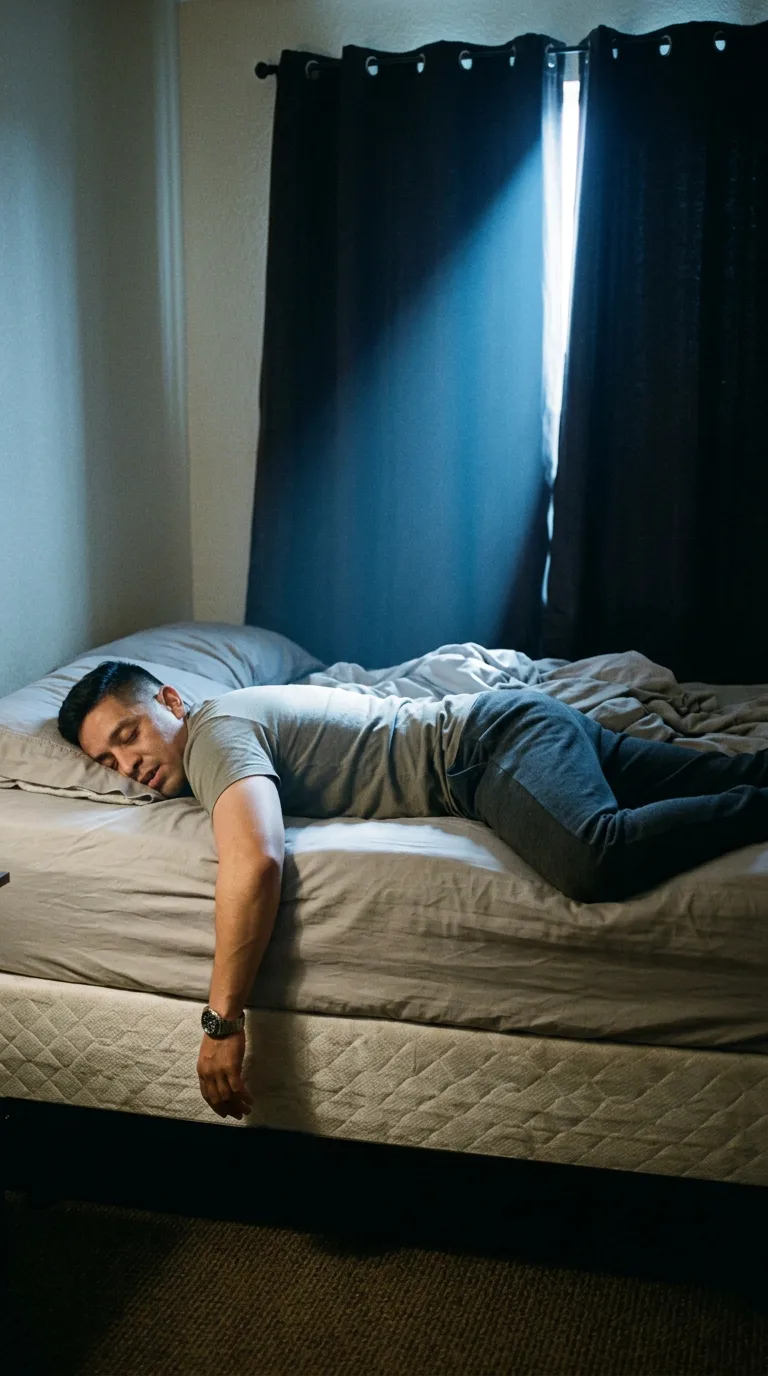
Rarest thing about him: Migraines — rare, 1 in 29
Season 0seed 591019164 · engine v10
Character card
lineage 2NZHHJ
His body-swap story
@colin.hasbrook, wearing Douglas Kestenberg, rolled the wheel on and woke up as Rafael Cintrón, spent 8 minutes in him, then spun the wheel and woke up as Kevin Iwasaki
---
Douglas Kestenberg's knees ache from the tent floor, thirty-one years of Seattle rain gone into the joints, and you are done being him for tonight. It's the middle of the night, a Saturday, everyone in the house asleep, and you sit at his desk in his boxers with his silver chest hair curling out of the collar of a Huskies shirt, and you think about how a man can spend a whole life kneeling over other men's garbage. Douglas found a trade bead yesterday. He wrote four hundred words about it in a field journal in his careful hand, and something in his gladness at it made you tired down to the marrow, made you feel the sixty-one years of him like a coat too heavy for the weather. You did not choose him for gladness. You chose him last time for something else, already forgotten, the way all of them get forgotten a little once you're standing in the next one. You open the laptop. The wheel is already loaded, spinning lazy and slow in the dark of the screen, waiting on you the way it always waits, patient as a slot machine, and you think, just one more before Doug wakes up stiff and none the wiser, and you tap it going.
The room that arrives is not a room, not yet — it's dark and it's cold in a way Seattle in that man's bones never was, sea-cold, and there's a shirt sleeve twisted wrong on an arm you don't own, hanging off the edge of a mattress like it's been thrown there and forgotten. Then the arm draws itself up, and it is a shorter arm than Douglas Kestenberg's, and the breath that was ragged goes even in the space of one exhale, and the hands come to rest folded on a chest that has never once folded them, not sleeping, not like this. You are on your back in an unmade bed in the dark, and a strip of streetlight is lying across the far wall through a gap in the curtain, and the pillow under you smells like somebody else's hair.
The gap comes first — you feel it before you feel anything else, tongue finding the space between the front teeth like a room you already know the furniture of, and with it comes a flood that isn't yours: this is Rafael's mouth, has been Rafael's mouth since he was nine and his brother knocked a tooth loose on a sidewalk in Bangor and it never grew back right, and their mother cried more about it than he did. Then the sheets — cheap cotton gone soft with washing, and the memory of Sunday mornings, coffee percolating two rooms away, his mother's radio turned to a Spanish station she thought nobody else could hear.
The watch is still on his wrist, heavier than it should be for a man his size, and touching its cool face brings back the morning he bought it — a used Seiko off a courthouse clerk's table for eighty dollars, cash, because a lawyer needs something on his wrist that ticks, even a public defender running on fumes and Marlboros. That's what he is — was — is: five years out of a state school law program nobody respected, five years standing on courthouse steps in Rockland with a scuffed briefcase and a caseload that never thins, defending men who remind him, some mornings, uncomfortably of his father. The migraines come with the memory of fluorescent courtroom light, a white-hot wire behind the left eye that starts around hour six of trial prep and doesn't quit till the verdict.
The T-shirt against your back is soft with age, and it gives you the morning he put it on — not this morning, some other one, tugging it over his head one-armed while holding the phone against his shoulder, his girlfriend's voice tinny and laughing on the other end, telling him to come to the boatyard after work, that her father wanted to show him something. Marisol. Her name arrives with the smell of her shampoo still somehow present in this pillow, faint, and a whole unhurried Tuesday comes with it: her hand on the back of his neck at a diner booth, her laugh when he ordered flan for dessert and the waitress said they didn't have any, his own laugh at himself, gap-toothed and unbothered. He loves her in the plain unremarkable way that never made it into any of his closing arguments. He has a rosary in the truck's glovebox that his abuela gave him and that he touches before every trial, not quite a prayer, more a habit worn into faith the way his shirt collars are worn into shape.
The mattress under you is thin, the box spring audible, and it gives you the whole shape of this house — shingles gone silver with salt weather, traps stacked by the door because the landlord downstairs fishes and never moves them, cold Maine light coming gray through every window even on the brightest days. Rafael sleeping face-down at this hour because he was up until four on a brief, because migraines make daylight a thing to be managed rather than lived in, because a pack a day and two drinks most evenings are the toll he pays a body that argues for other people all day and never once for itself.
Your — his — hands come up in the dark, into the cut of streetlight, and you turn them over like you're checking them for a fault. Blunt fingers, a callus along the right middle finger where a pen sits eight hours a day, no ring, no scar, nothing but ordinary wear, and the ache still faintly present behind his left eye like a debt not yet called due.
"Not yet," you say to the empty room, to Marisol's smell still in the pillow, to no one, and it comes out through the gap in his teeth exactly the way it always has, and you don't know yourself if you mean the migraine or the morning or the wheel still open somewhere far north of here in a dead man's laptop, waiting on you to come back to it.