Douglas Fenner
Fictional. Generated by AI — not a real person, and no likeness of one is intended.
58, delivery driver in San Francisco · rolled by @colin.hasbrook · card — no film
History
who has worn him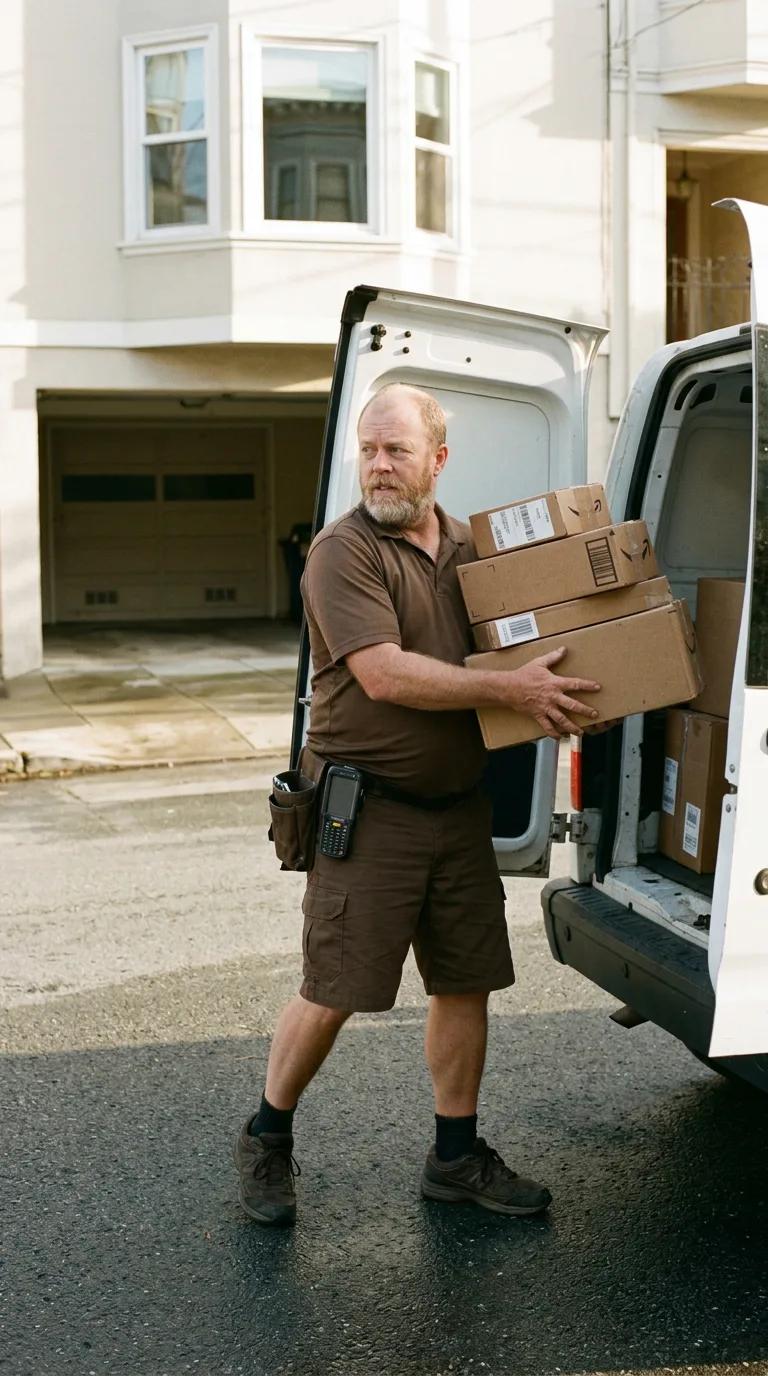
Rarest thing about him: Pagan, Wiccan or New Age — rare, 1 in 185
Season 1seed 1951096716 · engine v11
Character card
lineage 2NZHHJ
His body-swap story
@colin.hasbrook, wearing Aarav Bhandari, rolled the wheel on and woke up as Douglas Fenner, spent under a minute in him, then spun the wheel and woke up as Kenji Amasawa
Aarav Bhandari's hands smell like cardboard dust and the cheap citrus cleaner they mop the break room with, and you have been him for one minute, and one minute was enough to know. Twenty years old, wiry, a body that moves fast because it has to, because the scanner gun beeps and the quota clock never stops, and somewhere behind his sternum there is a tightness that isn't yours and isn't going away no matter how many bodies you spend it in. You didn't even set him down. You just want out of him the way you wanted out of the one before, and the one before that — six hundred and ninety-nine men now behind you like doors left open down a hallway, and this one closes the same way, mid-shift, nobody watching, the wheel already loading on a screen you're not really looking at anymore because you know what your thumb is going to do.
You spin.
Your hands are heavier before you understand why. Thick through the fingers, a callus riding the pad of the right thumb where a scanner grip has sat ten thousand times, and there are boxes in them — three, four, stacked wrong, sliding — and your body already knows to correct before you do, a little too late, a little too much, one motion done wrong and then, deliberate, slow, redone correctly. Sun is out here, real sun, cold and white off a bay window above a garage cut steep into a hill, and the air smells like eucalyptus and hot asphalt and the diesel breath of the van at your back.
The shirt is what opens first — collared, brown, a size too small at the gut and he's stopped minding, stopped even really seeing it in the mirror this morning, just pulled it over his head still warm from the dryer and thought about the Ricci job at the top of the route, third floor, no elevator, and how his knees have been talking to him lately, a low grumble he doesn't tell Lena about because she'll say something about the podiatrist again and she's not wrong but he doesn't want to hear it before seven a.m.
Lena. The name arrives whole, unasked, the way his memories do — through the shirt, through the belt with the scanner holstered against his hip like it's grown there, through the tread of his own shoes on the asphalt. Lena, who he has lived with nine years, who lights the candles on the windowsill on the new moon and doesn't ask him to believe any of it, just to sit with her while she does, and he does, every time, because her face in candlelight still does something to him at fifty-eight that he doesn't have words for and never tried to find any. Three kids between them — his, grown, scattered, a son in Sacramento who calls on Sundays, two daughters who group-text him memes he doesn't understand and loves anyway — and none of it made him rich but the 401k is fat and the house two towns over is paid down and there's a number in an account that would surprise anyone who saw these shorts, this belt, this gap-toothed grin on a man hauling Amazon boxes up someone else's driveway.
The van's handle, the last flash — cold aluminum, worn smooth, fourteen years of his palm on it, mornings when his back screamed and mornings when it didn't, a country song he can't get out of his head today, the specific ache behind his knees that means rain later even though the sky's clear now. His hands, when he's not paying them any mind at all, drum on the doorframe, tap the clipboard, worry a hangnail — always moving, always have, since before he can remember, some current in him that never found the wire to ground it except maybe her hand in his, maybe a cigarette on the porch on a night he's allowed himself a beer.
You stand there in him, boxes still balanced, gap between his front teeth caught mid-word he hasn't said yet.
You look down at the hands. Thick, weathered, a thumb-callus you didn't earn, restless already, drumming once against the cardboard before you tell them to stop.
You look up into the cold white light off the bay window and say, "Okay — who ordered all this."