Aarav Bhandari
Fictional. Generated by AI — not a real person, and no likeness of one is intended.
20, warehouse picker in Atlanta · rolled by @colin.hasbrook · card — no film
History
who has worn him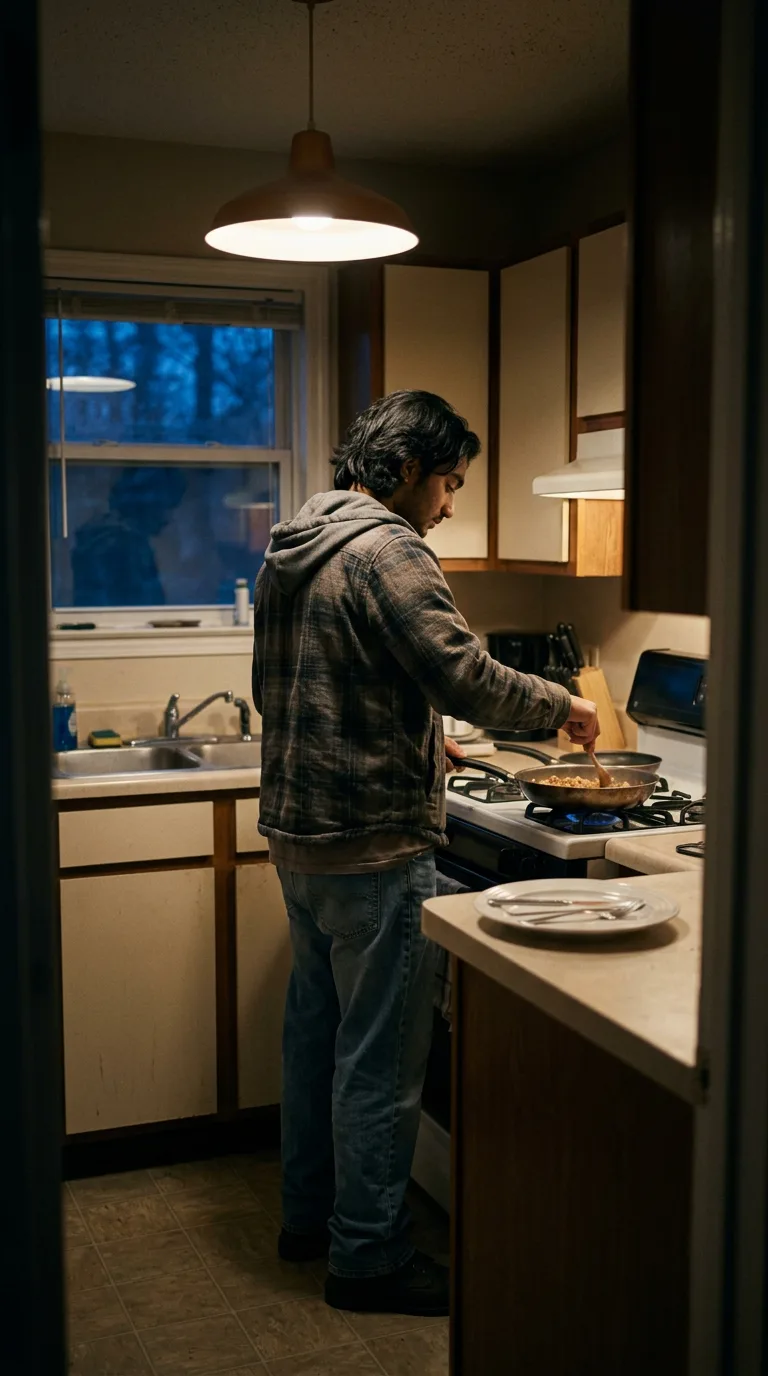
Rarest thing about him: Dip or chew — common, 1 in 31
Season 1seed 450180247 · engine v11
Character card
lineage 2NZHHJ
His body-swap story
@colin.hasbrook, wearing Marion Delacroix-Webb, rolled the wheel on and woke up as Aarav Bhandari, spent 1 minute in him, then spun the wheel and woke up as Douglas Fenner
Marion's forearms ache from a double, the good ache, the one that means the hydraulic press job is done and the check clears Friday. He's sitting in the break room with his boots still on, gray hair damp at the temple, and he pulls out his phone like a man checking a wound he already knows is there. Fifty-six days since he last did this. Fifty-six days of being a person with a name people call across a shop floor, a person whose knees hurt in a specific, familiar, almost comforting way. That should be enough. It has never once been enough. He thinks about the six hundred and ninety-eight men he has already spent and worn through like matches, and he thinks, not for the first time, that this is the closest thing he has to a marriage, and marriages don't stay satisfied on fifty-six days either. He opens vessel.cards on the cracked screen, and his thumb — Marion's thumb, blunt, a white scar he never asked about across the knuckle — finds the wheel before his better sense does.
The stirring stops mid-circle.
It starts again the other way, slower, testing the weight of a spoon in a hand that is shorter-fingered than the one you just had, thinner at the wrist, and you feel the whole architecture of him arrive at once — five inches shorter, twenty years younger, the low simmering hum of a body that has not yet learned to be tired the way Marion's was tired. You salt the pan without tasting it. Some reflex under the reflex reaches up into the cabinet and brings down a second plate, sets it beside the first, and only then do you notice you've done it, the way you notice a hiccup after it happens.
The hoodie is against your back first — flannel-lined, soft from a hundred washes — and it gives you a Tuesday in October, cold for Atlanta, him pulling it on in a dorm room that isn't his room anymore because he dropped out after two semesters, the zipper catching the same spot it always catches, and the small flat guilt of a mother who paid a deposit for a dorm bed her son slept in for four months. The jeans at your hips give you nothing but the ordinary weight of denim, worn soft at the thigh from a thousand mornings pulling them on sitting on the edge of a mattress, left leg first, always left leg first, no reason, just a body's private law.
The wooden spoon in your hand is the deepest well. It gives you the warehouse — racking three stories high, a scanner heavy and warm against your forearm where the strap sits, the beep of a forklift two aisles over that you've stopped hearing months ago the way you stop hearing your own blood. It gives you Deja, who works receiving, who laughed at something you said in the break room in March and you have been finding reasons to walk past receiving ever since — she's the one whose photo is a thumb-swipe away on the counter, whose name comes with a warmth low in the chest, uncomplicated, present-tense. And under that, quieter, the spoon gives you Priya — three years gone now, married to a dentist in Marietta, and still, God help you, the one whose name arrives first in the body's memory before it corrects itself to Deja's. You cook enough for two most nights, a habit you never explained to anyone and don't examine, a plate set out like a held door.
The counter under your palm gives you the apartment itself — the landlord who never fixed the window latch, the specific hum of the fridge at 2 a.m. on the nights the leg doesn't let you sleep, jiggling under the desk, jiggling in the truck, jiggling now, right now, against the cabinet door, a motor that runs whether you want it to or not. Your jaw is rough — two days unshaved, the stubble catching against your own collar when you tilt your head — and there's a phantom taste of dip you had at lunch, salt-sweet, gone stale in the memory of it. Twenty years old in every joint: nothing hurts. That, more than anything, is the thing Marion's body forgot how to tell you.
You look down. The spoon is still circling, other-handed, in a pan that's starting to catch at the edges. Two plates on the counter, side by side, and no one coming to sit at the second one tonight, and some tenderness in this stranger's chest that isn't yours yet reaches for her name anyway.
You turn off the burner. You look at your hand — narrow, sure at the wrist, a scab healed over on one knuckle you didn't put there — turning it in the stove light like you're checking it's real.
"Hey," you say, to no one, to the empty side of the counter, "smells good tonight."