Marion Delacroix-Webb
Fictional. Generated by AI — not a real person, and no likeness of one is intended.
57, maintenance technician in Chicago · rolled by @colin.hasbrook · card — no film
History
who has worn him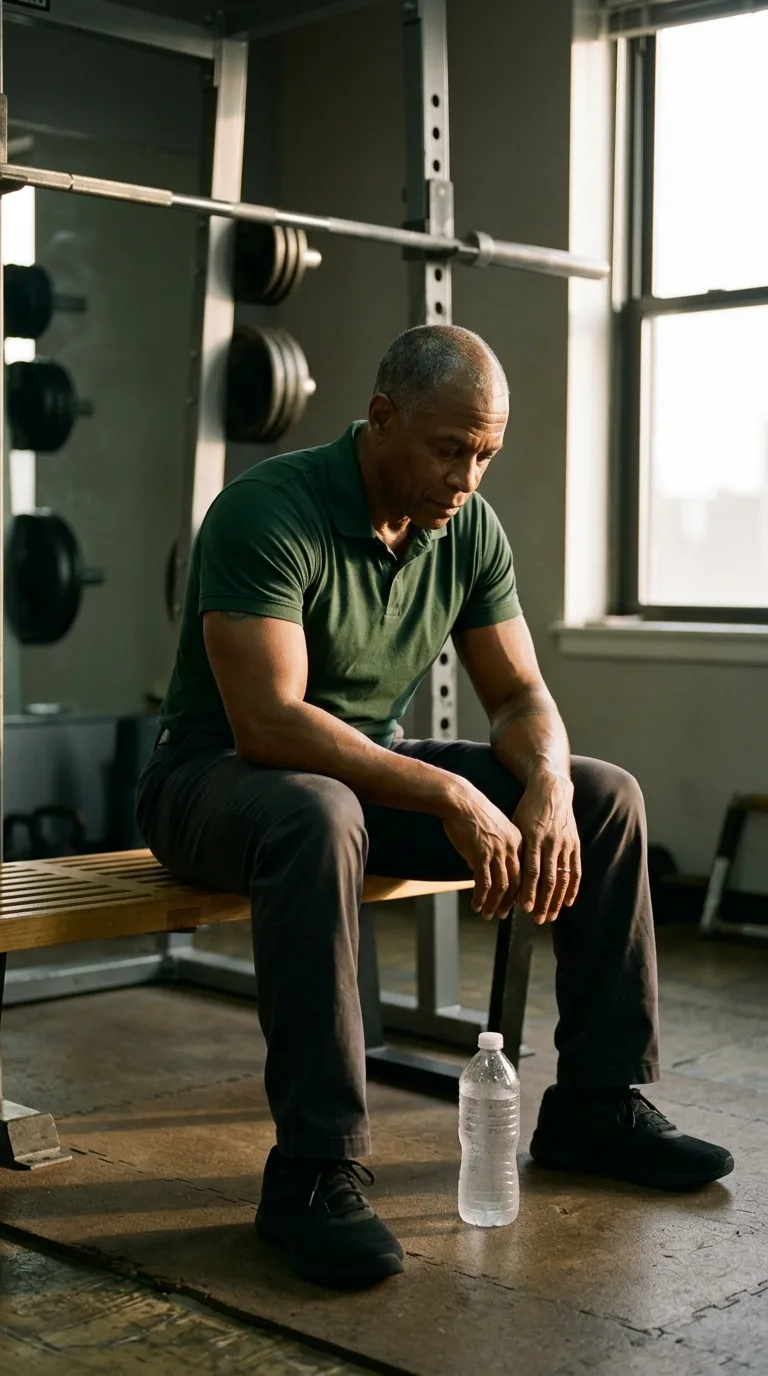
Rarest thing about him: Widowed — common, 1 in 84
Season 1seed 765797588 · engine v11
Character card
lineage 2NZHHJ
His body-swap story
@colin.hasbrook, wearing Gary Hutchens, rolled the wheel on and woke up as Marion Delacroix-Webb, spent under a minute in him, then spun the wheel and woke up as Aarav Bhandari
Gary Hutchens's knees ache on the ladder rungs, and that is the whole reason. Less than a minute in him and already the left one is singing where the meniscus never healed right, some old contractor's injury inherited whole with the body, and you sit on the edge of a client's tub in Phoenix with the wrench still in your hand and think: not this one, not today. It isn't hatred. It's just that fifty years old and heavy through the middle isn't what you wanted, and the wheel promised you didn't have to keep anything you don't like. You open the site on the cracked phone in Gary's pocket, thumb the wheel with Gary's thumb, and let it go.
The bar is two inches wider in your hands than it has been all year, and you don't know that yet — you only know the grinding stillness of a last rep that doesn't look like a last rep. Your knees are bent, your back is flat against a vinyl bench, and there is a rack over your head holding weight that a fifty-year-old contractor's shoulders never asked for. The face doing the work is not straining the way faces strain at the bottom of a set. It is doing nothing in particular. Water sweats in a bottle somewhere near your feet, and you press up out of the bottom, slow, controlled, a machine that has done this ten thousand times before you arrived in it.
The shirt is the first thing. Not this shirt — the green polo cooling against your back with sweat, but under it, layered in like a photograph left in water, the memory of a different shirt: navy blue, cotton, a smell of fabric softener and the specific line of a Tuesday morning. Marion's hands — yours now — knew this shirt before you did. Pulling it over his head in a quiet bedroom with the blinds still down, the ceiling fan turning slow, a picture on the dresser of a woman with her hair pulled back, laughing at something outside the frame, gone four years now and still there every morning like a weather report. He buttons the top button out of habit though the shirt doesn't need it. He clips the flashlight to his belt. He checks the keys — Building 4, Building 7, the super's master, his own — by feel, without looking, the way a man checks his own pulse.
The belt against your waist gives you the hallway: fluorescent tube humming, the ceiling panel he'd popped that afternoon, some tenant's smoke detector chirping low-battery two units down and driving him half-crazy by four o'clock. Thirty-one years doing this in the same six buildings under the same stretch of the Brown Line, and there is a whole architecture of small grievances and small satisfactions in it — the drywall dust that never fully leaves the crease of his knuckles, the tenant on 4 who leaves cookies out at Christmas, the tenant on 9 who calls him by the wrong name and always has. His hands know a hundred kinds of pipe by touch alone. They know how to seat a washer without looking, how to coax a boiler that hates him, how to run a hand over his own scalp — thinning now, silver, the crown gone smooth and bare under the hallway light — when a job isn't going his way, which he is doing right now, standing in a stairwell that isn't there anymore, in a body that has already put the wrench down for the wheel to find him.
The wedding band is the deepest one. Twenty-six years of it worn thin and yellow-soft at the inside curve, and touching it — his hand doing what his hands do, resting against the bar, sweat-slick — brings up a whole life at once, too much to hold: three kids loud around one table, then two around it, then all of them gone into their own kitchens; a wife's laugh in a car with the windows down; a hospital room he sat in for eleven days before there wasn't a reason to sit there anymore. He never took the ring off. He tells himself it's respect. It is also that he does not know, four years on, who he'd be without something round and gold telling him where he's been. On Sundays there's a church with too much light in it and a pastor who says his name right, and Marion sings along to hymns he doesn't fully believe he needs anymore but sings anyway, because that's a kind of muscle too, worked until it doesn't ache to use it.
You are standing in fifty-seven years of him — the shoulders wide and still strong, the low back tight the way a working man's back gets tight, the knees better than Gary's ever were, the whole frame carrying its weight like it has somewhere to be. None of it is straining. It has just stopped, mid-motion, the last rep unfinished and unfinishable now, because the man doing it isn't the one who racked the bar with his eyes.
You look down. His hands are on the bar, broad, a nick of old scar along one knuckle from a stripped bolt years back, the ring catching the gym's low winter light. You turn one hand over slowly, like it might tell you something the touch hasn't already.
"Didn't know I had that left in me," you say, out loud, to no one, and rack the bar, and reach up — without deciding to — to run a hand over the smooth bare crown of his head.