Devendra Kohli
Fictional. Generated by AI — not a real person, and no likeness of one is intended.
60, farmer in San Francisco · rolled by @colin.hasbrook · card — no film
History
who has worn him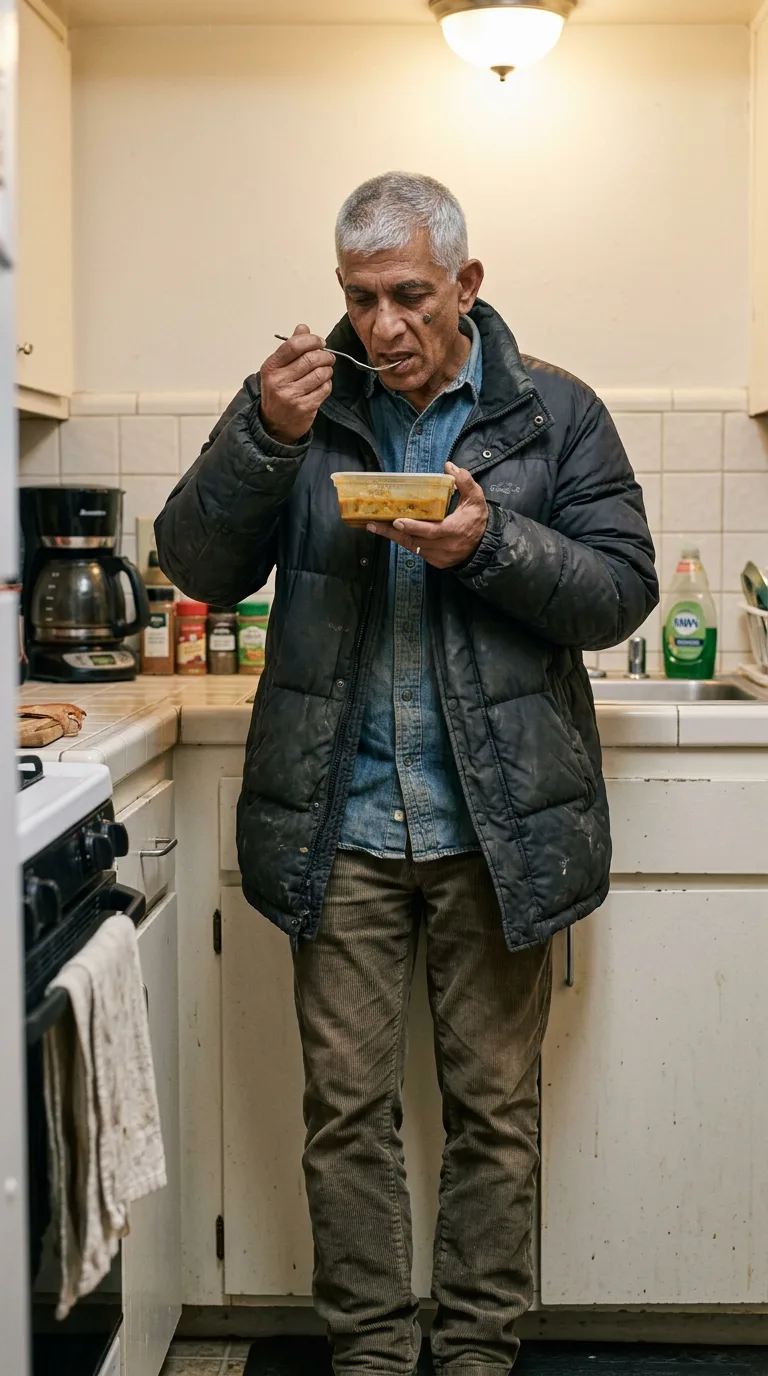
Rarest thing about him: South Asian — rare, 1 in 26
Season 0seed 1076883326 · engine v10
Character card
lineage 2NZHHJ
His body-swap story
@colin.hasbrook, wearing Colby Threadgill, rolled the wheel on and woke up as Devendra Kohli, spent under a minute in him, then spun the wheel and woke up as Prakash Devineni
The knife is still in your hand when you decide.
You are Ezekiel Braun, twenty-five, red-haired and heavy in the shoulders, standing in the walk-in at a butcher shop in El Paso with a half-broken-down shoulder of pork in front of you, and you have been him for six minutes, and already the wanting is back, worse than before. It is the middle of a Monday. The cold in here smells like blood and bleach and you know this man's hands know this work without you, that they would go on cutting whether or not you were in them, and that is the whole problem. There is nothing to do here but the thing that is already being done. You spun for a big man with dimples and strong forearms and got a man doing an errand. You set the knife down on the rail, wipe your palms on the apron he's already wearing, and you go to find the phone in his jacket, because six minutes was long enough to know you don't want El Paso, you don't want pork shoulders, you want the thing you keep chasing every time, which is the front-row seat to a life that isn't a chore. You open the site on his cracked screen with his own thumb. The wheel is already spinning before you've finished deciding.
And then you are not cold anymore. You are standing in warm kitchen light, a spoon halfway to your mouth, a plastic container warm in your other hand, a coat heavy on your shoulders though you are inside. The fork — no, a spoon — stops in the air. Comes back down. Sets itself on the counter beside the container with a small ceramic-sounding click against the tile edge. You feel a coat's weight roll off narrow shoulders, one arm and then the other, and you catch it before it hits the floor and drape it over a chair without deciding to. You sit at a two-person table you didn't know was behind you until your body found it. You finish the food in even mouthfuls, looking at nothing in a window gone dark with night on the other side of it, though somewhere behind your eyes you know it should be daylight, because your last body's clock said noon and this one's window says late.
The spoon is the first thing that gives him to you. Cheap stainless, a little bent at the neck from years of scraping pot bottoms, and it comes with a smell — turmeric, hing, mustard seed popping in oil — and a woman's voice from a kitchen forty years gone, his mother's, telling him he holds it like a shovel. You feel the whole shape of a childhood in Fresno pass through your wrist: a father who grew tomatoes on leased land and died owing money on it, a promise made at seventeen that he would own dirt outright before he was done, no matter what.
The coat gives you the cold. Not this kitchen's cold — the field's. Four a.m. frost on a gate latch, sixty years old and still doing this, the smell of diesel and wet green stalks, thirty-one years of a particular quarter section outside Half Moon Bay that you now know he owns free and clear, has owned free and clear since he was forty-two, the year the deal closed and he stood at the same gate and did not cry, exactly, but stood very still for a long time. Money came after that almost by accident — land appreciating under him while he was looking at soil, not sky, an offer from a developer he turned down twice and then structured into a lease that pays him more now than the crop ever did. Somewhere between six and ten million dollars, and none of it in his head right now, because his head does not go there. His head goes to the gate, the light going down over it, whether the irrigation line on the east row is still leaking.
The shirt against your back is denim, worn soft as cloth can get, and it gives you the morning: him buttoning it one-handed at five a.m. by the bathroom light, the mole on his cheek in the mirror he has stopped seeing the way you stop seeing anything you've looked at ten thousand times, the cap already sweat-marked from a hundred other mornings going onto gray-silver hair still damp. He does this every day of his life that isn't Sunday. He has done it since before you were the age you're pretending to remember being.
There is a ring on this hand — no, there isn't; you check and there isn't, though the watch on the wrist is his father's, older than the both of you put together, wound by hand, twenty seconds slow. No wife's photograph anywhere in this house, no ring worn thin at a knuckle. He tried, twice, in his thirties, and both times the land came first and he let it, without much grief, and that not-grieving is its own small ache that lives somewhere behind the sternum, one you can feel now like a held breath he never quite lets go.
The apartment gives you its own smell — a garage smell, oil-stain and cold concrete under a kitchen laid down above it, the bay window upstairs he never uses because the light through it makes him think of somewhere he'd rather be, which is the field, always the field, even in a city that gave him more money than he ever asked the dirt for. He bought this place because it was close to the market where he still sells greens himself on Saturdays, cash box, folding table, dirt still on his knuckles, richer than the man buying his lettuce and neither of them thinking about it. He snores, badly, alone, and has for years, and does not know or care that there's a machine for that he could buy ten thousand of and never notice the cost.
You know this house from a different door. Six spins ago you wore the man next to this one — Kenji, twenty-nine, quick and light on his feet, gone from you seven minutes after you had him — and you remember standing in his backyard and seeing this man's porch light on late, waving to him once across a fence about compost, nothing more, the ordinary unfinished nod of neighbors who like each other without knowing why. You have stood on both sides of that fence now. Neither of them ever knew.
You look at your hands. They are dark-skinned, veined, a mole's shadow just visible at the edge of your sightline on your own cheek if you look down and sideways too hard, nails split and blackened with soil that a shower never fully lifts. Sixty years old and they don't ache the way you expected — they are strong, corded, sure of themselves in a way your last body's hands, young and huge and clumsy with a knife, never were.
You set the empty container down. You look up into the dark window like it's a mirror, or a camera, or something that might answer.
"Didn't think I'd miss the cold," you say, to no one, in his voice, and you don't yet know if you mean the field or the six minutes you just spent being somebody else entirely.