Colby Threadgill
Fictional. Generated by AI — not a real person, and no likeness of one is intended.
25, butcher in El Paso · rolled by @colin.hasbrook · card — no film
History
who has worn him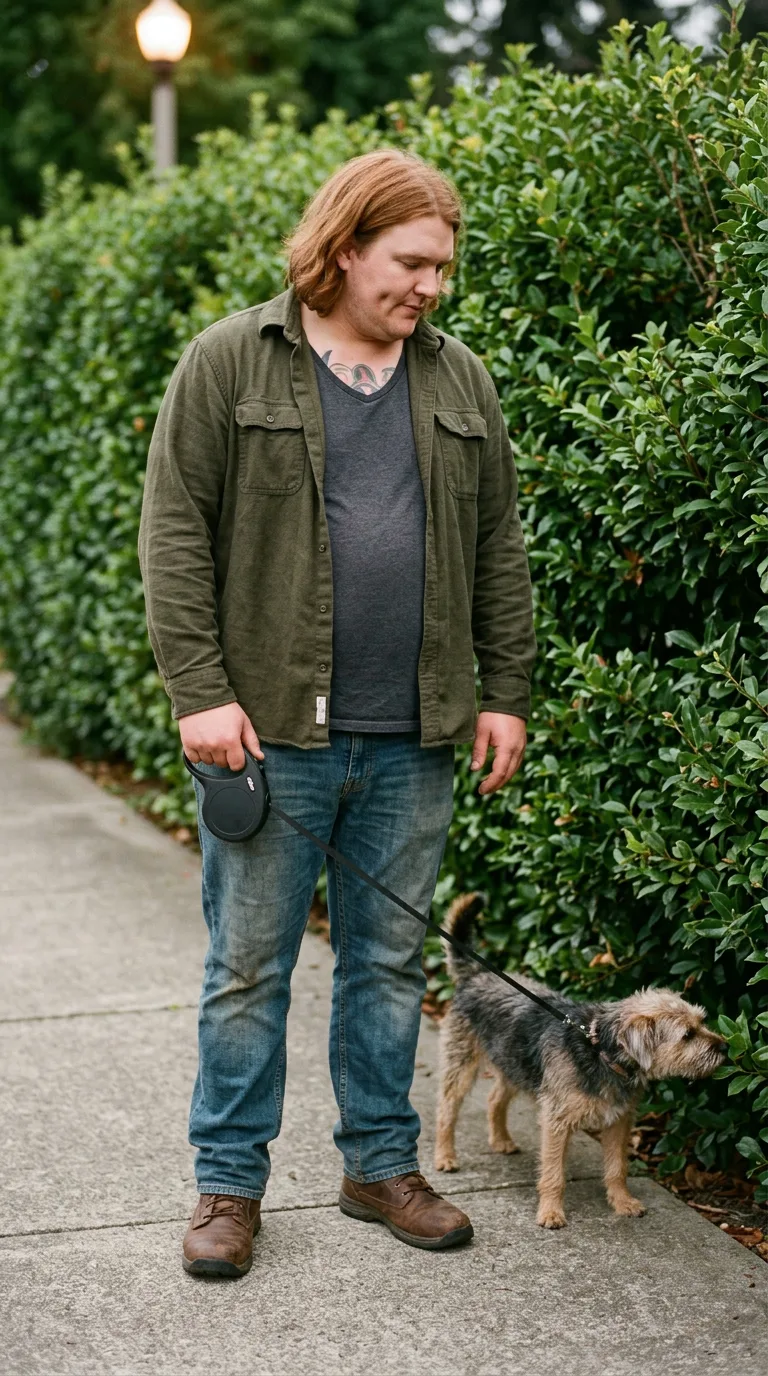
Rarest thing about him: A tremor in the hands — epic, 1 in 504
Season 0seed 343723173 · engine v10
Character card
lineage 2NZHHJ
His body-swap story
@colin.hasbrook, wearing Rigoberto Salcedo, rolled the wheel on and woke up as Colby Threadgill, spent 6 minutes in him, then spun the wheel and woke up as Devendra Kohli
The flower cooler hums behind you, and your hands — Rigoberto's hands, fifty-some years of them, going soft at the knuckle — won't stop shaking over the ribbon spool. Not from age. From the thing itself: less than a minute in this skin and already the tremor is unbearable, a small mean detail the wheel didn't warn you about, and you know, standing here in the smell of cut stems and refrigerant, that you did not spin 103 times to end up folding bows for some quinceañera with hands that won't hold still. That's the whole reason, if anyone made you say it out loud: you wanted hands that worked. You reach for the phone in your apron, thumb the bookmark you always thumb, and the shop dissolves out from under you mid-breath.
The leash is real before anything else is. Nylon cord biting a groove into two fingers, a small determined weight on the other end of it pulling toward a hedge, green and overgrown, lit gray-gold with early light. Your — his — hand stops winding. The dog looks up past the leaves, ears flat, some animal arithmetic not adding up. You feel the stall in his legs like your own hesitation, a half-second where the man who owns this body isn't answering anybody. Then the hand you're wearing winds the leash twice around itself, decisive, and a stride starts that the dog has to trot to match.
It comes in through the leash first — cheap grip, familiar in his palm — and then everything else follows the way spilled things follow gravity, all at once and no order to it. Nine years old, spring, some other dog, a good one, gone now. A name for this one — Biscuit — surfacing with the specific fondness of a joke that stopped being funny to everyone but him. His girlfriend's voice from the kitchen window twenty minutes ago, *don't let him eat anything off the Cardozas' lawn again,* and the small guilty pleasure of letting the dog do exactly that once she's out of sight.
The flannel shirt gives up its own memory, cotton gone soft at the elbows: putting it on in a bedroom with the blinds still down, sun already too bright at the seam of them, because in El Paso in his life the day starts and ends at strange hours — he came off a closing shift at the shop three hours ago, the saw blade still ringing faint behind his ears, and this walk is what he does instead of sleeping right away, wearing the dog out so the dog will let him. The shirt's second button doesn't sit right against a chest that's thicker than it used to be; you feel that thickness now as simple fact, not judgment, the weight he carries in front like ballast, the day-in-day-out solidity of standing at a counter twelve years running.
The collar rides against something raised on his chest, ink under cotton, and touching it — even through fabric — gives you a barracks smell, boots on concrete, a name he doesn't say out loud anymore except to the mirror. Not this life. A before-life, folded up small and worn at the tattoo like a coin in a pocket. There's a woman in that memory too, but she's an ex-wife now, filed under things settled, not things aching — mostly. The one aching a little is smaller and more recent: her voice at the window. Not enough to be trouble. Enough to notice.
His hands are wrong for a moment and then exactly right — you feel where the tremor should be and isn't, feel instead the density of forearms that know a blade's weight without looking, the ropy strength under the softness, twenty-five years old and already going thick through the middle the way his father did, the way it doesn't bother him to be. Boots on concrete, good ones, broken in around a heel. Behind the eyes, dimples pull at his face without him doing anything to earn them — they're just there, at rest, the one thing anybody ever says about him first.
The dog stops again, and this time the hand you're wearing doesn't hesitate. It bends, scratches behind an ear with a familiarity that isn't yours yet but is already comfortable, borrowed and correct, like a key turning in a lock cut for it.
You straighten up and look at that hand — steady, thick-knuckled, a little raw across two fingers from the leash — and turn it over slow in the morning light, the way you always do, checking the work.
"Good boy," you say, meaning it for the dog and, some other way, for the hand itself.