Dennis Yamashiro
Fictional. Generated by AI — not a real person, and no likeness of one is intended.
57, cop in New York · rolled by @colin.tarwater · card — no film
History
who has worn him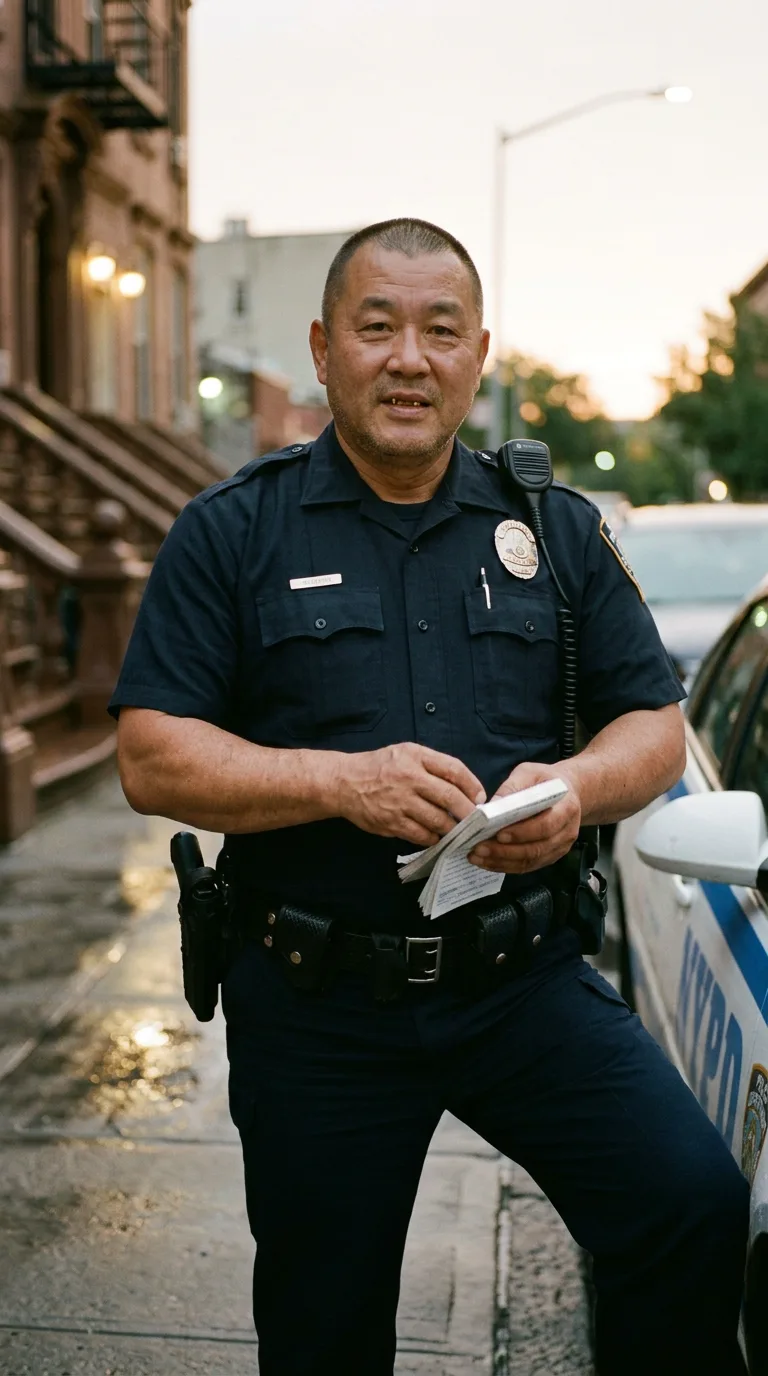
Rarest thing about him: A gold tooth — epic, 1 in 142
Season 0seed 1485897437 · engine v10
Character card
lineage COEU7T
His body-swap story
@colin.tarwater, wearing Gary Provo, rolled the wheel on and woke up as Dennis Yamashiro
The mop bucket is where you leave Gary Provo, mid-swing, the gray water still sloshing against the plastic rim. Missing tooth, green eyes, that whole athletic frame folded over a janitor's cart in some San Francisco office tower at the tail end of a shift nobody thanked him for. You have had less than a minute in him. Long enough to feel the tooth-gap with your tongue once, decide you hated it, and understand that a fifty-year-old man who cleans up after other people for a living was never going to hold your attention past the first spin. You didn't even finish the hallway. You just wanted out of him, the way you sometimes want out of a coat before you've buttoned it, and the wanting had a name this time, small and stupid and total: *I paid for better than this.* So you go back to the site with mop water still imagined on your fingers, and you spin.
You arrive already writing.
The pen is between two fingers, angled down against a small spiral pad, and the hand — thick-knuckled, a callus riding the pad below the pinky — is halfway through a signature line it has drawn ten thousand times. It hitches. The ballpoint skids a half-inch wrong, drags a tail off the last loop of a word that isn't a word yet, and then, slow, deliberate, like a man rereading his own name to make sure it's spelled right, it goes back and does the line again. Correctly. You feel weight settle into you all at once — heavier through the middle than you expected, dense rather than soft, the gut sitting low and solid over a belt hung with more hardware than you have ever worn in your life. Radio mic clipped at the shoulder. Something hard against your hip you understand, immediately and without being told, is a gun. Evening light, gone the flat gray-gold of after-sunset, lies along a street of brownstones still wet from earlier rain. You are leaning against the side mirror of a car with lights on its roof, and you write the next ticket slower than the last nine, checking each numeral against the plate like you've never done this before.
The pad is what opens first — thin paper, warm at the edges from being carried against a body all day, and it gives you a flash of a hand this size flipping through a hundred of these on a hundred other evenings, quick and bored, this being the only slow one in years. Then the belt: buckle heavier than you expected, a memory of putting it on this same morning coming up through your fingers before you've asked for it. You feel him dressing, sleeve first, right arm into the uniform shirt because the left shoulder's been stiff since spring — an ache with no story attached, just a joint that complains on cold mornings and some evenings for no reason at all, something a doctor once used a long word for and Dennis mostly ignored because there was nothing to be done about it except take the pills when he remembered. Buttons done one-handed, fast, an old skill in fingers that have done it since he was twenty-six and still couldn't get his collar straight. The gold tooth catches a memory too, though nothing is touching it: a tongue-habit, checking it's still there the way another man checks his wallet, a tic from the year he got it capped after a car door caught him wrong on a night he doesn't like to remember in full.
The street gives you the rest. Rain-smell and somebody's cooking two floors up and the particular quiet of a block that trusts him, mostly, the way blocks trust a face they've seen for a dozen years of Tuesdays. Widowed uncle who raised him after Seoul and Queens both, church every week he isn't working, the incense-smell of it arriving unbidden and warm the second you register the small gold cross he doesn't wear but always meant to buy. No wife ever stuck, no one who calls asking where he is; the apartment that comes with him is a good TV and a recliner and a shift schedule taped to the fridge, and it should feel lonely and instead it feels like a man who made his peace with a quiet life a long time ago and doesn't examine it further. He smokes on the stoop after shift, one real cigarette to close the day, the vape for in between; his knees complain on stairs, his shoulder complains in weather, his gut has gotten heavier every year past forty and nobody's ever told him to lose it because there's nobody left whose job that is. The body he carries you is tired in the ordinary way of fifty-seven, and strong in the way of a man who has hauled his own weight around for decades without once thinking of it as remarkable.
You look down. The pad. The pen. The signature, finished now, correct, in handwriting slightly cramped from an autoimmune ache that flares in his fingers on wet evenings exactly like this one.
You look up into the little mirror on the patrol car's side, and the gold tooth shows before the words do.
"Didn't used to take me this long," you say, to the empty street, in his voice, and you don't know yet if that's true, or how long you're going to be the one finding out.