Dennis Amano
Fictional. Generated by AI — not a real person, and no likeness of one is intended.
61, personal trainer in Coastal Maine · rolled by @colin.hasbrook · card — no film
History
who has worn him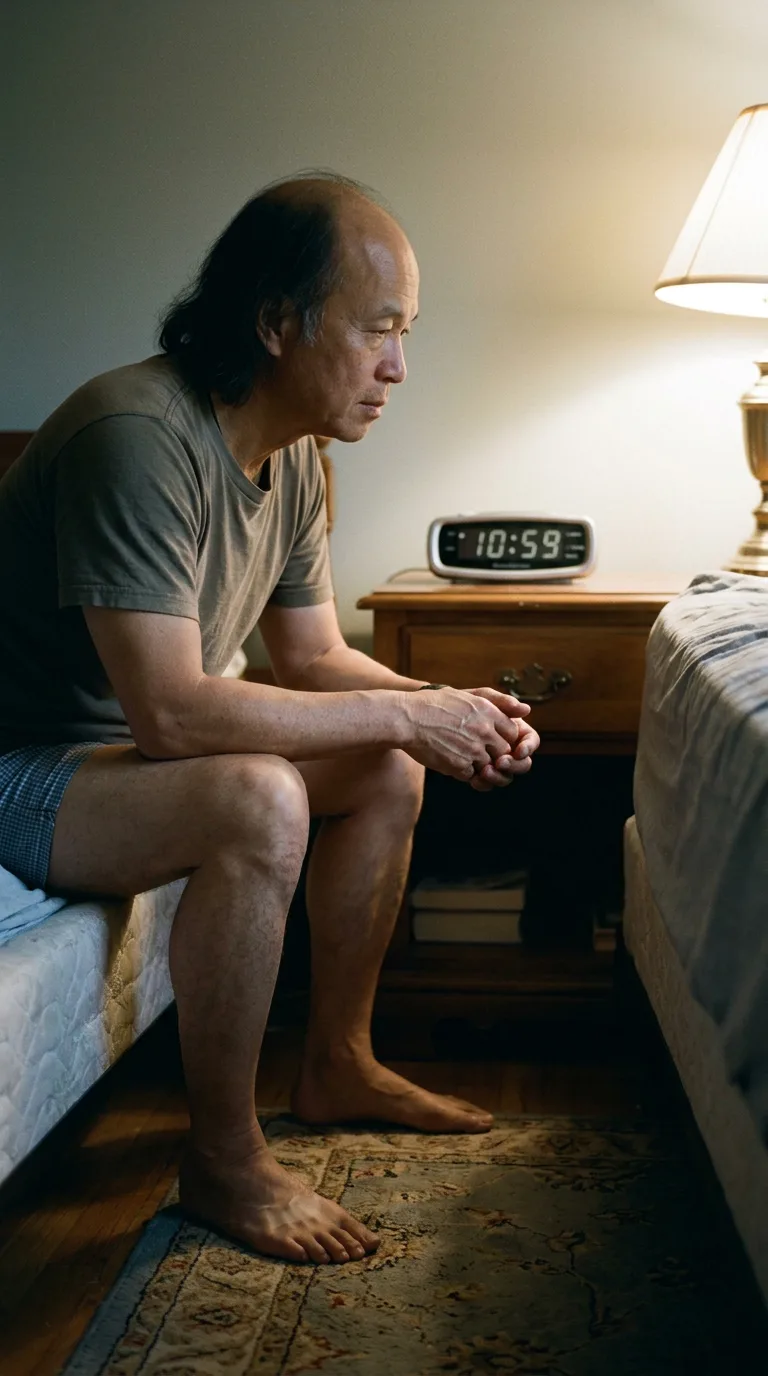
Rarest thing about him: Smokes and vapes — epic, 1 in 53
Season 0seed 1172209497 · engine v10
Character card
lineage 2NZHHJ
His body-swap story
@colin.hasbrook, wearing Colton Meskill, rolled the wheel on and woke up as Dennis Amano, spent under a minute in him, then spun the wheel and woke up as Rafael Quintanilla
The tailor's shop smells like chalk and steam, and you have been him for thirteen minutes, and already you know the problem: his hands know things yours do not, and yours — the wanting kind, the kind that spun the wheel four hundred and sixty-five times before this — do not know how to want inside a body that is already, quietly, happy. Colton Meskill likes this. Likes the shears, the light through the front glass, some memory of a woman's voice saying *hem it there, not there*. There is nothing to take from a man who is not missing anything. That is unbearable in its own particular way. You set down the pins he was proud of a second ago and you go back to the site on the shop computer, the one he uses for orders, and you spin, because thirteen minutes of contentment is thirteen minutes too many.
The wheel does not ask if you're sure.
You get to the amen early. That's the first thing — not your amen, his, already moving through the muscles of a jaw that isn't the one you had, already half-laughing at something, some private joke about talking to a nightstand clock at his age — and you are up on your knees and rising when the rising simply stops. Knees find the bedspread again on their own. The laugh goes out of the mouth mid-breath, the way a candle doesn't so much extinguish as get thought about too hard. Forehead down. Cotton bedspread, faint smell of fabric softener and, underneath that, something staler — a man who lives alone and does his own wash on Sundays.
The body is not what you were told it would be and it is exactly what you were told it would be: sixty-one and every year of it sitting in the knees, a low persistent ache along both sides that has been there so long it reads as furniture rather than pain. Forearms wiry under loose skin. A t-shirt gone soft from a hundred washes, and under your knees the give of an old mattress that has learned the shape of one sleeper instead of two. The clock on the nightstand says something you don't process as a number yet, only as light, amber and small in a room going the color of a Friday evening — that particular gray-blue that only happens near water, when the sun is already behind the tree line but hasn't decided to admit it.
Your hands are still loosely folded, and that's the first key. The moment they press flat against the bedspread to push yourself up again — slower this time, unsure why the first attempt didn't take — the flash comes: not this room, but a church basement thirty years gone, hands folded the same loose way, a woman beside him he hasn't touched in eleven years now, and a priest saying something in Latin that Dennis Amano never fully learned and never stopped loving the sound of anyway. Gone as fast as it came. But it opens the door, and after that the door doesn't stay shut.
The t-shirt against your back gives you a Tuesday from some spring — him pulling it over his head in this same room, alone, the ceiling fan turning too slow to do anything but move warm air sideways, and the specific tiredness of a man who spent nine hours on a gym floor coaching other people's discipline and has none left over for his own dinner. You feel, distantly and not as your own, the pleasure he takes in his forearms — sixty-one and still cut along the muscle, still able to spot a bench press without his back complaining until the next morning — and the shame that sits right next to that pleasure, unexamined, about the two kids in Portland who call at Christmas and sometimes not, about Carol who left not because of anything dramatic but because thirty years of him coming home smelling like other people's sweat and saying nothing over dinner will do that on its own, no third party required.
The nightstand clock gives you the last four years of falling asleep to its red numbers alone, and the drawer beneath it — you feel it before you understand why, some old habit of the hand — holds a lighter he isn't touching right now but wants to be, the flick-flick-flick of it a tic older than the divorce, older than the two kids, maybe older than the priesthood he almost joined at twenty-two before a girl named Carol Mizuki changed his mind for thirty years and then unchanged it. Whiskey some nights, beer others, never enough to be a story anyone would tell. A vape pen in the truck's cupholder. Client after client on the gym floor calling him Dennis like it's a compliment, like consistency is the whole personality, and maybe by sixty-one that's all a personality needs to be.
The prayer itself — you get the tail end of it through his own folded hands, the way his mother taught him to fold them, an old woman two decades dead now who prayed in a language he half-remembers — wasn't about much. Thanks for the day. Ask that his daughter's flight home for the holidays doesn't get delayed. Not very serious, the way it hadn't been very serious in years, faith worn down to a smooth habitual stone rather than a fire, said kneeling at the edge of a bed because his knees still let him kneel and some part of him thinks that matters more than the words.
You look at your hands.
They are not young hands and they are not soft, ring finger pale where twenty-eight years of gold used to sit, knuckles a little swollen on the right from an old injury the memories haven't handed you a story for yet. You turn them over once in the failing amber light, watching the tendons move like something worth watching, and somewhere behind that flat gray sea outside a window you haven't turned to look through yet, the day is finishing without him.
"Okay," you say, out loud, to the empty room, in a voice you didn't choose and are already fond of the sound of. "Okay. Let's see what you're carrying."