Rafael Quintanilla
Fictional. Generated by AI — not a real person, and no likeness of one is intended.
42, sanitation worker in Small-town Ohio · rolled by @colin.hasbrook · card — no film
History
who has worn him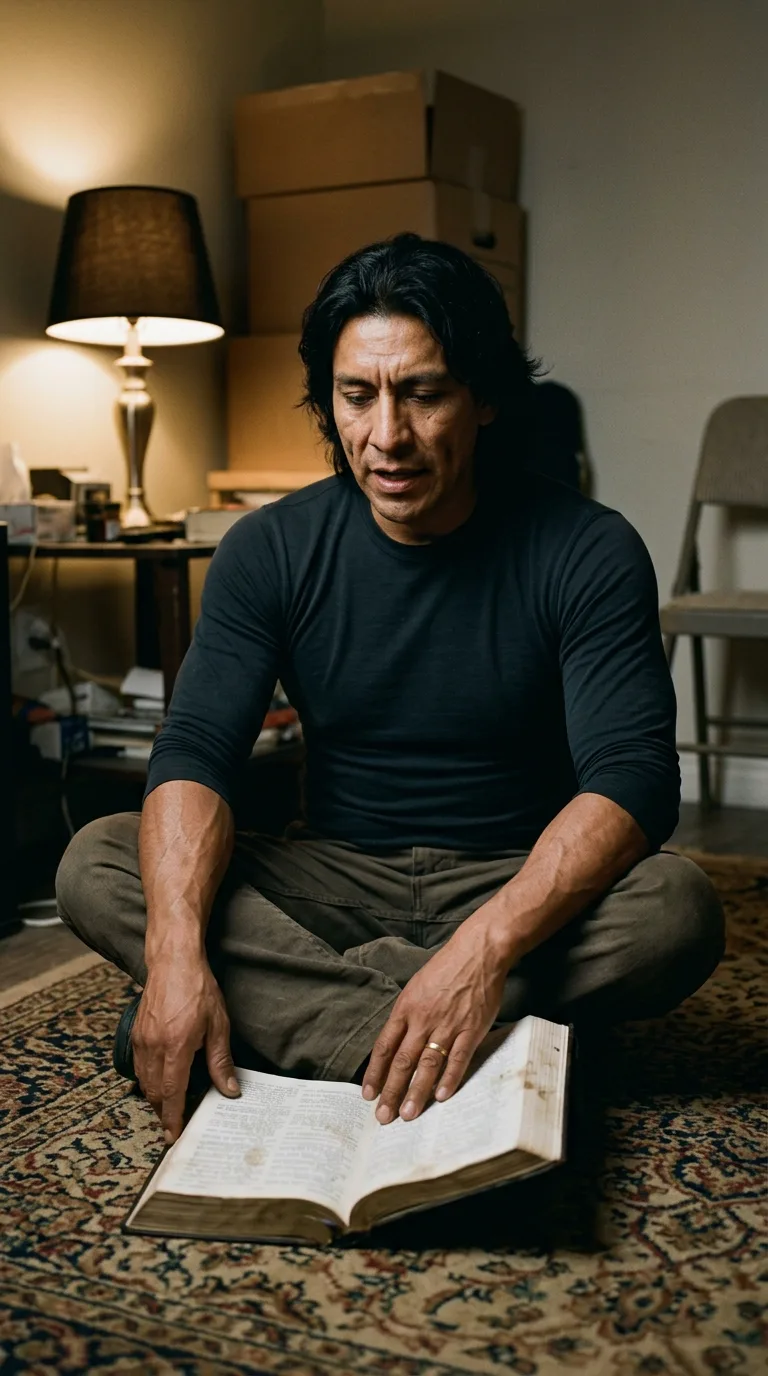
Rarest thing about him: Reading something he was not meant to — rare, 1 in 155
Season 0seed 2117243361 · engine v10
Character card
lineage 2NZHHJ
His body-swap story
@colin.hasbrook, wearing Dennis Amano, rolled the wheel on and woke up as Rafael Quintanilla, spent under a minute in him, then spun the wheel and woke up as Patrick Meagher
Dennis Amano's shoulders are good for sixty-one. That's the thing you keep noticing tonight, standing in his kitchen with a glass of Malbec sweating in his hand, the ocean going gray-gold through the window over the sink. Good shoulders, good knees, a client roster that calls him an inspiration. You have had worse bodies. You have had much worse bodies. But you have had him for less than a minute of his own life and forty minutes of yours, and already the itch is back — that specific hunger that has nothing to do with him being wrong and everything to do with the wheel being right there, open on the laptop, humming like a slot machine that never has to pay out to keep you feeding it. Dennis would tell a client this is a discipline problem. You are not interested in what Dennis would say. You set the wine down still full, sit at his kitchen table like a man about to review his portfolio, and you spin.
The rug under him is Persian, worn thin in a path where feet cross it daily, and his knees are folded onto it cross-legged, and the book in his lap is heavier than it looks, water-stained, the paper gone soft as cloth at the corners. His mouth is already moving on the third line — you feel it stumble, feel the tongue catch on a syllable that has no business in it — and you are there for the second attempt, and it comes out of a throat that has apparently said these vowels before, though it has not, though this is the first time, though nothing about this should be fluent and everything about it is. You finish the page without looking down. Around you: a lamp with a dark shade throwing gold up a wall, boxes stacked in a corner like a move that never got finished, a folding chair nobody's sat in.
The book's cover is under your palm and it gives you nothing — just paper, just damp, just a stranger's find from some estate sale or dead uncle's attic, a curiosity he brought home because it was strange and free. What gives you everything is the shirt. Long-sleeved, black, worn soft, and the second your back settles against its seam you're standing in a bedroom at five-forty in the morning, hauling it over your head one-armed because the other shoulder's been catching for two years now, a dull grinding thing low in the joint that the doctor called wear and told him to live with, so he lives with it, the way he lives with the knees. Below that: the same closet, a hundred mornings of it, gloves already tacky with yesterday's grime hung to dry on the doorknob, the smell of the truck's diesel that never fully washes out of anything he owns.
Then more, faster, unbidden. Marisol laughing at something on her phone, feet up on his lap on this same rug on a Sunday, the twins fighting over the last waffle, the baby — not a baby now, six, loud, hers — asleep against his chest at the hospital the first time he ever felt like his heart had a fourth chamber nobody warned him about. The truck's back step at six a.m., cold coming up through his boots, Ohio sky doing that pink thing over the grain elevator, and the guys on the crew ribbing him because his hair's past his collar again and Marisol likes it that way and he isn't cutting it for anybody else's opinion. The stoplight downtown blinking its one yellow eye over a diner that closed the year the twins were born and never reopened, and how he still slows for it out of habit like the town's still watching. A wedding, twenty years gone, her father crying harder than either of them, this same band already loose then and tighter now around a finger that's thickened with the years and the work.
His back complains where he's sitting, that old ache low in the spine that comes from bending into a truck's hopper ten thousand times, and his hands — his hands know this without being told — go to his own thumbnail, worry at the edge of it, the nail bitten down past comfort though nobody's ever caught him at it, not even her. There's money now that there wasn't for the first ten years, a number on a statement he still doesn't quite believe belongs to a man who empties other people's trash, and he goes to Mass anyway, out of something older than pride, and drinks his one glass most nights standing at this counter, and has never once wanted a cigarette in his life. He is, underneath all of it, fine. Muscled, aching, forty-two, whole.
You look down at your hand on the page. Turn it over. The nail beds are ragged, the ring catches the lamp.
You lift your eyes off it, into whatever is watching, and you say, "I don't know this prayer" — and you smile, and the dimples come up even though nothing in you meant them to.