Colton Meskill
Fictional. Generated by AI — not a real person, and no likeness of one is intended.
23, tailor in Rural Texas · rolled by @colin.hasbrook · card — no film
History
who has worn him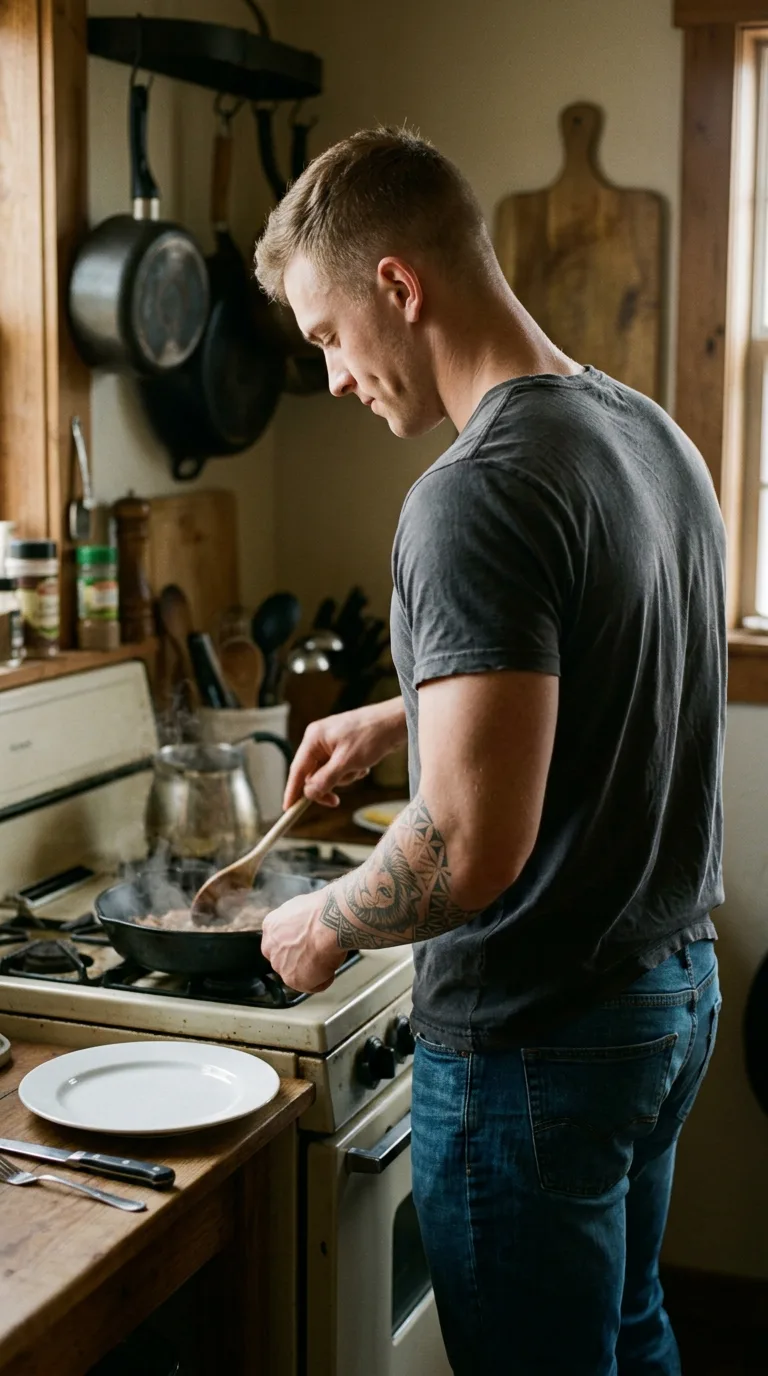
Rarest thing about him: Flips a lighter — rare, 1 in 50
Season 0seed 733330938 · engine v10
Character card
lineage 2NZHHJ
His body-swap story
@colin.hasbrook, wearing Amir Nassif, rolled the wheel on and woke up as Colton Meskill, spent 14 minutes in him, then spun the wheel and woke up as Dennis Amano
The precinct locker room smells like bleach and old coffee, and you are sitting on the bench in a body that is not built for waiting. Amir Nassif's knees bounce. Nine minutes in this one and already the shift feels wrong on you — the gun belt too heavy on hips this narrow, the gold tooth catching the light every time you catch your reflection in the locker door, a rookie's face that isn't yours and never was. Somebody radios something two lockers down. You don't care. Nine minutes was never about the badge. It was about getting back to a screen before the feeling faded — that itch behind the sternum that the last body always leaves, the one that says *small, this one was small, spend it and go again.* You take out your phone. The bar in the browser loads slow on precinct wifi. You don't wait for privacy. You spin.
The wheel is still turning when it isn't.
The spoon is already moving before you know you're the one moving it, small brown-butter circles in a cast iron pan, and then — mid-circle — it stops, hangs there over the heat a half second too long, and starts again the other way. Steam off the pan warms a face that isn't yours yet in any way that matters. A kitchen. A window with afternoon coming through it sideways, low and gold, the kind of light that has no business next to New York's evening except that it is exactly next to it, an hour that doesn't ask your permission. Your back is to a room you've never stood in. Your hand salts the pan without tasting it — an old habit, not yours — and then that same hand, unasked, reaches up into the cabinet and takes down a second plate and sets it next to the first, like it's done this a hundred times and only just noticed.
The dimples come first, before any memory does — a tightness at the corners of the mouth that isn't a smile, just the shape a face defaults to, and it's there even now, even alone, even for no one. Then the shirt. Thin cotton, worn a hundred washes soft, and putting it on this morning comes back through your own shoulders like a stretch you didn't ask for: sleeve, then sleeve, collar, the little hitch where the top button never sits right against a neck this thick. A closet with more flannel than anything else. A tie you own for one reason — Sundays, a woman at church who compliments it every time and will again this week, and you go because it's easier than explaining you don't quite believe what she believes, only something adjacent to it, something with no name and no building.
The tape measure looped and left on a hook by the door gives you a whole shop — the bell over the door, dust in window light, a half-made jacket propped on a dummy in a herringbone that took you three fittings to get right on a groom too impatient to stand still. Pins in a leather pouch you wear at the hip like a holster. Hands that know, without being told, how to pin a hem blind, how to feel where a seam wants to sit before the tape says so. Hands that also, when there's nothing to do with them, find the lighter in your pocket and flip it, flip it, catch it, flip it again — not for the flame, you've never smoked a day, just for the weight of doing something while your head goes six directions the doctor finally had a word for two years back, sitting in a clinic in Lubbock feeling stupid for needing a stranger to tell you why you'd always been like this.
The sleeve tattoo on the right arm burns up out of the skin like it's remembering itself — the insignia, the years attached to it, a barracks smell, a name or two you don't call anymore but would drop everything for if they called. Whatever war that was, it's over, and what's left is ink and a discipline that shows up now in how square you cut a lapel.
The counter under your palms is old laminate, cool, and past it, past the window, there's a gravel road going nowhere in particular and a water tower standing over the flat like a held breath. No one is coming up that road. There was never going to be a second person at that table — you know that the way you know your own name, except it isn't your name, it's his, and it arrives last of all, the way the best-kept things do: *Colton.* Quiet on purpose. Nobody waiting on him and nobody he's waiting on, and still, every night, two plates.
You look down. The spoon is in a hand with a lion inked into geometric linework at the wrist, older ink faded just slightly at the edges, a hand that has never once, in its whole life, belonged to anyone standing in New York.
You turn it over once, like you're checking it's real.
"Didn't think I'd need two chairs tonight," you say, to the empty room, in his voice, and you don't put the second plate away.