David Choe
Fictional. Generated by AI — not a real person, and no likeness of one is intended.
30, stockbroker in New York · rolled by @colin.hasbrook · card — no film
History
who has worn him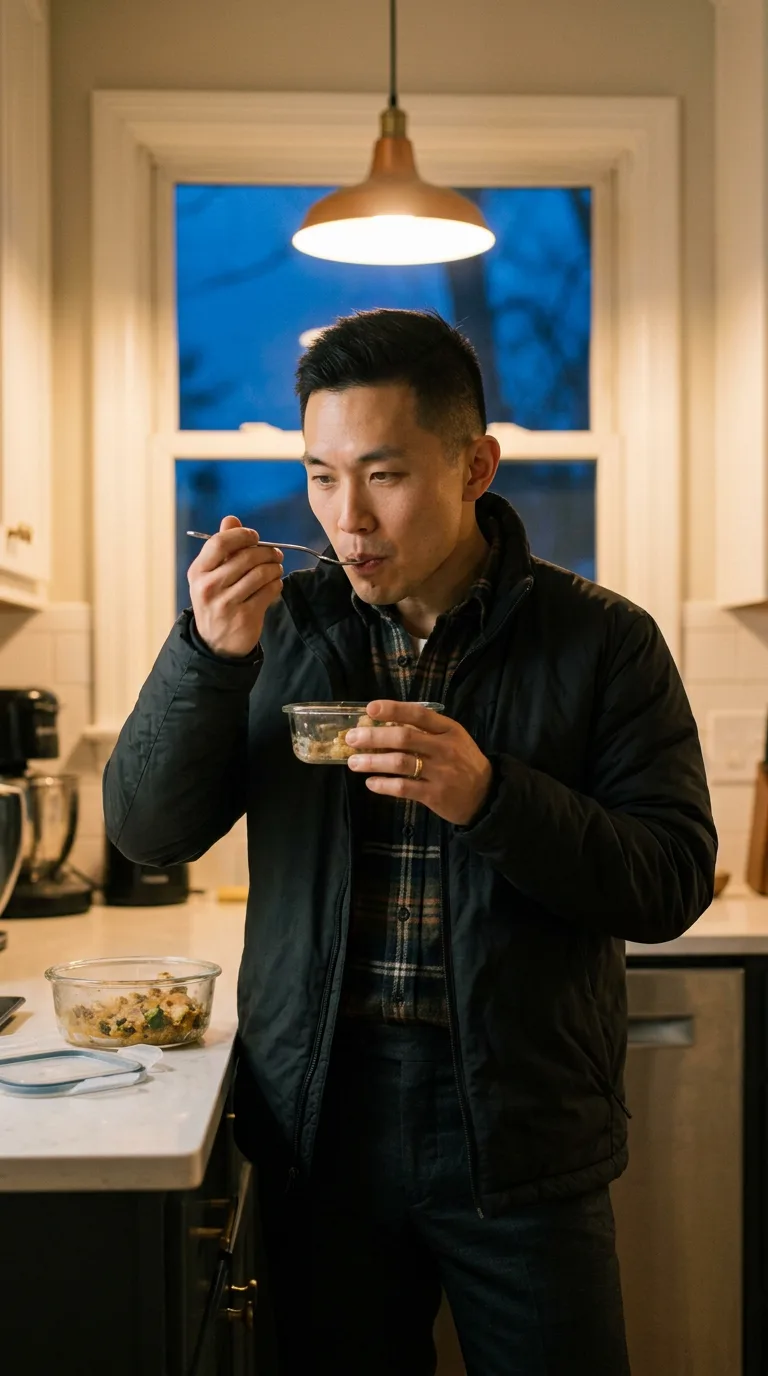
Rarest thing about him: Buried — $100k+ underwater — uncommon, 1 in 161
Season 1seed 2034833078 · engine v11
Character card
lineage 2NZHHJ
His body-swap story
@colin.hasbrook, wearing Wesley Tannehill, rolled the wheel on and woke up as David Choe, spent under a minute in him, then spun the wheel and woke up as Travis Kincaid
You are Wesley Tannehill for less than a minute — dad bod, green eyes, the smell of the forklift's vinyl seat still on your palms — and it is not enough. It was never going to be enough. Wesley's shift ended twenty minutes ago and he clocked out into a life you already know the whole shape of: the same beer he isn't drinking, the same couch, the same phone he won't call his brother on tonight either. You did not even unlock the truck. You are still standing in the break room, keys warm in your fist, and boredom moves through Wesley's body like a draft under a door. Not disgust. Just — done. Four minutes ago you had wanted the forklift, the calluses, the easy dumb strength of him. Now you want to not know what happens next. So you find the site on the cracked phone screen, thumb print smudging Wesley's own glass, and you spin.
The fork is at your mouth and it comes back down.
Somewhere between one bite and the next, the kitchen changes hands. Not the room — the room stays exactly as it was, copper light, blue window, the particular hush of a Brooklyn brownstone at the end of a Wednesday. What changes is who is behind the eyes looking at it. You feel the coat first — real weight, wool, the collar still cold from outside against a neck that is not the neck you had a second ago. You feel how short you suddenly are, how compact, how the shoulders sit different, tighter, like a smaller machine built for more precise work. The fork is between two fingers you did not choose. You set it down on the counter, slow, because some reflex in this body wants order before it wants food.
You shrug the coat off. It slides down arms that know exactly how far to reach for the hook by the door without looking. That's the first one — a flash: this same motion, six hundred times, coat off, tie already loosened on the subway, a wife's voice from the next room saying something about the kids' bath. Gone before you can hold it.
You sit. You pick the fork back up and finish the container, and every bite is a door.
The shirt is what opens first, because it's still against your back, and it comes with a whole morning — his morning, seven this morning, not yours. Standing in front of a mirror in an apartment two floors below this one's twin, buttoning from the bottom because his father taught him that, some old superstition about luck and buttons that David never questioned enough to break. The suspenders going on like a small ceremony. The tie — navy, plain, chosen because his wife laid it out the night before without being asked, and there is a warmth in that, a whole marriage folded into a strip of silk. He remembers, or you remember through him, the receiver of a landline he still keeps at the desk out of superstition too, tucked against his shoulder while both hands stayed free for the other line, a market falling somewhere in his ear while he watched numbers do what numbers do. Two phones. A wall of screens. A number underwater that he does not say out loud to his wife, has not said out loud in fourteen months, because Catholic guilt is a specific flavor and his is the flavor of a man who confesses everything except the mortgage.
The wedding band is next — plain, left hand, and it drags up an ex-girlfriend's face uninvited, a woman from before all this, a version of him that drank and smoked and thought thirty was far away. He quit both around the time he met his wife, quietly, without a speech about it, the way some men quit things when they finally have something worth being sober for. His hands remember the shape of a cigarette anyway, a phantom weight between two fingers that isn't there anymore, hasn't been there in years, and won't be tonight either.
The cleft in his chin isn't something he touches, but you feel it anyway, in the small vanity of a man who has been told his whole life it's his best feature and has stopped being embarrassed by knowing it.
Under all of it: thirty years old, five-five, compact and strong in a way that surprises people who only ever see him behind a desk — squash on Saturdays, a body that recovers fast and complains rarely. Two kids upstairs, asleep or close to it, a wife who is somewhere in this house not yet aware anything in her kitchen has changed hands. A hundred thousand dollars and more that he does not talk about at Mass. A man mid-life, fully lived-in, and none of it yours, all of it right here, sitting in his shoulders like weather.
You look down at your hand — his hand — wedding band catching the pendant light, fork empty, container scraped clean. You turn it over once, like you're checking it's real.
"Long day," you say, to the dark window, to no one, in his voice, because it's the kind of thing he'd say and you haven't found your own yet.
Somewhere back in Nashville a phone screen goes dark in a hand that isn't anyone's now. Here, the container goes in the sink. You don't know how long David Choe gets to keep being eaten from the inside. Neither does he.