Daniel Cho
Fictional. Generated by AI — not a real person, and no likeness of one is intended.
34, nurse in Philadelphia · rolled by @brett.sowinski · card — no film
History
who has worn him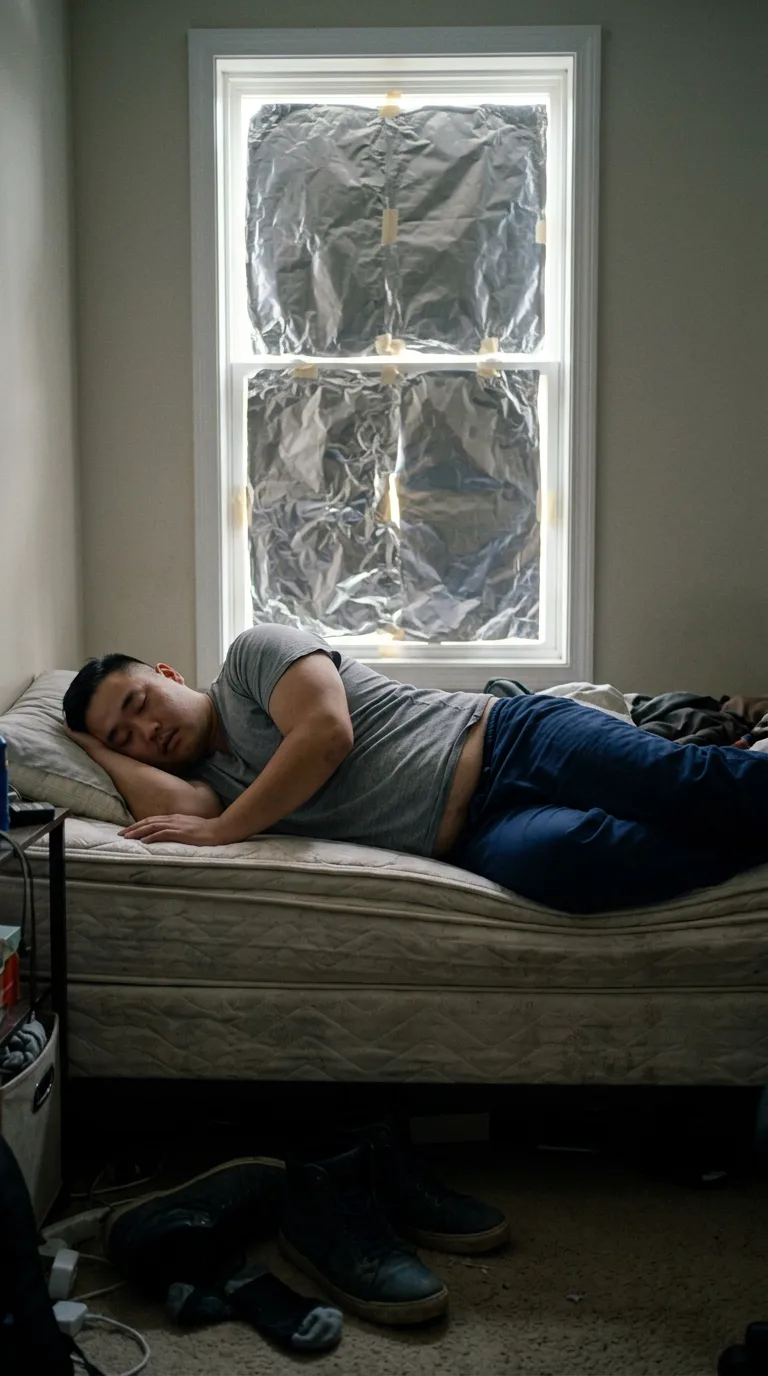
Rarest thing about him: Sleeping off a night shift — common, 1 in 85
Season 1seed 1095706061 · engine v11
Character card
lineage EU5SNZ
His body-swap story
@brett.sowinski, wearing Aaron Feldstein, rolled the wheel on and woke up as Daniel Cho, spent 4 minutes in him, then spun the wheel and woke up as Kevin Doucette
---
Aaron Feldstein's kitchen is too clean for a Saturday. You've had him two minutes and already you know the shape of him better than you wanted to: the laminated vocabulary posters rolled in a corner from some move he never finished unpacking, the half-and-half going sour in the fridge because he drinks his coffee black now, out of some resolution he made and kept. Sunlight through gauzy curtains, the kind of light that makes a grown man's kitchen feel like a waiting room. He is tall. He is strong in the shoulders in a way that got noticed once, on a basketball court, a long time ago. None of that is why you're already reaching for your phone.
It isn't boredom, not exactly. It's that you spun for size and reach and a voice that carries down a hallway, and you got all of it, and it still isn't the thing you wanted, which was to feel like you'd gotten away with something. Two minutes of being looked up to by teenagers and what you feel is how familiar it is. You want strange again. You want the vertigo of it. Houston at midday, sun flat and white through the blinds, and you are standing in a kitchen that smells like someone else's bleach, and you open the site on a phone that isn't going to be yours much longer.
The wheel loads. You don't think about Aaron. You never really do, the ones before — they become furniture fast, the chair you were sitting in. You tap spin.
—
The room is dark and smells like a struck match, foil and adhesive and warm dust, and there is a bar of white light lying across your face like a blade that has decided to be gentle. You turn from it on instinct, into the pillow, the way a body does when it's been doing this exact motion for years, and then — not your instinct, his, already working before you've caught up to it — you turn back into it. Eyes open into the glare. You don't blink.
The weight is wrong in a way that feels right. Shorter. Softer through the middle, a give at the stomach you press into the mattress without meaning to. A gray T-shirt rucked up under one arm. Your trousers are still on — work trousers, navy, the drawstring loose at your hip — and your socked feet are cold against a rumpled blanket that smells like a body that sweated a long shift into it and never changed the sheets after.
You hold still in the light the way he would have, the way whoever he is holds anything uncomfortable, by waiting it out.
—
The boots on the floor get you first, even before you've moved, just the sight of them — scuffed, laces still tied the lazy way, loosened and stepped out of rather than untied. A whole twelve-hour shift arrives sideways: fluorescent light over a nurses' station, the particular ache that lives across the arches when you've been on your feet since before sunset, a chart open on a screen with vitals you checked four times because the resident wouldn't. Daniel Cho. The name comes with the boots, oddly, the way his mother used to say it reading off a school form, two syllables and a pause.
You sit up — his body does, really, out of old habit, swinging legs off the mattress before the mind is awake — and your hand finds the shirt collar, and that's where the morning comes back whole. Not this morning. The one before the shift, yesterday evening by his clock, pulling this same gray shirt over his head in a locker room that smelled like hand sanitizer and old coffee, a coworker laughing about something down the row of lockers, the scrub top folded over his arm because he changes at work and goes home in his own clothes, always has, some small stubborn comfort in not looking like a nurse on the walk to the car. His hands know the motion of that shirt going on without being told — the stretch of the collar wider than it used to be, a thing he's stopped being embarrassed about, mostly.
The foil on the window gives you the next thing, just from looking at it, the taped corners, the particular ritual of it: three years of night shifts and a bedroom with morning sun that used to wake him at nine no matter what he did, until he bought a roll of foil at the hardware store on Passyunk and taped it up himself, badly, and his girlfriend laughed at him for it and then helped him do the last two panels straighter. Mei. She stays over Tuesdays and Thursdays, when her sister has the kids, and this isn't one of those nights, which is why the apartment is this quiet, why there's no small shoes by the door.
The mattress under you gives you the two kids before anything else does — not hers, his, from the marriage that ended before any of this, before the rowhouse and the foil and Mei. A boy and a girl, seven and five, with his ex two neighborhoods over, and a court schedule he keeps in his head better than he keeps anything else, and the particular grief of missing a Tuesday pickup because a shift ran long, a grief that lives in his chest like a stone he's gotten used to carrying. He loves them with an intensity that has nothing careful in it. He has never told anyone, not even Mei, how much he resents loving them this much on four hours of sleep.
Your body — his body — aches in the ordinary places: low back from lifting patients who can't lift themselves, a tightness behind both knees, hands that know how to find a vein in the dark without looking, muscle memory so deep it doesn't feel like a skill anymore, just like breathing. Dad bod, somebody called him once at a cookout, not unkindly, and he'd laughed because it was true and because he liked who'd made him that way, two kids and a job that eats the hours you'd spend at a gym. He drinks more than he says out loud, usually alone, after shifts like the one he just came off. It's the thing nobody at the nurses' station knows, the real reason he sleeps through whatever light finds its way past the foil.
You sit there a second with all of it, a stranger's whole aching ordinary life, heavier than Aaron's ever was, heavier than you expected two minutes ago when you tapped spin standing in someone else's clean kitchen.
—
You look down. Your hands — his hands — are wider than Aaron's, blunt-fingered, a nurse's hands, nails cut short and practical, a faint indent across one palm from a glove strap worn too tight too many hours. You turn the right one over slowly, like it might tell you something your own never could, like it belongs to someone you're about to meet.
You lift your eyes to where a camera would be, if there were one, into the bar of light still lying across the foil, and you say, flat, not sure yet whose voice that was —
"Didn't sleep enough for this."