Kevin Doucette
Fictional. Generated by AI — not a real person, and no likeness of one is intended.
40, dishwasher in Boston · rolled by @brett.sowinski · owned by @julian.reyes · card — no film
History
who has worn him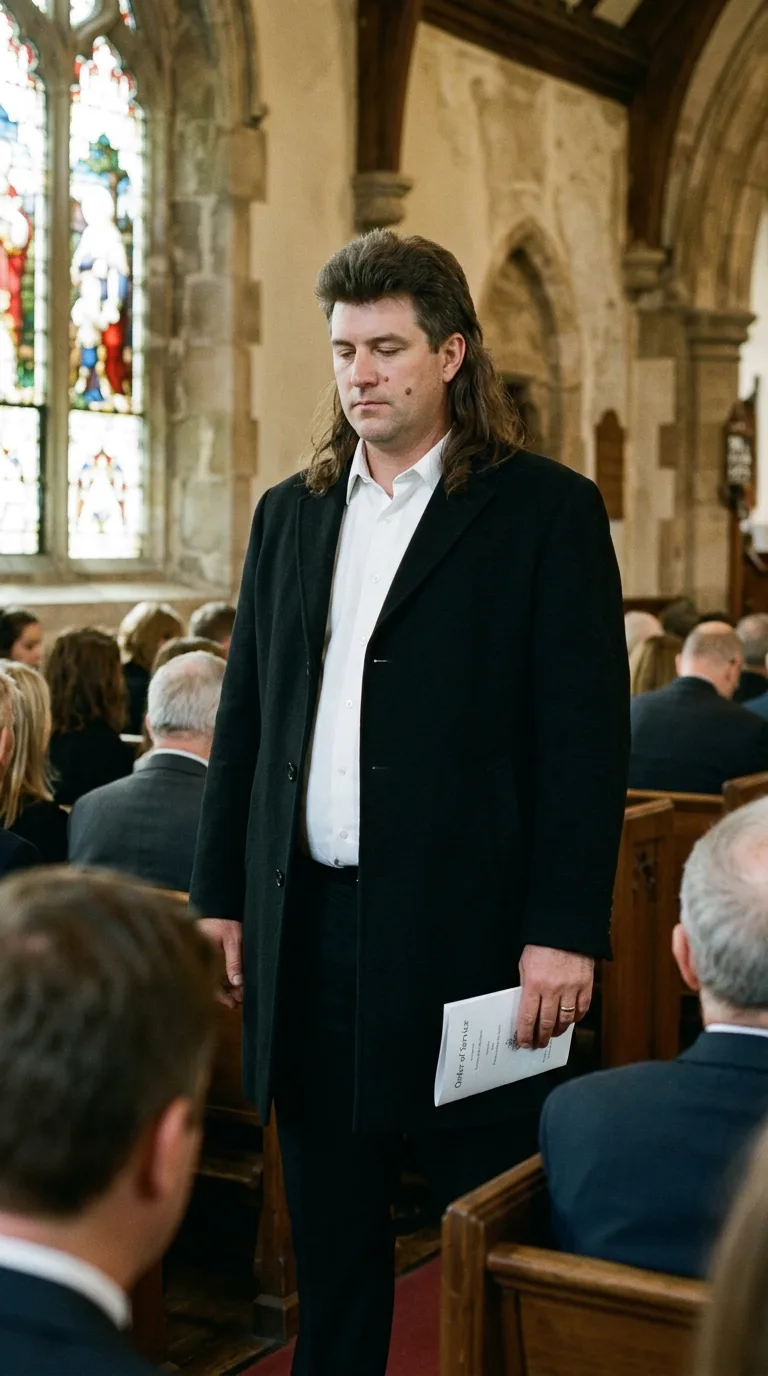
Rarest thing about him: 6'4" — uncommon, 1 in 103
Season 1seed 146354080 · engine v11
Character card
lineage EU5SNZ
His body-swap story
@brett.sowinski, wearing Daniel Cho, rolled the wheel on and woke up as Kevin Doucette, spent 1 minute in him, then spun the wheel and woke up as Russell Tamayo
---
Three minutes. That's what Daniel Cho got — thirty-four years old, a nurse's tired shoulders, the smell of hand sanitizer baked so deep into his skin it might as well be cologne. You stood in his kitchen on a Saturday that was already half gone, sun coming in wrong through a window you didn't choose, and you felt how little he'd been asked to carry. No shift today. No one needing him. Just a body standing in a kitchen with nothing in its hands.
That was the thing you couldn't forgive him for — the emptiness of it. You'd spun for a nurse, a man who saves people, and gotten three minutes of him refilling a water glass. Some lives don't announce themselves. Some lives you have to go looking inside, and Daniel Cho's current hour had nothing in it worth finding. So his hand — your hand, for now — went back to the laptop on his counter, to the site with the wheel on it, and you did not think very hard about why. You never do. You just felt the old itch under borrowed ribs: *spin again, spin again, see what's heavier.*
The wheel doesn't care what day it is where you land. You pay, you spin, and the floor changes under you before the number even finishes clicking into place.
The room goes stone-colored and cold, and sound arrives before sight does — an organ cutting off mid-chord, the groan of a hundred people standing at once. Your knees have weight they didn't have a second ago, real weight, farmer's weight, and there's a folded paper bending in your right fist. Your coat is wrong, buttoned over a chest that isn't the chest you had. You're an inch taller than you've been in three bodies combined and your feet are planted in dress shoes a half size tight. Somewhere behind your eyes, a mole sits high on your cheek like it's always been there, because it has.
You don't move yet. Nobody here is looking at you — that's the mercy of arriving at the back of a chapel mid-service — so you let your hands do what hands do, which is smooth down the front of a borrowed black coat you've apparently always owned, slow, like you're relearning which buttons go where.
That's when he starts coming in.
The coat first — wool, slightly too warm, and under it a memory of a closet in a triple-decker, hangers that don't match, his wife's dresses pressed up against this one good coat he keeps for weddings and funerals both. *Marianne.* The name arrives whole, unasked, with the weight of eighteen years behind it — her laugh in a kitchen, her voice saying his name with the flat Boston vowel she never lost, three kids thundering down a back staircase that creaks on the fourth step every single time, no matter how many times somebody's dad swore he'd fix it.
The order of service in his hand gives you a name you don't say out loud — somebody he worked a line with twenty years back, a guy named Paul who used to split a cigar with him out behind the restaurant at close, both of them leaning on the same dumpster with grease still under their nails. You feel the grief arrive sideways, not sharp, just tired — the grief of a man who has been to enough funerals now that he knows how to stand at the back of one without making it about himself.
The shirt against your back brings the morning: him buttoning it in a bathroom with bad light, the mirror fogged at the corners, Marianne's voice from the hallway asking if he'd ironed it or just hung it near the shower like always. He had. Like always. His arms went into the sleeves the way they've gone into ten thousand shirts, and under the right one, skin pulls differently where the ink is — a cross, praying hands, put there the year his first kid was born, a decision made at 2 a.m. in a shop that smelled like antiseptic and matched nothing about the rest of him except how badly he'd needed, that year, to believe somebody was watching out for all of them.
The hands know things. They crack their knuckles without him asking — one, two, a habit older than the marriage — and under the glove-memory that isn't here now, just the ghost of rubber and hot water, you feel forty years of a body that works standing up: the low ache in a lower back that never fully unclenches, the stiff swing of a shoulder that's run a sink sprayer eleven hours a day since before the oldest kid could walk. Dad bod, Marianne calls it, not unkindly, patting it on her way past. He quit drinking six years ago on a Tuesday for no reason he's ever told anybody, and some nights he still wants one so bad his teeth ache, and he goes and stands on the porch with a cheap cigar instead and lets the smoke do the work whiskey used to do.
The wedding band is on your left hand, plain, worn thin on the inside curve from two decades of water and friction. Touching it, you get her — not a memory exactly, more a texture, the specific gravity of a marriage that is good, mostly, steady, the kind that doesn't make for stories. And behind her, further back, half-sealed like a door somebody meant to lock: another woman, no name arriving with her, just a feeling like a window left open in winter — *the one that got away* — and how he never thinks about her except at funerals, except in rooms where everyone is remembering things on purpose.
The organ has stopped. The room is standing. You are a half-beat behind all of them, which is how you know, underneath everything, that nobody here has noticed anything at all.
You look down. The order of service is damp at one corner where his — your — thumb has been pressing too hard. You turn the hand over, slow, like it might still refuse you, and the mole is up near your cheekbone where you can almost see it if you look hard enough down your own face, and the cross on the forearm is dark and clean under the coat sleeve when you push it back an inch to check.
You say, quiet, just loud enough for the man in the next pew to half-turn —
"Didn't think I'd be the one standing for this part."