Aaron Feldstein
Fictional. Generated by AI — not a real person, and no likeness of one is intended.
49, teacher in Houston · rolled by @brett.sowinski · owned by @julian.reyes · card — no film
History
who has worn him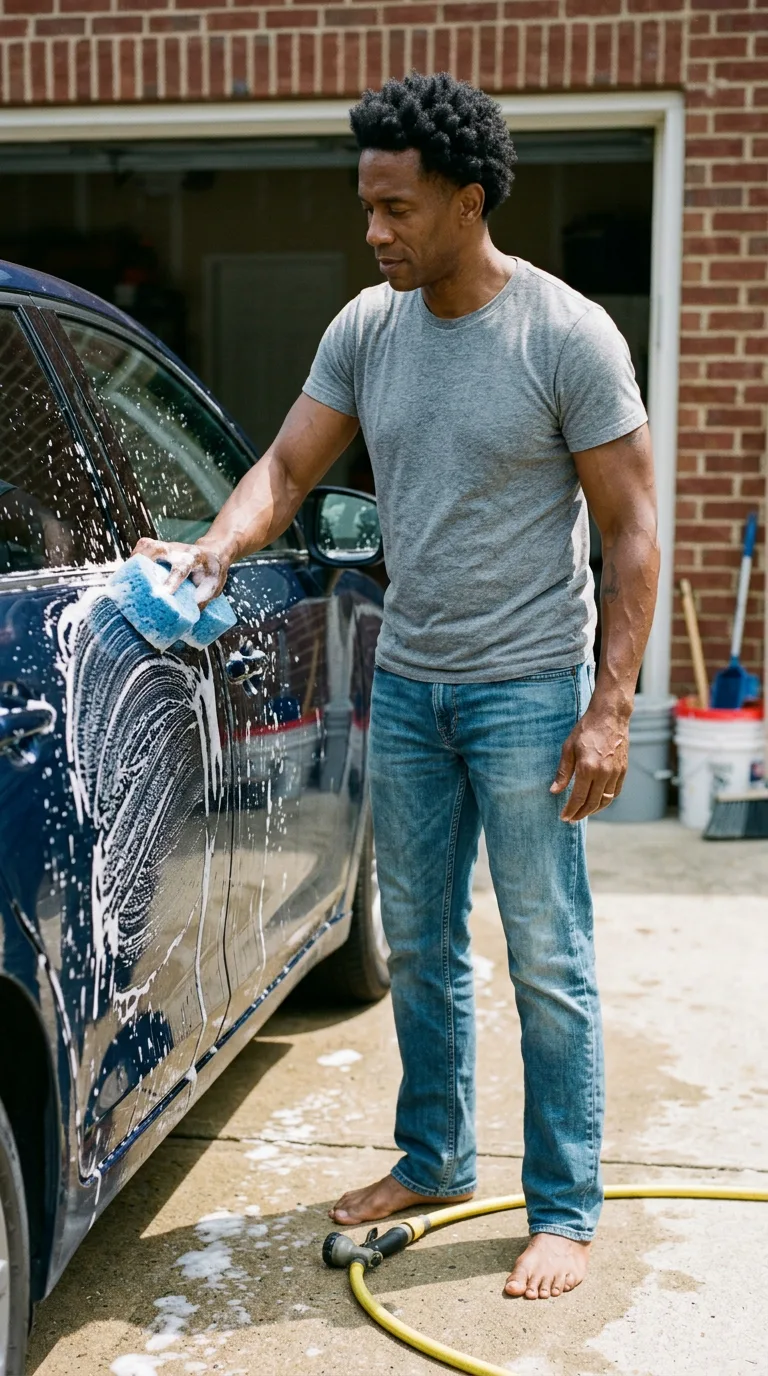
Rarest thing about him: A tremor in the hands — common, 1 in 79
Season 1seed 192886122 · engine v11
Character card
lineage EU5SNZ
His body-swap story
@brett.sowinski, wearing Marcus Teague, rolled the wheel on and woke up as Aaron Feldstein, spent 2 minutes in him, then spun the wheel and woke up as Daniel Cho
The shop smells like WD-40 and the coffee going cold by the register, and your hands — Marcus Teague's hands, thirty-two years old, a beauty mark under the left eye you keep catching in the dusty mirror by the door — are still trembling a little from how new this is. Two minutes. That's all you've been him. The bell on the door hasn't rung, nobody's come in, and already the quiet is unbearable, because quiet in somebody else's life feels like borrowed time standing still. You own this shop now, or he does, or whoever Marcus actually is underneath you, filed somewhere you can't reach — and that not-reaching is the thing. You can feel the shape of a life pressing up against you from the inside, unopened, and you don't want to be the one who has to live into it. Not today. Maybe not ever. So you go back to the site on the shop's cracked phone screen, thumb trembling same as the rest of him, and you spin again, because the wanting was never really about Marcus. It's about the half-second before the wheel stops.
The hose is running somewhere. That's the first thing, before you're even sure you have a body — the hiss of water against concrete, close by, and then your hand is wet and gripping something soft and blue, and there's a man's forearm, darker than Marcus's, roped with a vein that runs down to a wedding band, and the sponge in your grip is sliding down a car door in the wide arc somebody else started and you finish. Thumb tucked. Wrist turning in small circles. The swirl marks stop. You are standing barefoot on warm concrete in Houston, soap sliding past your toes in a thin white river, and the sun is doing something to the back of your neck that Nevada's dry morning never did — this is wet heat, heat that sits on you, heat with weight.
The shirt isn't on him right now — it's a gray t-shirt, damp at the collar, and when your shoulder brushes the fabric against your own skin you get him: this morning, a different shirt, pale blue oxford, sleeves rolled twice because he always rolled them twice, not once, not three — a thing his wife teased him about for nineteen years, said he dressed like a man permanently about to explain something. The lanyard. The laminated badge with his own face looking stunned in it the way everyone's does. Running a hand down the placket, each button already knowing where it goes, muscle memory older than thought. A classroom with the chairs up on the desks and the smell of pencil shavings and orange cleaner, and him standing at the front of it alone after the last bell on a Friday, not because anyone made him stay, but because he liked the ten minutes when it was only his.
The wedding band on your hand — his hand — is warm from the sun, and touching it gives you her: Deborah, asleep still probably, because it's early afternoon here and she works the earlier shift at the clinic on Saturdays and comes home while he's out here making the car look respectable for no one. Twenty-two years married. The way she still laughs too loud at his bad jokes in front of other people just to be kind. Before her — a girl named Rachel, college, a breakup so clean and sad it never turned into anything bitter, just a name that still surfaces sometimes on a particular stretch of a particular song, and he lets it surface and lets it go, the way you let water run over your feet.
The sponge against the door gives you the two kids — a daughter at A&M who calls on Sundays, a son who still can't parallel park and won't let his father teach him. Thirteen years at the same school. A ninth-grade kid who couldn't read two years ago who can now, because Aaron Feldstein stayed after on Tuesdays without telling anyone. A cantor's voice in his head from temple last week, a service he almost skipped and didn't regret going to. None of it dramatic. All of it his.
Your hand — the one not holding the sponge — has a tremor in it, small, constant, the kind he's had since he was forty-four and learned to write around, sign checks around, hold a dry-erase marker steady enough by bracing his wrist on the board. It isn't sickness. It's just a thing his body does now, like the ache behind his left knee from basketball twenty years gone, like the strength still sitting easy and unclaimed in his forearms, a body that's kept itself up out of habit more than vanity.
The water keeps running over bare feet that have stood in this exact driveway a thousand Saturdays, and you hold still in him long enough to feel how ordinary it all is — how whole, how finished-feeling, a life built the way a man builds a thing to last — and that is exactly what makes it bearable to be about to leave.
You lift the hand with the sponge in it and look at it: the wedding band, the fine tremor, soap running down between the fingers into the gutter.
You say, out loud, to no one, in his voice, "Hold on, give me a second" — the voice Debbie's going to hear through the open garage and think nothing of.
Nobody knows how long you'll stay inside that.