Marcus Teague
Fictional. Generated by AI — not a real person, and no likeness of one is intended.
32, shop owner in High-desert Nevada · rolled by @brett.sowinski · owned by @julian.reyes · card — no film
History
who has worn him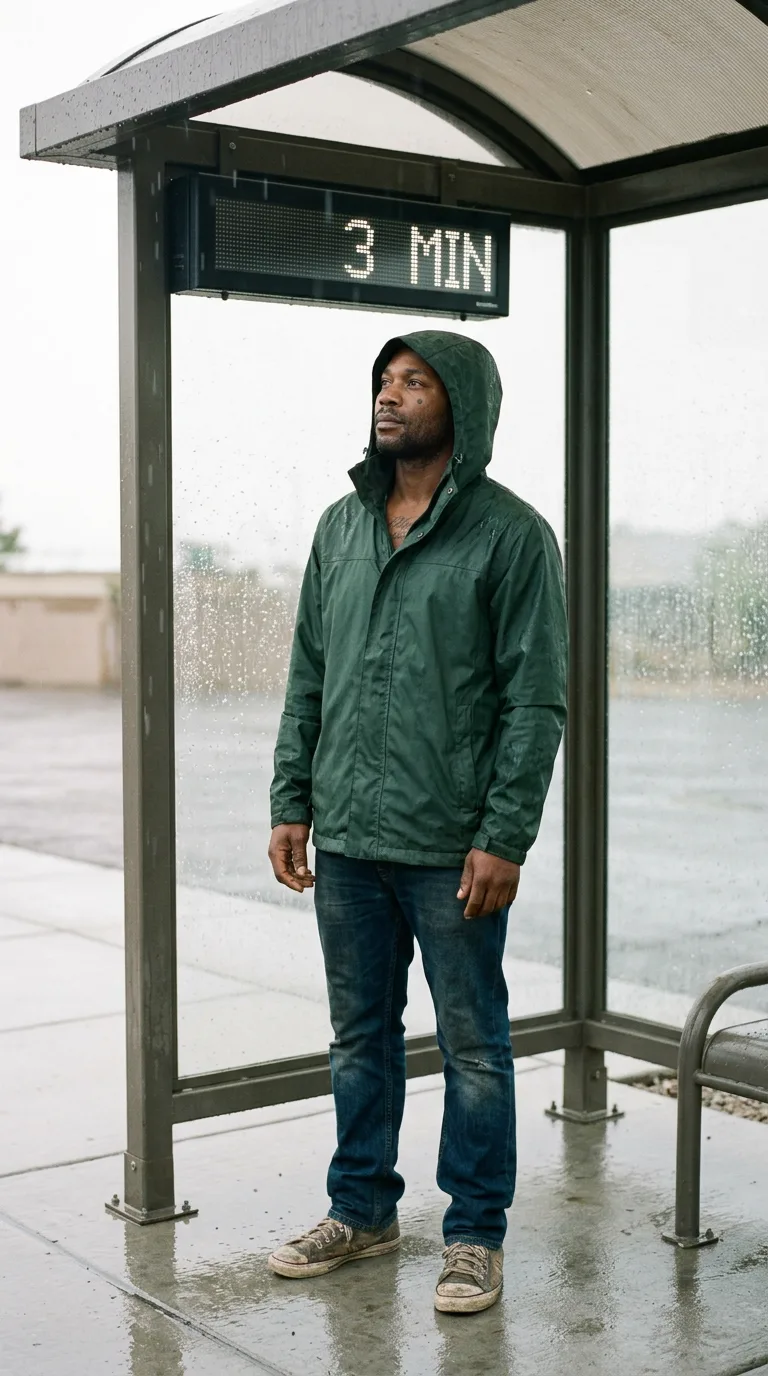
Rarest thing about him: Chews gum constantly — common, 1 in 34
Season 1seed 561177216 · engine v11
Character card
lineage EU5SNZ
His body-swap story
@brett.sowinski rolled the wheel on and woke up as Marcus Teague — their first, spent 2 minutes in him, then spun the wheel and woke up as Aaron Feldstein
You've been at the screen since the dishes, since the third scroll through nothing, and the tab has been open in the corner for a week like a dare. Vessel.cards. A wheel, an unfunny cursive font, a price that felt like a joke until you entered the card number and it wasn't one anymore. You have wanted this since before you could say why — every story where someone wakes up behind a stranger's eyes, every two-in-the-morning thread about what it would feel like, not metaphorically, actually — and tonight is dull enough and the wanting is old enough that you click spin before you can talk yourself out of it. The wheel spins the way wheels do in videos clearly staged to look like this one isn't. It stops.
It is the middle of the morning where you are. Saturday. Nothing on.
It is the middle of the morning where he is too, but his morning is three hours behind yours and it is raining there, and he has been up since four because the store opens at six on Saturdays and the register has to be counted twice. You don't know any of that yet. What you know is weight — more of it than you've ever carried, settling into legs that were already carrying it a half-second before you existed in them — and rain, real rain, needling a scalp that isn't bald but feels suddenly, strangely bare under a hood someone just pushed back. The bus board behind your eyes says 3 MIN. His face is already tipped up into the water, already not flinching from it, like a man letting something wash over him that he decided a long time ago not to fight.
The jacket is the first thing. Green, slick, zipped to the throat, and when it comes back to you — not as information, as feeling — it comes back as Saturday morning cold in a parking lot, a thermos he forgot, the particular ache of his left shoulder that's been there since he caught a pallet wrong two years ago unloading drywall. Marcus. The name arrives with the collar, with the damp cotton under it, with the tag he never cuts out because cutting it out always leaves a little plastic nub that scratches. Marcus Teague. Thirty-two. His shoulder tells you he's strong in the particular way of a man who lifts for work and not for show — forearms that know the weight of a paint can before his eyes confirm it, a lower back that twinges when he bends wrong and has learned forty ways to bend right instead.
The jeans give you the store. Not an image first — a smell: sawdust and the orange hand-soap by the register and WD-40 on a hinge nobody's oiled in a month. You are standing behind a counter that isn't there, ringing up a man who wanted three-quarter-inch conduit and got the wrong length twice, laughing about it, because Marcus laughs easy, laughs like it costs him nothing, and underneath the laugh is the steady quiet math he's always running — the loan on the shop, the slow months, the fast ones, five figures of margin that never quite become six.
The gum isn't in his mouth right now, which feels wrong somehow, the way an itch feels wrong when you can't reach it — his jaw keeps finding nothing there to work, and in the finding, a whole habit surfaces: a drawer by the register full of spearmint packs, a joke his girlfriend makes about how he'll outlive his teeth on the stuff before a cigarette ever touches his mouth, because it never has, not once, not even the once everybody tries at seventeen.
The shirt under the jacket — flannel, red and blue plaid, the collar damp now — brings the morning he put it on, hours and a time zone away from this instant and somehow right here in the fabric: the trailer's low light, the particular creak of the single-wide settling on its blocks, her voice from the other room, half-asleep, telling him to grab her charger off the counter on his way out. Her. The girlfriend. The one he lives with, whose laugh he could pick out of a crowded lot, whose name sits just out of reach of your borrowed tongue the way a word does right before it comes. And behind her, further back, an ex who still has a weight to her, a gravity, the kind that doesn't go away just because the apartment did — a name that flickers and won't quite resolve, a feeling more than a face: something unfinished, something that still costs him a half-second some mornings.
The collar is open one button and that's where the tattoo sits, and touching it — his own hand hasn't risen to it, but the rain is running along it and that's contact enough — gives you a date and a name in script he chose himself, inked young, meaning something he still means: his mother, or a brother, or a year nobody else would recognize, grief turned into permanence because that's what twenty-two-year-olds do with grief when they can't afford therapy and can afford a tattoo gun. It aches faintly under the ink the way old ink does in cold rain, a sensation that isn't pain, just presence.
The shoes — canvas, soaked through already, laces gone gray — remember standing on a concrete floor for ten hours at a stretch, remember the particular give of his arches after a day like that, remember a body that is thirty-two and starting, just starting, to notice thirty-two in the knees.
You are still standing in the shelter. No time has passed. The board still says 3 MIN. Rain is still coming down on a face tipped up into it like he has decided, somewhere back before any of this, not to be cold anymore, not to let the weather be a thing that happens to him instead of a thing he steps into.
You bring his hand up — your hand now, for as long as now lasts — and turn it over in the rain, knuckles up, then palm, watching water run off a lifeline that isn't yours and callus that wasn't either five seconds ago, and you say, out loud, in his voice, to no one, to the empty shelter and the empty lot:
"There you are."