Dale Kowalczyk
Fictional. Generated by AI — not a real person, and no likeness of one is intended.
30, farmer in Small-town Ohio · rolled by @colin.hasbrook · card — no film
History
who has worn him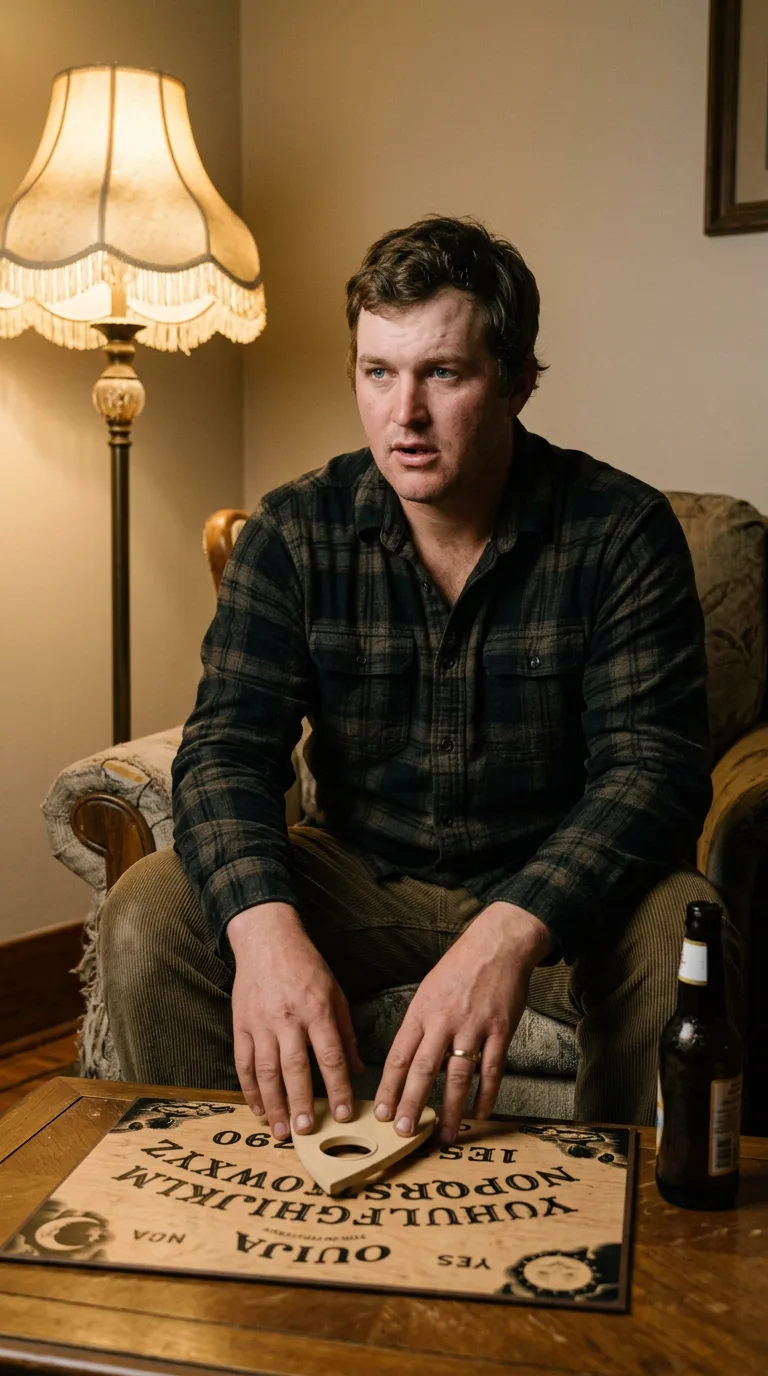
Rarest thing about him: A missing front tooth — epic, 1 in 191
Season 0seed 1974974652 · engine v10
Character card
lineage 2NZHHJ
His body-swap story
@colin.hasbrook, wearing Bryan Kozlowski, rolled the wheel on and woke up as Dale Kowalczyk, spent 1 minute in him, then spun the wheel and woke up as Nicholas Broda
Bryan Kozlowski's hands smell like fryer oil and bleach even five minutes into being him, and that's the thing that decides it — not the dimples, not the twenty-one-year-old knees that still work fine, but the smell that won't wash out of a line cook's cuticles no matter whose life you're borrowing. You stand in his galley kitchen in Philadelphia doing nothing, feeling nothing wrong exactly, just aware that this one is small and this one is soft in the middle and this one has a shift in ninety minutes that isn't yours to work. Five minutes isn't long enough to want to stay and it isn't short enough to forgive. You open the site on his phone with his thumb, the print still faint and greasy on the glass, and you spin because there's nothing here worth being, and somewhere it is always somebody's ordinary Monday.
The wheel gives you weight before it gives you anything else — mass dropping into a body that is already sitting, already leaning forward, already committed to a motion that started before you existed inside it. Your hand — his hand — is moving across a coffee table toward a wooden pointer with GOODBYE stamped at its wide end, sliding it there to kill a joke, and the hand does not stop. It keeps going past the word, level and unhurried, tracing three letters on the painted board like it knows the shape it's making. A beer sweats a ring into the wood by the board's corner. A lamp with a fringed shade throws yellow light across corduroy knees. Somewhere behind your borrowed sternum a chest draws one breath that isn't a flinch, isn't anything — just breathing, the same as before, because nothing in him noticed the hinge.
The shirt is what opens first — flannel, soft with age at the elbows, and it comes with the memory of pulling it off a hook by the back door at five-forty this morning, cold air from the mudroom, boots already caked from yesterday because there hadn't been time to hose them off. His name arrives with the shirt, easy, the way your own name never needs fetching: Dale Kowalczyk. Thirty years old. A field gate an hour before this, latch cold enough to bite, light going long and orange across beans that aren't his best crop this year and won't cover what the equipment loan already owes. The debt sits in him like a low hum he's stopped hearing, the particular flavor of being underwater on paper while the ground under his boots is worth more than he'll ever see cash for. He doesn't talk about it. Nobody around here does, not out loud, not even to the wife.
The wife — Carrie — comes through the wedding band, plain gold, worn thin on the inside curve from a decade of gripping steering wheels and fence tools and, twice a week probably, her hand. She's asleep upstairs right now, or was an hour ago; there's a kid down the hall too, four years old, a girl who calls this house too quiet when Dale works late. And under that, guiltily, folded away like a receipt he means to throw out, there's a woman named Steph who isn't his wife, who he stopped seeing eight months back and still, some nights, misses in a way that has nothing to do with wanting her back and everything to do with missing being looked at like a possibility instead of a fixture. He loved his wife the whole time. That's the part that made it worse.
The missing tooth is on his tongue before it's anything else — the gap where a front tooth should be, from a truck door catching him wrong three winters ago, and he's stopped feeling self-conscious about it except at the dentist's office he can't afford to go back to. His hands are thick, seamed, competent with things they've never been taught in words — the give of a gate latch, the particular drag of dry corn through a auger, the vape pen he keeps in his shirt pocket out of habit more than need, three or four pulls an hour without noticing. Big night twice a month, usually a Friday, beer that turns into more beer, Carrie driving. Mass on Sundays when the weather allows it, less when it doesn't, an apology to nobody in particular either way.
The corduroy under your palms is worn soft at the thighs. The beer bottle sweats against the board's edge, close enough that its smell — yeasty, cheap — threads into the memory of every ordinary night this room has held: Carrie laughing at something dumb, the kid asleep upstairs, the diner on Main Street that closed two years ago and left the stoplight with nothing to blink at but itself. He was doing this as a joke. Somebody dared him, or he dared himself, alone with a beer on a Monday because Carrie'd taken the kid to her mother's and the house was too quiet the way the kid always says it is. He never believed in it. That's what made pushing the planchette to GOODBYE funny — a man ending a joke he started.
His hand stops moving. You look down at it — thick fingers, dirt worked into the knuckle creases that no amount of dish soap ever fully lifts, the ring catching lamp light — and you turn it over slowly, the way he never would have, like checking whether it's really the one you remember owning.
"Hell," you say, in his voice, gap-toothed and low, to a room with nobody in it to hear the difference, "didn't think that thing worked."
You don't know yet how long you keep the debt, the tooth, the quiet upstairs. You never do.