Bryan Kozlowski
Fictional. Generated by AI — not a real person, and no likeness of one is intended.
21, line cook in Philadelphia · rolled by @colin.hasbrook · card — no film
History
who has worn him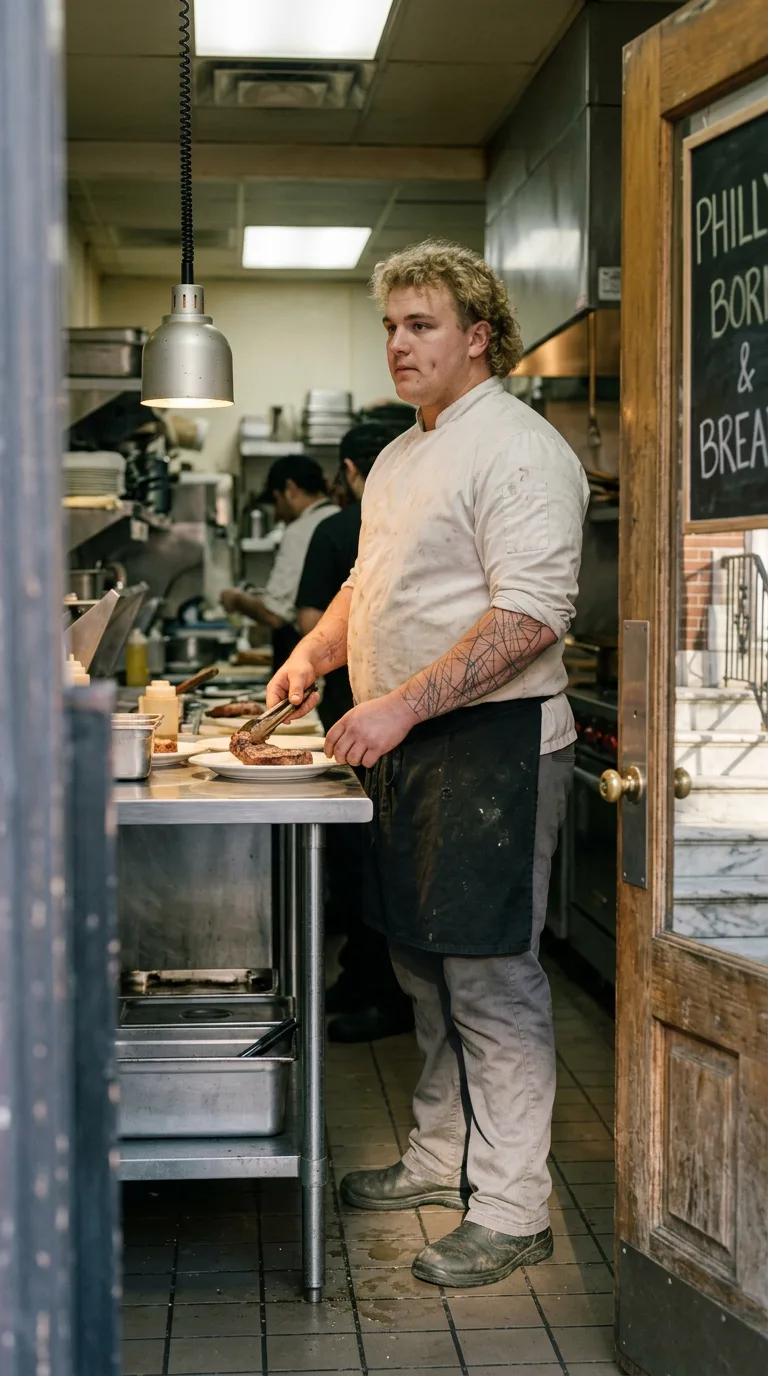
Rarest thing about him: Smokes and vapes — epic, 1 in 49
Season 0seed 1598016148 · engine v10
Character card
lineage 2NZHHJ
His body-swap story
@colin.hasbrook, wearing Ramón Iwata, rolled the wheel on and woke up as Bryan Kozlowski, spent 5 minutes in him, then spun the wheel and woke up as Dale Kowalczyk
The knee has been talking to you for eleven years now, and Ramón Iwata's knee is worse than the one before it, and the one before that. You're standing in the gravel lot behind a half-framed porch addition in Eastern Kentucky, afternoon sun flat and white, and the man whose skin you're borrowing has a text open on his phone from a nephew asking if he's coming to Easter, and you don't know this nephew, you have never known this nephew, and something about that — a whole family orbiting a body you're just visiting — makes the wanting rise up the way it always does, quiet and total, like a held breath deciding to let go. Fifty-eight years old, less than a minute in, and already you're thinking about the wheel. That's the tell, if you were the kind of person who still checked yourself for tells. You pull up vessel.cards on the cracked phone screen with Ramón's thumb, the thumb that doesn't quite bend right anymore, and you spin.
The tongs are already in your hand.
Not your hand — his, and the weight arrives before the name does, before anything does: younger, thicker through the wrist, a burn-scar tightness along the forearm you can feel like a memory of pain rather than pain itself. The steak on the plate in front of you is off by four seconds and you know it before you know how you know it, and the tongs come up, turn it, set it, adjust the herb butter with a flick nobody watching would ever see. Then the flick that should have been automatic isn't. You do it again, slower. Right. You check the next ten plates like a man counting his own pulse.
The apron ties dig a little at the small of a back that carries more weight than the one you left, and that's the first thing that comes through — not a memory yet, just a body's fact, that this one is built solid and soft both, that it has been on its feet twelve hours a day since it was seventeen. Then the ties themselves give you something: this morning, hands — his hands, doing the double loop out of habit, the same motion since culinary school, since Sister Agnes's kitchen at the parish hall where he first learned a blade could be gentle. The chef's coat sleeve brushes a scar along his forearm, old and pale under the ink, and a whole afternoon opens: sixteen, a fryer, his mother's voice sharp with fear and not anger, the sleeve rolled down for a month after so nobody at school would ask.
The ink itself — fine geometric lines climbing the right arm, a compass rose buried somewhere in the lattice — comes up warm under your touch like it's still healing, though it isn't. He got the first piece the week he turned eighteen, alone, because he wanted one thing in his life nobody else had a vote on. His mother cried. His father, a longshoreman built like a door, just looked at it a long time and said it was good work, which from him was the whole speech. Church that Sunday, sleeve down, the incense and the gold and Father Michael's voice going up into the dome, and Bryan — you have the name now, it comes off the embroidery at his collar, small and blue-thread, Bryan — kneeling there thinking about the tattoo like a secret he was keeping from God, which he knew wasn't how it worked, but felt that way anyway.
The clogs under his feet know this floor's every uneven tile, six years of it, the same stretch from flattop to plate rail worn into muscle. There's a boyfriend in there somewhere, ended nine months back, no wreckage left, just a name — Theo — that surfaces without weight when your fingers find the pack of gum shoved in the apron's front pocket. He's chewing before he decides to. Spearmint. Always spearmint, since he quit smoking indoors and started vaping instead and still can't make either one feel like enough, and there's a flash of the little orange bottle in his medicine cabinet, sertraline, taken every morning without ceremony, a doctor at student health who was kind about it when nobody else in his family had ever said the word aloud.
Elsewhere in the kitchen someone calls a ticket. The rhythm wants to close back over you like water over a dropped stone — his hands know where the herbs are without his eyes, know the exact half-second before a pan starts to catch. You let it. Ten plates, checked, correct. The line cook next to him says something about the Sixers and Bryan's mouth — your mouth now — almost answers before you catch it and let it, because some replies don't need deciding, they're just there, worn into the throat like the floor is worn into his feet.
You look down at the hand holding the tongs. Blond hair-flecked knuckles, a forearm laced in ink that isn't yours and never will be, dimples pulling at your face for no reason at all, just resting there, an inheritance from a mother somewhere in Fishtown who has the same ones. You set the tongs down on the rail, slow, like something that might go off.
"Order up," you say, to nobody, just to hear it land in his voice instead of Ramón's, and you don't know yet if that's the last thing you'll ever say as him or the first of ten thousand.