Colton Reyes
Fictional. Generated by AI — not a real person, and no likeness of one is intended.
29, merchant mariner in Miami · rolled by @marco.villagrana · card — no film
History
who has worn him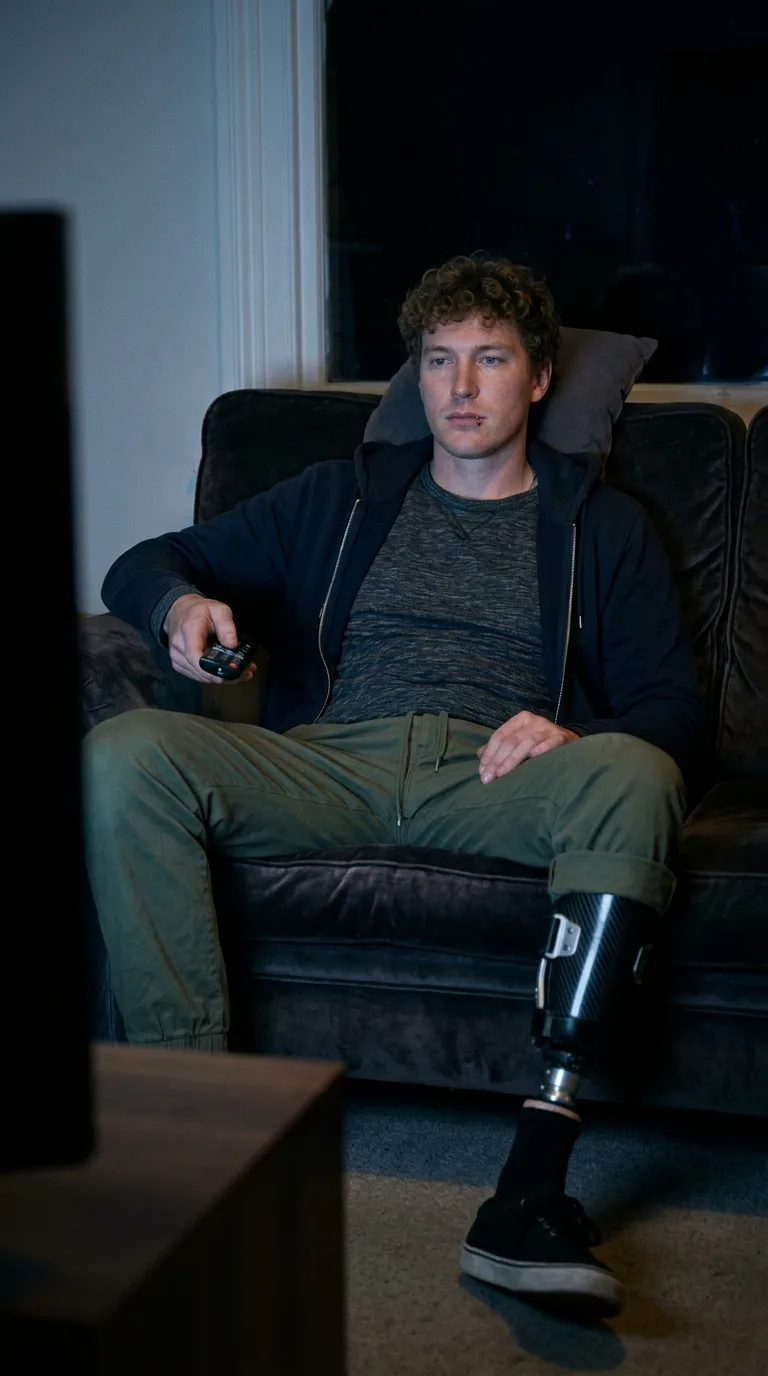
Rarest thing about him: Below-knee prosthetic leg — rare, 1 in 242
Season 1seed 141370599 · engine v11
Character card
lineage LJL8SV
His body-swap story
@marco.villagrana, wearing Sameer Nayak, rolled the wheel on and woke up as Colton Reyes, spent 5 minutes in him, then spun the wheel and woke up as Douglas Hennessy
Three minutes is not enough for a body to learn you. You know this the way you know weather. You are standing — Sameer Nayak is standing, was standing — at the kitchen counter in Atlanta, in a robe, socked feet cold on tile, and the meteorologist's whole flat familiar life is sitting in your head like furniture you didn't buy: the radar shift that ends at midnight, the mother who calls on Sundays, the girl two floors down he hasn't asked out. None of it is yours. You only just got here. You are already leaving.
It isn't boredom, exactly. It's that this one is careful. Sameer checks smoke detectors. Sameer eats the vegetables first. Three minutes in him and you already know the whole shape of the evening he'd planned, and it has no edge on it anywhere, and edge is the thing you spin for. You set the mug down. You open the laptop that is already open. The wheel is already loaded, spinning-wheel bright against the dark kitchen, vessel.cards patient at the top of the tab like it has been waiting for you specifically, which — call it a hundred and thirty-eight times now — it basically has. You tap. Sameer's finger does it. The wheel goes.
The room changes before the finger finishes moving.
You are sitting down. That's the first thing — weight dropped low and long into cushions, legs longer than any legs you've wanted in weeks, one of them ending in something that doesn't bend where a knee should and bends instead lower, hinged, carbon under your rolled-up trouser cuff. A television throws blue light across a dark living room. There's a remote loose against your palm, and your palm sets it down on the couch arm without being told to, mid-motion, like the hand already knew the show was about to get good and didn't want to fumble it. You are sitting up straighter than you were a half-second ago. You don't laugh at the line that comes next. The old him would have.
The couch is deep and a little too soft, sinking under a frame taller than Sameer's by almost a foot, and that height comes to you first through the couch itself — the way your knees are is wrong, is far away, is somebody else's geometry entirely. Then the shirt. It's against your back, worn thin at the shoulder blades, and touching it — just sitting in it — gives you a Tuesday morning, gray light through a Miami blind, a man pulling this exact shirt over his head one-handed while balancing on the good leg, sock already on the bad one because the liner goes on first or the whole day chafes. You feel that lesson arrive whole: sock first, then liner, then the socket, twist and seat and listen for the click that means it's honest. His name comes with it, the way names come with houses — Colton, said in his own head in his own voice, unremarkable to him, ordinary as a doorknob.
The prosthetic itself, under your fingers when you reach down without deciding to — a old habit checking it's seated — brings back more than the shirt did. Three years since the leg. A winch line on deck that didn't behave, and after that a hospital, and after the hospital a physical therapist who told him "most guys quit lifting things by month six" like it was a fact and not a dare, and Colton — you're already thinking of him as Colton, the name won't stay borrowed — took it as a dare, obviously, because that's the kind of animal he is. Deck hand. Now second mate, or near it. Container ships out of PortMiami, gone three weeks, back ten days, gone again. You get, through the carbon under your palm, a whole watch at 3 a.m. somewhere off Hispaniola, salt-cold rail under his good hand, checking a lashing bar with a headlamp because the swell had shifted the stack and nobody else was going to check it at that hour, and the particular clean fatigue of a job done right that nobody will ever see him do.
The couch cushion under you gives you more — Saturday, home ten days now, restless in the good way that means the leave is working, savings account he doesn't check because he doesn't need to (the number sits in memory glancing and huge, the kind of money that came from a settlement and grief and none of it was worth the trade, he'd tell you, and mean it), church he goes to some Sundays and skips others without much guilt about either, a girl he liked once who wanted the story of the leg told a certain way, sadder than it was, and he stopped calling her because of that, not because of the leg. A ring through his lip that he touches now without knowing he's doing it, the metal warm from his own mouth, and that touch gives you nothing narrative, just a plain animal fact: he's had it four years, it doesn't mean anything anymore, he likes how it feels when he runs his tongue along it thinking.
He quit drinking two years back, quietly, no story attached, the kind of quitting that doesn't need a coin or a chip because nobody was watching closely enough to need convincing. Evangelical, Sunday-shaped rather than daily, prays like a man leaving voicemails — short, a little embarrassed, sincere. Single, no ex worth the word, no kids, a life sized for one and comfortable that way.
The remote is still warm from his hand under yours. The room smells like the ocean got into the building somehow, salt through a cracked window, neon bleeding faint pink off wet tile out on the balcony past the glass. Your — his — chest rises long and slow, a big man's breathing, unhurried.
You look down at the hand on your knee. It is broad, sun-marked along the back from decks and rail-glare, a callus at the base of the first two fingers that a winch put there and years kept there. You turn it over. The palm is paler, a thin white seam of old scar you didn't ask about and it doesn't offer. It is a good hand. It is not one you've worn before.
You lift your eyes to the dark television glass, where a shape is looking back that isn't you and isn't only Colton either, not anymore, and you say, out loud, to the empty apartment and to nobody:
"Okay. What else you got."