Colin Brennaghan
Fictional. Generated by AI — not a real person, and no likeness of one is intended.
21, trucker in Philadelphia · rolled by @connor.waskiewicz · card — no film
History
who has worn him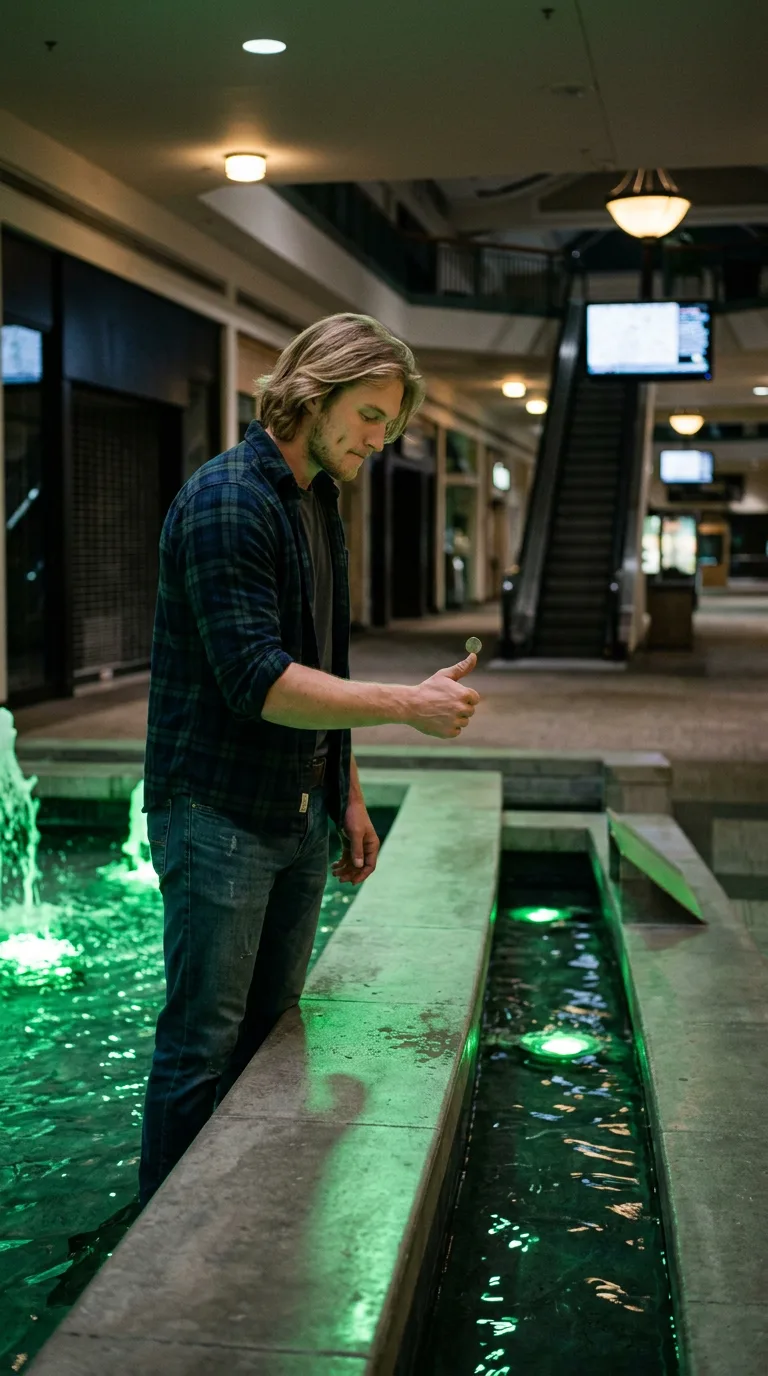
Rarest thing about him: Making a wish — common, 1 in 65
Season 1seed 229859301 · engine v11
Character card
lineage 2NZHHJ
His body-swap story
@connor.waskiewicz, wearing Daniel Okamura, rolled the wheel on and woke up as Colin Brennaghan
The warehouse floor is cold through Daniel Okamura's shoes, and that is the whole problem with him, tonight: cold floor, aching arch, a shift that ended an hour ago and a body that is still standing in it anyway, because you told it to stay a minute longer. Bald head under the fluorescents. Dimples you have grown almost fond of, the way you get fond of a rental car. Thirty-eight years old, five-foot-nothing, and strong as a stapled bird — good hands, this one, quick on a pallet jack, but small in every direction that matters tonight, and it is the smallness that decided it before you did. You have been him less than a minute and you already know the whole shape of being him for longer: reaching for things. Always reaching. A man built like a keyhole in a world built for keys.
You take out your phone in his hand — his hand, still, technically, though you stopped asking whose was whose nine hundred bodies ago — and the site loads the way it always loads, patient, gray, a wheel drawn thin as a coin's edge. You do not think about it as a decision. You think about it the way you think about opening a fridge you already know is empty. Spin.
—
The coin leaves your thumb.
You feel it go — the small release at the pad of the thumb, the flick of a callus that has done this a thousand idle times at a thousand idle counters — and then the falling is wrong, all at once and everywhere, because you are two feet taller than you were and the floor under your boots is concrete lipped with wet tile instead of a warehouse's aching flatness, and the air smells like chlorine and old popcorn instead of cardboard, and the light coming up off the water is green, and there is a whole strange country of shoulder and forearm attached to you now that Daniel's arms never had to carry.
The splash goes inward. Wrong. Not outward the way a coin's splash goes, but in on itself, a swallow instead of a scatter, and something that was standing at this lip a half-second ago is not standing anywhere at all, anymore, ever again.
You stay looking down at the water like he did. You don't know yet that's what you're doing.
—
It comes in through the shirt first — flannel, worn soft at the elbows, and it gives you an afternoon at a thrift store on Passyunk with his sister needling him about looking like a lumberjack cosplaying a lumberjack, and him laughing, dimples cutting in even though he wasn't smiling on purpose, they just do that, they always have, since he was nine and his mother called them God's apology for the rest of his face taking so long to grow into itself.
The cap on your head, the brim low — that one comes with diesel smell and a sunrise over a Sheetz outside Hagerstown, hands numb around a coffee cup, three hundred and ten miles left on the log and a country song he doesn't even like playing because the last driver left the dial there and he never bothered to move it. His name is Colin Brennaghan, and the flash of it lands whole and unbidden — Colin, said in his mother's kitchen, said over a CB handle he never picked for himself, said by a dispatcher who likes him because he never complains about the bad routes.
The boots — worn at the outside heel, the leather gone the particular dark of a thousand mornings — bring the good weight of him: six-foot-two, muscle built by loading straps and backing trailers by feel, not by mirror, a body that has never once had to ask permission to reach the top shelf. It aches in the low back the way twenty-one shouldn't ache yet, a trucker's ache, earned early. It is strong in the forearms in a way that has nothing to do with vanity.
The belt buckle under your palm gives you money — not what you'd guess from the flannel and the dead cab lights, but real money, an inheritance half-spent on nothing, invested by a broker his father found him, more zeroes than a twenty-one-year-old knows what to do with, which is why he still drives, still loads his own truck at 4 a.m., because sitting still with that much money and nothing to point it at felt like drowning slower than any river could manage.
The jeans, worn thin at one knee — that's an ex, a girl from Fishtown who liked him for a summer and then didn't, no children, no wound that reopens, just a low door closed quiet.
And the coin's ghost, still faintly in the thumb — that's the wish itself, arriving last and smallest: he wished, standing here two minutes past his own midnight on a night he couldn't sleep and drove to the dead mall out of some old habit from being a kid dragged along by his mother, he wished for something to happen to him. Something. Anything. He did not specify.
You feel the joints of his fingers wanting to pop, the way they always want to, unthinking, a tic worn into tendon over twenty-one years, and you let them.
—
You look at your hands — his hands, wide-knuckled, a rope-burn callus gone silver along one palm — and you turn them over once in the green light like you're checking they're real, which they are, more real than anything you were an hour ago in Boston.
You look up into the dark glass wall behind the fountain where your own reflection is standing in his shape, dimples showing even though nothing in you is smiling, and you say, to no one, in his voice, coming out low and a little rough from a throat that isn't used to being spoken through by someone else yet:
"Guess it worked."