Daniel Okamura
Fictional. Generated by AI — not a real person, and no likeness of one is intended.
38, warehouse picker in Boston · rolled by @connor.waskiewicz · card — no film
History
who has worn him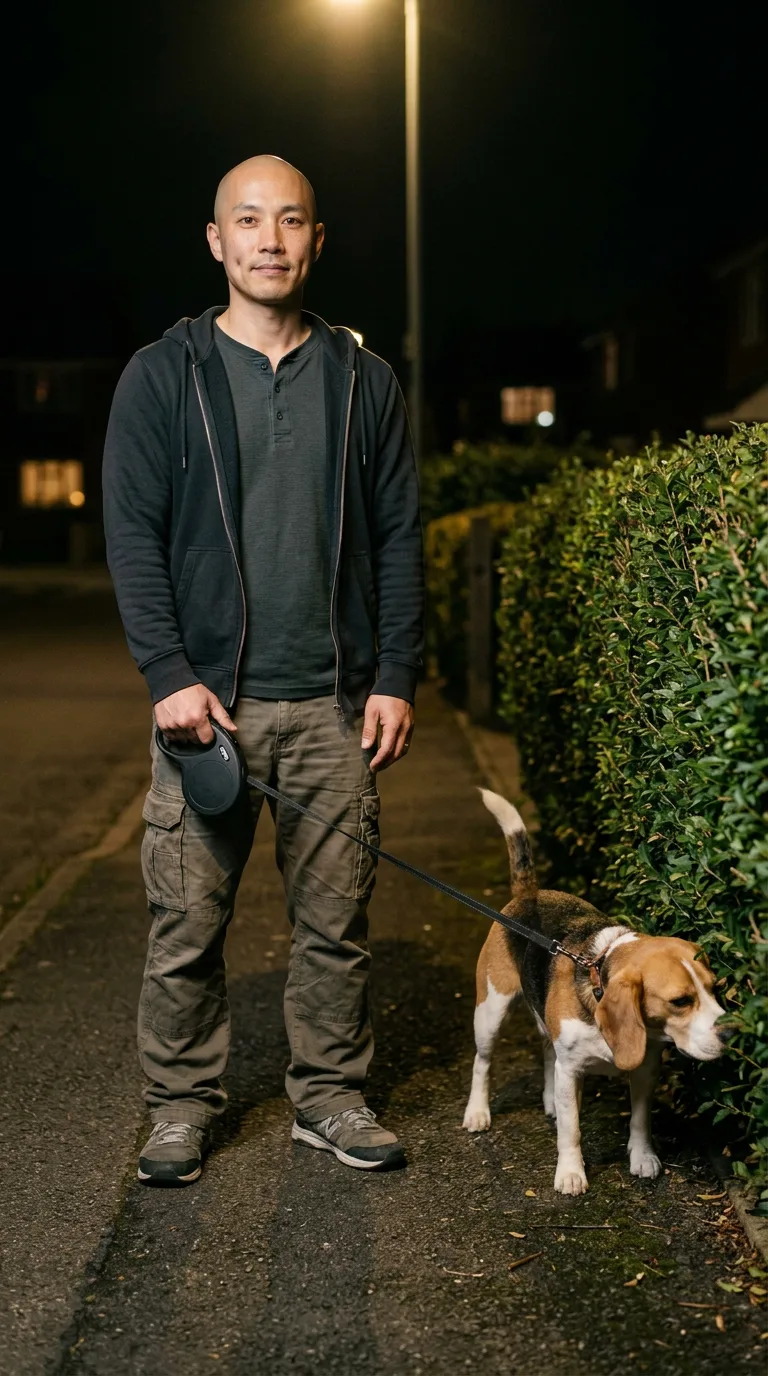
Rarest thing about him: 5'3" or under — common, 1 in 31
Season 1seed 1407601523 · engine v11
Character card
lineage 2NZHHJ
His body-swap story
@connor.waskiewicz, wearing Russell Kopecki, rolled the wheel on and woke up as Daniel Okamura, spent under a minute in him, then spun the wheel and woke up as Colin Brennaghan
Russell Kopecki's beard itches. It has itched for eleven months, since the divorce papers, since the night shift got permanent, since he stopped noticing which one caused which. He's sitting in the recliner at 11:58 on a Monday, laptop heat on his gut, and the call center headset mark is still pressed into his hair from a shift that ended four hours ago and never really let go of him. He is not thinking about Russell Kopecki. Nobody thinks about Russell Kopecki, including, most nights, Russell Kopecki. He thinks about the wheel instead — the small clean spin of it, the half-second where the number 974 doesn't feel like a lot, it feels like a warm-up — and the itch under his jaw is the last thing that body ever feels for him, because his thumb is already on the button.
The leash goes slack in your hand.
That's the whole event: a small give in the strap, a beagle's ears going back like it heard something behind the hedge that wasn't there, and then the hand — not yours yet, but about to be — stops walking. Streetlight overhead, sodium-orange, cold enough that you can feel it before you can feel anything else. You wind the leash twice around your palm without deciding to. The dog doesn't understand the new rhythm and neither do you, not yet, but the body does, already, before you've caught up to being in it.
The zipper of the hoodie is cold against your knuckles first — that's the door in. A zipper pull, half-down, metal gone icy in October air, and it opens onto a hand doing this same motion a hundred mornings: Daniel Okamura standing in a warehouse locker room at five a.m., pulling the same zipper up over a navy polo, the hi-vis vest already snagged on the hook waiting, and the small ordinary satisfaction of gear that fits a body this size exactly, nothing borrowed, nothing too big. He is 5'3" and has never once in thirty-eight years wished to be taller, not really, not on purpose — the aisles are built for reaching, the pallet jack for a low center of gravity, and there's a particular economy to how he moves that six-footers spend their whole shift fighting.
The retractable leash handle is next, ridged plastic warm from his own palm, and it gives you an evening — not this one, an evening three years back, teaching his daughter to hold it loosely, "let him find the smell, don't drag him off it," her small hand under his bigger one, both of them laughing when the beagle sat down mid-sniff like he'd run out of battery. His son is younger, still asks to come on the walk and still, most nights, falls asleep before it happens. Two kids. A wife — Mei — asleep right now, or near it, in the room above the porch with the storm door that sticks in wet weather, and Daniel had promised he'd fix the storm door this weekend and hadn't yet, and some tired fondness comes with that unfinished thing rather than guilt.
The wedding band is cold too, plain gold, and it gives you the morning he put it on for the first time, hands shaking a little at a JP office because they couldn't afford the venue they wanted and didn't care in the end. Fourteen years of turning it absently. His hands drum against his thigh sometimes without him asking them to — they're doing it now, a small four-beat tap picked up from some warehouse radio years ago and never put down — and under the polo you can feel what the job built: forearms dense from scanning and lifting, a back that knows how to bend from the knees, dimples that dig in even now, at rest, at nearly midnight, ears half-cocked toward a dog that wants the hedge for one more second.
He is smiling faintly, from habit, at nothing. That's the last thing that's only his.
You look down at the hand holding the leash. It's small — smaller than you're used to arriving in — and the ring catches the streetlight, and the dog looks up at you the way it never quite looked at him, like it already knows something changed in the leash before it changed in the face.
"Good boy," you say, in his voice, testing it like a borrowed shoe, and start walking again at a pace the dog has to scramble to learn.