Charles Liu
Fictional. Generated by AI — not a real person, and no likeness of one is intended.
29, chaplain in Philadelphia · rolled by @colin.hasbrook · card — no film
History
who has worn him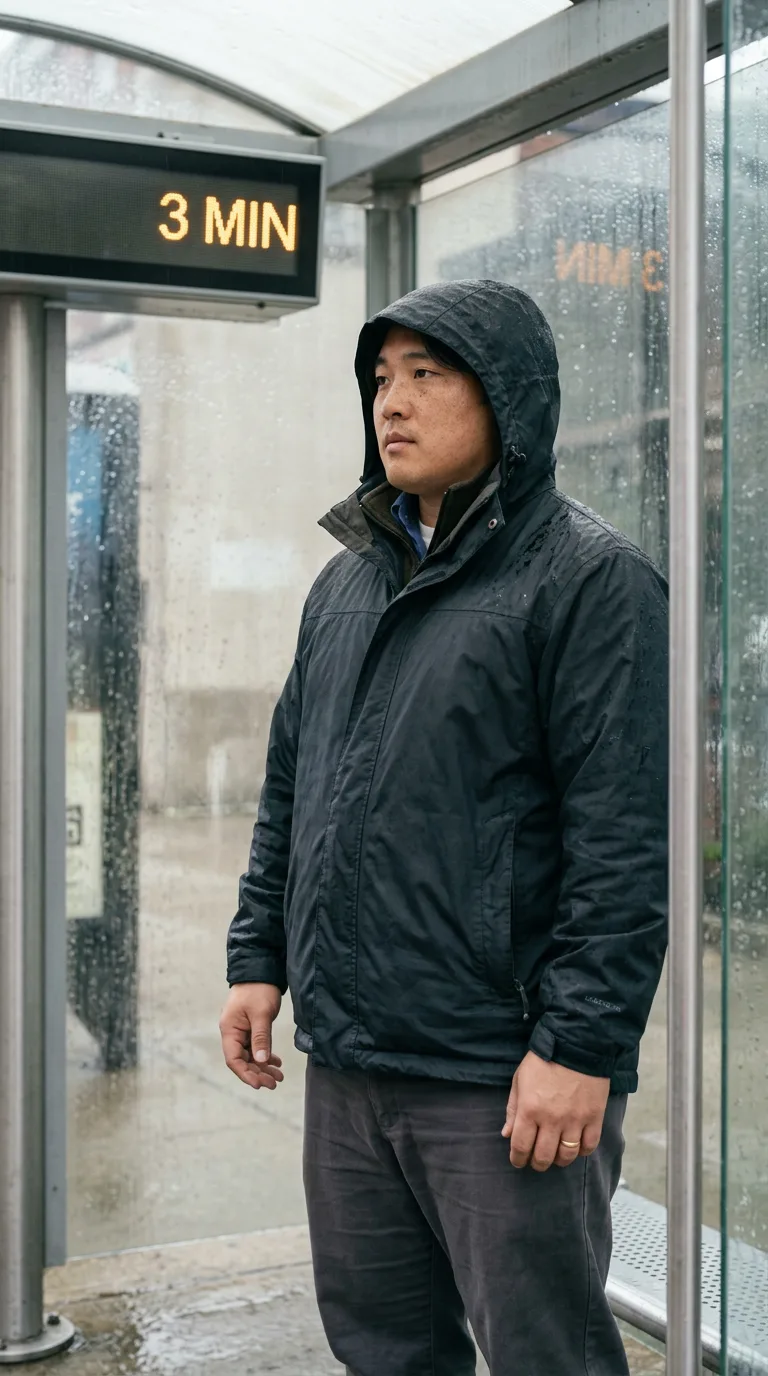
Rarest thing about him: Chaplain — uncommon, 1 in 2,428
Season 1seed 169347300 · engine v11
Character card
lineage 2NZHHJ
His body-swap story
@colin.hasbrook, wearing Casey Whitfield, rolled the wheel on and woke up as Charles Liu, spent under a minute in him, then spun the wheel and woke up as Dalton Braswell
The barracks room is quiet the way rooms get at eleven in the morning when everyone else is somewhere useful. You've had Casey Whitfield twelve minutes, and already you know the shape of his problem: a text on his phone, still lit, from a girl who isn't the one back home, and a knock that's coming whether you answer it or not. Twenty-one years old and already boxed in by a life that isn't yours to fix. You didn't take him to fix it. You took him because the card said beauty mark, chin, and you'd wanted to know what that felt like for exactly as long as it takes to stop being interesting. It stopped being interesting around minute nine. His hands are shaking slightly, not from anything you did — nerves already baked into him — and you don't want to be here for whatever happens next in his day. You want out before the knock. You open the site on his phone with his thumb, feel him not noticing, and you spin.
Rain. That's the first thing — not sound, not sight, just cold water running down the bridge of a nose that isn't Casey's, over lips that are already open for it, tilted up into a sky the color of wet concrete. Your weight has dropped, gone low and dense and settled, shorter than you were a half-second ago by half a foot. A hood is shoved back against your skull and water is finding the part in your hair and running down either side of your face like it's been let somewhere it's wanted to go for years. Your feet are planted in a puddle at the lip of a bus shelter, one step out from the dry, and behind you a board is clicking through its numbers. You are not cold. That's the strange part — the rain is going straight through a coat and you are standing in it like a man who has been waiting for exactly this.
The coat is the first key. Heavy, canvas-shelled, a zipper pull worn smooth — and it gives you a hallway in a rowhouse, a wife's hand smoothing this same collar down over his shoulders while she says something about the 47 bus being late again lately, and him laughing, not because it's funny but because her hand is on his chest and that's still, after six years, worth laughing for. The name that comes with the memory is Charles. Charles Liu. He likes the rain. He has always liked the rain, since he was a boy in a city that isn't this one, and his mother used to let him stand in it on the porch while she called him foolish in a language this body still keeps somewhere low in the throat, unused most days.
The lanyard is next, cold plastic against your — his — collarbone, tugged loose from under the jacket by the wet. CHAPLAIN. Cheryl Liu — no. Charles. The badge photo underneath is a man who looks like he's trying not to smile for the camera and failing at the corners. The lanyard gives you the chapel: three chairs and a kneeler and a stained-glass panel that throws red and gold onto linoleum some afternoons, and how he sits with people in the very worst hour of their lives and does not flinch from it, because flinching is the one thing he decided a long time ago he would never let a dying man see. It gives you a night four years back, a boy on a ventilator and parents who could not speak English well enough to ask the question they needed answered, and Charles finding the words in the language his mother gave him, kneeling by the bed rail until three in the morning. Nobody put that on his file. He never told his wife the whole of it either. It sits in him like a stone he's stopped noticing the weight of.
Your hand, without you telling it to, goes up and runs once over your scalp — his gesture, not yours, arriving through the motion itself, water sluicing off dark hair as your palm passes. It is a thing he does when a silence has gone on a beat too long, in waiting rooms, in the confessional, in bed at midnight with his wife already asleep and his mind still going through a list of names.
The book. You realize your other hand is closed around something small and leather, worn soft at the spine — a psalter, prayers and readings, his father-in-law's before it was his, and it opens a morning: this morning, this exact jacket going on over this exact sweater, the collar tugged straight in the hallway mirror, the ring already on because it never comes off, his wife handing him his glasses because he'd left them on the nightstand again, one of the kids — the younger one, four, still soft everywhere — hugging his leg at the door and not wanting to let go of it, and him crouching down heavy on his knees to be level with her, freckled face against her hair for one second before the bus. That was forty minutes ago in a day that has run ahead of you at some other speed while you were somewhere else being someone else.
The freckles are on your face now too, dotted faint across a nose gone slick with rain — you know this without a mirror, the same way you know the shirt underneath the sweater is a size too tight in the shoulders because he's put on weight this year and hasn't bought anything new, the same way you know there's a dull permanent ache low in his back from bending over hospital beds all day every day for years, and that his hands, broad and blunt-fingered, know how to hold another person's hand still and warm without seeming to grip at all. Thirty-one years shorter than the six-foot-four you left behind twelve minutes ago in Maine, and denser somehow for it — planted, unhurried, built for standing beside people rather than over them.
The board behind you clicks down to 2 MIN and you don't move for it.
You look down at your hand — his hand — turning it slowly, rain running off the wedding band, off the small brown book still held loose in the fingers, and you lift your eyes up into the wet gray light, into whatever is watching.
"Guess I missed my bus," you say, and something in the mouth wants to smile at that, easy, like it's already forgiven whoever did it.