Casey Whitfield
Fictional. Generated by AI — not a real person, and no likeness of one is intended.
21, airman in Coastal Maine · rolled by @colin.hasbrook · card — no film
History
who has worn him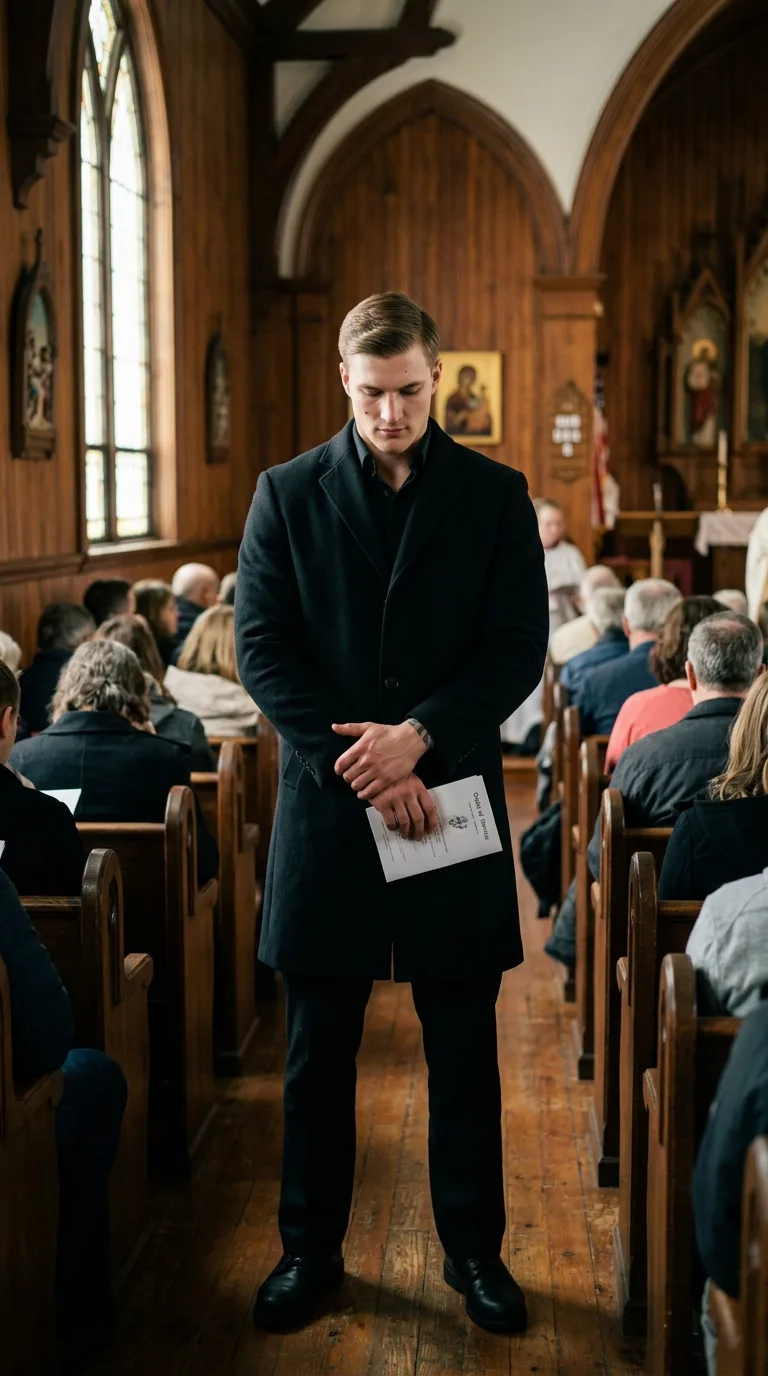
Rarest thing about him: 6'4" — uncommon, 1 in 103
Season 1seed 1385058570 · engine v11
Character card
lineage 2NZHHJ
His body-swap story
@colin.hasbrook, wearing Rigoberto Peña, rolled the wheel on and woke up as Casey Whitfield, spent 12 minutes in him, then spun the wheel and woke up as Charles Liu
---
Rigoberto Peña's office chair is the wrong height and it has been the wrong height for eleven months, and you have never once adjusted it, because that is a small thing that would mean staying. The desk phone rings on the other line and nobody picks it up. Outside the window a Denver morning does its flat blue nothing over the parking structure. You are looking at your hands — his hands, short-fingered, a college ring he never talks about, the beginnings of a liver spot — and you are thinking, not for the first time, that operations managers do not get to feel the wind on anything. That sixty years bought a man a chair he could not fix and a title that means he approves other people's time off. You spun into him and you did his emails for less than a minute before the boredom arrived like weather, total and without cause, the way it always does now, the seven-hundred-and-eighty-sixth time faster than the first. You open the site again on the monitor, vessel.cards, the wheel already spinning lazy behind the login like it's been waiting on you, and you do not think of it as leaving Rigoberto. You think of it as leaving the chair.
You spin.
There is no falling and no rising, just the seam between one weight and another, and then you are impossibly tall inside a stiff black coat, and the room has stood up around you a half-beat late, pew wood creaking under a hundred people rising at once, and an organ note dying into the rafters, and in your hand — his hand, big, a mole riding high on the cheek above it in the reflection of a dark window — is a folded paper gone soft at the crease. Order of service. You are at the back. Nobody is looking at you. You bring your free hand up and smooth the coat down the front of you, slow, like you are reading braille through the wool, learning where the buttons sit, and nobody turns around, because a young man settling his coat at a funeral is not a thing anyone is built to notice.
The paper is the first door. It opens on a smell of glue and cold toner, a printer in a back office at four in the morning, a woman he does not want to think about right now folding programs at a kitchen table that isn't his — Bev's table, his girlfriend's aunt, and this is her mother in the box up front, and he is here because Bev asked him to come and because he loved the old woman's dry laugh the two times he met her. That's as far as the paper goes. It's a small door.
The coat is a bigger one. It's borrowed — his own funeral coat too tight in the shoulders since the gym, since the flight line put twenty pounds of muscle on him that his wardrobe never caught up to — and the borrowing itself unspools a whole friend, Danny, who is a foot shorter and lent it anyway laughing that he'd look like a kid playing dress-up, and didn't, he looked like himself in a coat that fit someone smaller, which is its own kind of true thing about being twenty-one and six-foot-four and always wearing something that used to belong to somebody else's idea of a grown man.
Under your feet the floor is old-church pine, and it gives you the whole base building of him without a single memory attached — just structure, the way his knees are good and his lower back has a dull line of ache from three years of kneeling on tarmac to check tie-downs at oh-four-hundred, the way his shoulders know how to brace against wind coming sideways off the water even standing still in a nave two hundred miles inland from where he learned it. His hands, when you're not asking them anything, want to clench his jaw — you feel the muscle jump there once, unbidden, a habit with no memory attached to it either, just tension with nowhere assigned to go.
Then the shirt. Under the coat, against your back, and this is the one that goes long, because a shirt worn since five that morning has a whole morning folded into it. He put it on in a cold room over the boat cove, gray light through a shingled window gone silver with salt, Bev still asleep with one arm thrown over the space where he'd been. He'd stood at the closet a long minute deciding between the black dress shirt and this one, plainer, choosing plain because Mrs. Anholt would have hated a fuss made over her, and he'd known that about her from exactly two afternoons of knowing her at all, and it had seemed like the right kind of grief anyway — quiet, deferential, standing at the back of a room he had no real claim to. He'd buttoned it one-handed, the other holding his phone, texting his sister in Bangor who was not sorry Nana Anholt-by-marriage was gone and did not pretend to be, and he'd felt the small ugly relief of not being the one who had to feel that, only the one who had to stand near it looking respectful.
The tattoos on his forearms are under two layers now, sleeves and coat both, but they still speak up anyway — tribal black, done at nineteen and twenty on a base in Georgia with a guy named Ochoa who did good work for cheap, and under that comes flight line at dusk, the specific cold of Maine coastal wind cutting under a flare of floodlight, a C-130's engine ticking down, the huge relief of a shift ending clean with no discrepancies on the form. He is good at his job. He likes it in a way he has never said out loud to anyone, not even Bev, because liking your job too much out loud sounds like bragging to people who hate theirs.
And there she is, the woman who got away, arriving on nothing you touched at all, just proximity to grief — Marissa, three years gone now, who left for Portland and a life that didn't have engine grease or six a.m. musters in it, and whom he thinks about exactly at funerals and thunderstorms and any other time the world gets loud enough to remind him things end. He does not think about her more than that. He is happy with Bev. He would tell you that plainly if you asked him, if there were still a him in here to ask.
The organ has stopped. The room is standing, and settling, and starting to sit again in a long ragged wave of pew-creak, and you are still standing because you came up half a beat behind the rest of them and the half-beat hasn't caught up yet.
You look down at the order of service in your hand, at the borrowed coat's cuff, at a hand you have never seen before this morning — his — and it looks like nobody's hand and every hand at once, the way they all do right at first.
You lift your eyes off it, into the dim gold light of the chapel, past a hundred backs that never turned around, and something that isn't grief and isn't guilt but sits close enough to both says itself out of his mouth, quiet, just for the pew in front of you:
"Wrong seat."
You do not sit down yet. You do not know, standing there in his height, in his weight, in the ache riding low in his back that isn't yours and is now, how long the wheel means to let you keep him.