Rigoberto Peña
Fictional. Generated by AI — not a real person, and no likeness of one is intended.
60, operations manager in Denver · rolled by @colin.hasbrook · card — no film
History
who has worn him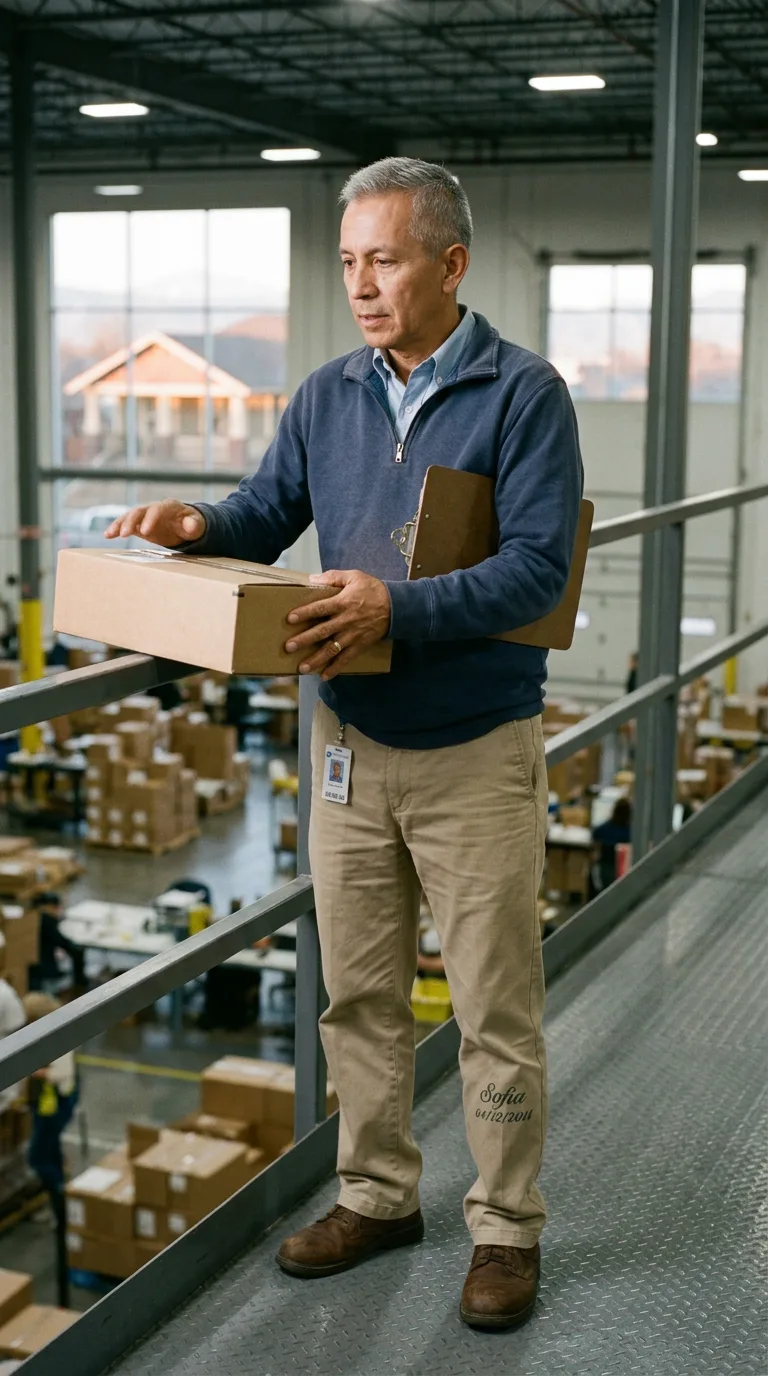
Rarest thing about him: Leg — common, 1 in 54
Season 1seed 1055057773 · engine v11
Character card
lineage 2NZHHJ
His body-swap story
@colin.hasbrook, wearing Suresh Bhatia, rolled the wheel on and woke up as Rigoberto Peña, spent under a minute in him, then spun the wheel and woke up as Casey Whitfield
The desk is too small for you. It has been too small for you for eleven months, since the wheel put you into Suresh Bhatia and left you there — a mid-level manager in Miami with soft shoulders and a laugh that comes too easy, a man who apologizes to the coffee machine when it jams. You have his hazel eyes, his freckled forearms, his habit of rolling a pen between two fingers during meetings nobody needed to have. It is eleven-something in the morning, humid already, and you are sitting in his cubicle rolling that pen and thinking, again, the thought that has been arriving more often lately: this is fine, but it isn't anything. Suresh's life is a life other people built around him — a job he inherited, a condo his parents helped buy, no wife, no one waiting on the tattoo she paid for, nothing carved into him anywhere. Six hundred and eighty-four days you spent choosing men before him. You know by now what boredom feels like arriving, low and specific, like a hunger that isn't about food. You open the laptop. The wheel is already bookmarked. You do not decide so much as notice that you have already clicked it.
The box is halfway into your arms when the room changes without moving.
Your hands — smaller than they were a half-second ago, a ring on the left one, knuckles thicker — are already closed around the cardboard. Fluorescent light. A mezzanine rail cold under one forearm. Below, a floor of conveyor belts and stacked pallets, workers in vests you can hear before you can place why you know the sound. You are shorter. The floor is further from your eyes than it should be and also exactly right, because this body has stood on this walkway for years and knows precisely how far down the concrete is. Your motion falters — the box tips a half-inch, corrects. You set it onto the cart wrong, lift it, set it down again, slow, deliberate, like a man double-checking arithmetic he's done in his sleep for a decade. Nobody below looks up. Nobody ever does.
The clipboard is wedged under your other arm, its metal clip biting a familiar dent into your ribs, and that's the first thing that comes through — not a memory exactly, more a temperature: this clipboard has been under this arm for so many mornings that the wood has a groove worn pale where his forearm rests. Rigoberto. The name arrives with the groove, the way a room arrives with a smell.
The shirt collar against your throat brings the rest. Not all at once — in pulls, like a drawer opening a little further each time you touch something new. The collar: a light blue oxford, the top button he never fastens because his neck thickened in his fifties and the collar stopped closing right, and Marisol teasing him about it every single morning for eleven years, "botón, Rigo," and him waving her off with the same hand that's holding the box now. The zip-front sweater over it, navy, worn soft at the cuffs — his son gave it to him two Christmases ago, and he wears it on cold-floor mornings because the walkway is drafty near the loading doors and because his son picked it out himself, stood in the store and picked it, and Rigoberto has never told anyone how much that mattered.
The khakis. Cotton gone thin at the knee from thirty years of kneeling to check pallet counts. And low on the right leg, under fabric, skin remembers before thought does — the tattoo. Script. A name: *Sofia*. A date: *04/12/2011*. The day she was born, and also, four years later almost to the day, the day they buried her, eleven months old grown into four years of hospital rooms first, machines, a room that smelled like the inside of this memory — sterile, cold, Marisol's hand crushing his on one side and his mother's rosary clicking on the other. He got the tattoo eight days after the funeral, sat in a chair he doesn't remember choosing and let a stranger put permanent ink where he could see it every time he put on pants, every single morning of his life since, on purpose. Not to remember her. He never forgot her. To have somewhere on his own body proof that she happened.
The wedding band, plain gold, worn down on the inside from forty years of turning — Marisol at nineteen in her mother's kitchen, Marisol at thirty telling him she was pregnant again after they'd both quietly decided not to try, Marisol last night, in the kitchen of the bungalow, saying nothing about anything, just handing him his lunch bag and his pouch of nicotine off the counter because he always forgets it, and he always says gracias like it's news.
Boots, steel-toed, broken in on the left more than the right because that hip has ached since a forklift clipped him eight years ago and he still hasn't told the doctor how bad some mornings are. Sixty years old, carrying weight he calls skinny still in his own head, though the mirror stopped agreeing with him around fifty. Hands that know this cart, this rail, this exact three-step turn from receiving into staging without a single wasted motion — until half a second ago, when a motion came out wrong for the first time in years, and then correct, and then ten more too careful, too watched, a rhythm he built with his body doing the noticing instead of him.
It comes in through the pen too — there's one clipped to the board, and just brushing it against your knuckle drops a decade of habit, no thought, just click-click-click through every meeting he's chaired, every number he's double-checked because the floor runs better when he's the one who's nervous about it instead of the sixty people under him.
You set the box on the cart. Your hand — his hand — stays there on the cardboard a second too long.
You turn it over, palm up, in the gray light coming off the loading-dock windows, mountains just visible past the rooflines behind glass. A callus at the base of each finger. A tan line where the ring sits. Sofia's name an inch above the boot line, out of sight, present anyway.
"Cuarenta años," you say, out loud, to no one, in his voice, not sure yet if it's true or if it's a thing he says, and not sure — this is the part that isn't going away — how long you get to be the one saying it.