Brendan Foss
Fictional. Generated by AI — not a real person, and no likeness of one is intended.
29, teacher in Philadelphia · rolled by @justin.moy · card — no film
History
who has worn him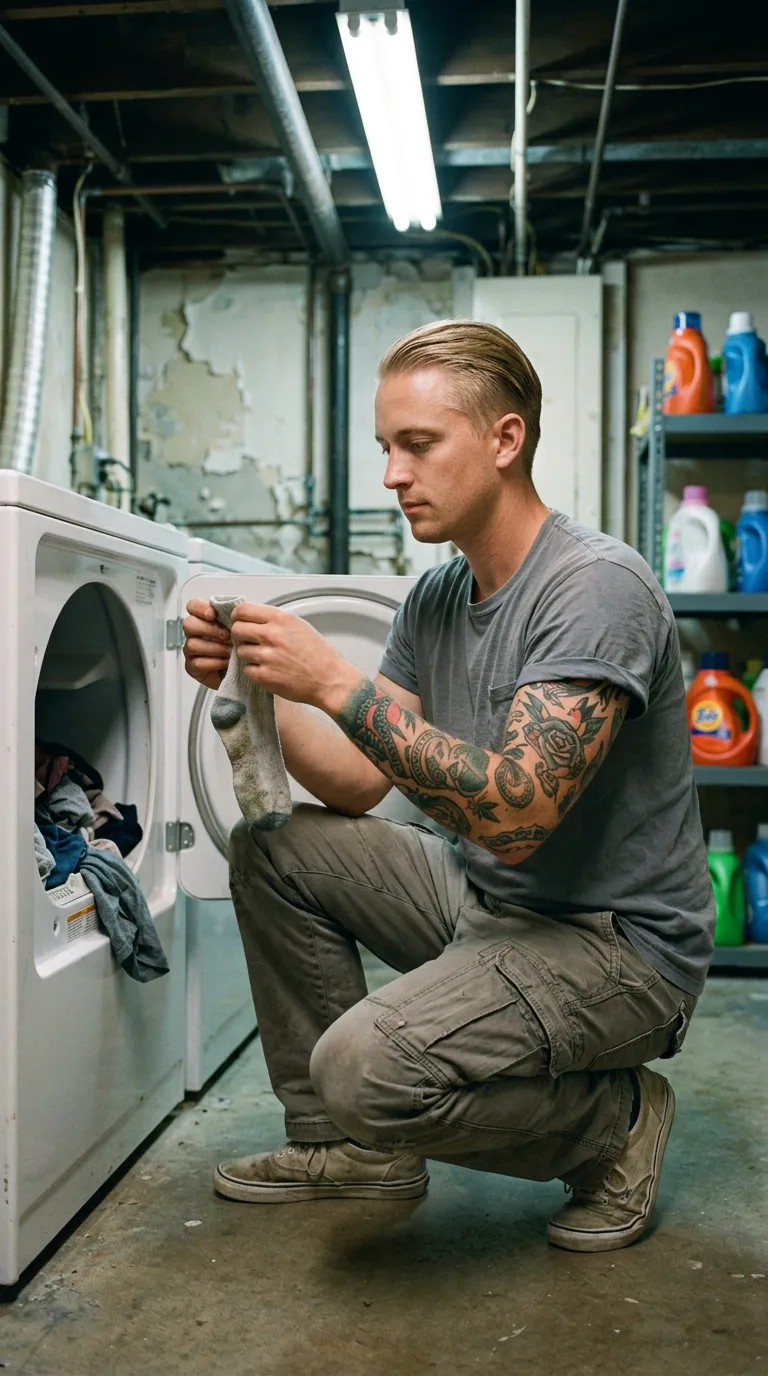
Rarest thing about him: Half sleeve — rare, 1 in 29
Season 0seed 1126509756 · engine v10
Character card
lineage EN1F2L
His body-swap story
@justin.moy, wearing Owen Piascik, rolled the wheel on and woke up as Brendan Foss, spent 4 minutes in him, then spun the wheel and woke up as Marlon Adderly
You're sitting at Owen's little desk in the back room of his shop, and Owen's hands — soft in the palm, calloused at the fingertips from pins and shears — are doing nothing, just resting flat on a bolt of gray wool, because you already decided. Three hours in this skin was enough to know its rooms: the ex-wife's number he still hasn't deleted, the knee that clicks on the stairs, the particular loneliness of a life spent altering other people's clothes to fit other people's bodies. You liked him fine. That was the problem. Liking him fine is not the same as wanting to keep being him, and underneath the liking, quiet and specific, is the thought you haven't said even to yourself: Brendan. You were in Owen's memory of Brendan twenty minutes ago — some bar, some Eagles game, Owen laughing so hard beer came out his nose — and it left a taste you want more of. You know things about Brendan that Brendan doesn't know you know. That's not nothing. You open the site on Owen's phone, the wheel already familiar, and you spin it wanting, for once, someone in particular, and the wheel doesn't care what you want, it never does — but this time it gives you him anyway.
The dryer door is warm against your knee before you understand you have a knee again, a different one, longer, younger. A sock is between two fingers that are not Owen's fingers — no give in the pads, nail bitten to the quick on the thumb. The fluorescent tube overhead ticks. For a half-second there is no one steering and the sock just hangs there, and then you're behind the eyes, and the first thing you feel is how much taller this is, how the ceiling pipes are closer to your head than they had any right to be a body ago.
Then the shirt. It's not on you yet — it's folded in the basket, but your hand brushes the sleeve as you reach past it for the next wet load, and it comes anyway, the way it always does: a Sunday morning, this exact shirt, buttoning it in a mirror with a water stain shaped like Florida in the corner, Danielle's voice from the bedroom saying you're going to be late for your own mother again, and the small flare of guilt that comes standard with that name, evangelical guilt, the kind that doesn't go away just because you stopped believing most of it. His mother. Church. A God he still, on some nights, three drinks in, tries to renegotiate with.
The basket handle, plastic, worn smooth where a hand — his hand, always his hand until just now — has gripped it a thousand times. That gives you the apartment upstairs, small, a window unit that never quite keeps up, Danielle's plants on every surface because his hands kill anything green. Gives you the sound of Owen's laugh again, but from this side of it now — Owen at the bar, Owen slower, softer, always picking up the tab because he feels bad about something he'll never name, and you, Brendan, letting him, because that's the shape the friendship took twenty years ago on a rec-league field and never un-took. You know, standing here, that you owe Owen four hundred dollars from March. You know Owen doesn't care. You know you care more than he does, which is its own kind of shame.
The half sleeve on your right arm — sailor stuff, a rose, a banner with no name in it anymore because the name got covered over two girlfriends back — pulls up a night in a shop on South Street, twenty-two years old, the buzz of the gun, a friend holding your other hand because it hurt more than you let on. Not this friend. An older one, gone from your life the way people go.
Your tongue finds the memory of last night's drink before your mind does — bourbon, too much of it, the taste still faintly there, and under that the plain fact of the body: twenty-nine, a low ache behind the eyes that isn't quite a hangover and isn't quite not one, shoulders that know how to write on a whiteboard all day and still come home and lift a laundry basket without thinking about it. Hazel eyes that have been looking at the same twenty-six eighth-graders since September and are, if you're honest, a little tired of it, though he'd never say that out loud to Danielle, who thinks the job is noble and doesn't need the truth about Tuesdays.
Danielle. The name lands last and heaviest, through nothing you're touching — just the smell of the basement, dryer sheets and old concrete, close enough to the smell of the apartment that it drags her in anyway. Six years. The move-in. The fight about the wedding neither of them has set a date for. And under her, further down, the one you weren't looking for: Kayla, college, the one who left for Portland and didn't ask him to come, the one he still, uselessly, checks up on twice a year. The one that got away, everyone gets one, his just has a name and a face he can still call up too easily.
You pull the last shirt from the dryer warm and you fold it without deciding to — square, fast, corners lined — because his hands already know this, better than Owen's ever did, better than the drawer upstairs where his own shirts sit crumpled like he never learned. Some things a body just knows.
You look down at the sock still in your hand, ridiculous, forgotten mid-thought, and turn it over once like it might explain something.
"Hey, man," you say, to no one, to the empty laundry room, in his voice, grinning with his mouth at a joke only you're in on. "Long time."