Owen Piascik
Fictional. Generated by AI — not a real person, and no likeness of one is intended.
45, tailor in New York · rolled by @justin.moy · card — no film
History
who has worn him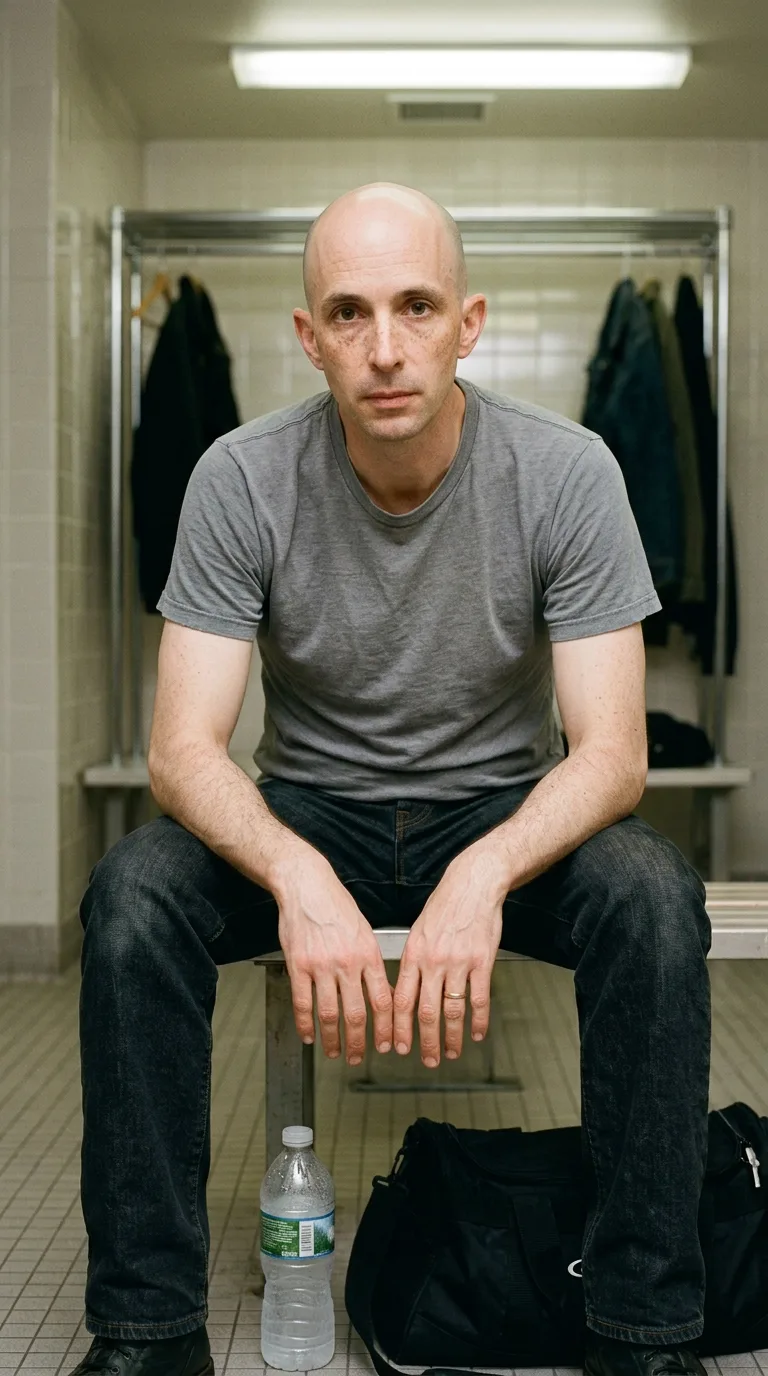
Rarest thing about him: Vapes daily — rare, 1 in 28
Season 0seed 562660538 · engine v10
Character card
lineage EN1F2L
His body-swap story
@justin.moy rolled the wheel on and woke up as Owen Piascik — their first, spent 3 hours in him, then spun the wheel and woke up as Brendan Foss
The screen has been open for forty minutes and you have not blinked much. It is early, dark outside your window, the kind of hour that belongs to no one, and the page just sits there being plain about itself: a wheel, a price, a button. You have wanted this since before you knew there was a word for it — every story you read twice, every thread you kept open in another tab, every night you lay there running the idea like a tongue over a tooth. Waking up as someone else. Not a fantasy exactly. A hunger with no shape to put itself in, until tonight, when apparently it has a shape, and the shape costs money, and you pay it without letting yourself think about the number. You spin. The wheel does what wheels do. It stops.
You are gripping a bar.
It is cold and it is two inches wider in your hands than it should be, though you don't know that yet — you only know that your arms are up and locked and something under you is grinding, a low animal effort that isn't yours but that your body is already mid-way through completing, and you don't get a run-up to it, there is no darkness before, no falling — there is only bench, bar, breath, and the breath is not coming through your teeth the way it was a second ago in a life you didn't live. The rep finishes because it has to. The bar goes back on the pins. Your — his — arms drop.
You are sitting. Freckled forearms on your knees. A bottle sweating on the tile by your foot.
The gym light is a flat fluorescent white that has no opinion about the time of day, which is good, because you have no idea what the time is here, only that it doesn't match wherever you actually are, that the two of you are somehow standing in the same second on different clocks, and there's a strangeness to a man his age lifting alone at this hour that you can't place yet — until the terrycloth of the wristband scrapes your — his — brow, and something opens.
The shop. Cutting table. Late light through old glass, the smell of chalk and steam and wool that never fully leaves a man's clothes no matter how many showers he takes. A jacket half-finished on the dummy, pinned at the shoulder where it's still wrong. He'd been up since four, because the fitting is at ten and Mrs. Okafor's husband is not a patient man, and the books — the books are why the gym is now, mid-morning, on a Monday, when men like this are supposed to be at benches of a different kind, ringing something up. He goes when the shop is between customers because the shop cannot survive an owner who has let himself go entirely to the hole he's dug it into, and the treadmill costs nothing, and lifting costs nothing, and for forty minutes the only math is bar weight.
The gym bag against your calf gives you the walk over, this morning: him standing in the dark of the bedroom, dressing quiet so as not to wake her, jeans he's had since the boys were small, faded to nothing at the knee. The wedding band is a small persistent pressure around your — his — fourth finger, and it opens wider than the rest: fourteen years, a City Hall afternoon neither of them could really afford even then, her hand steady on his tie because his wasn't. Two kids now, one who needs braces and one who needs cleats, both needs arriving at once the way they always seem to. He does not tell her the number the shop is under. He tells her it's tight. Tight is a word that can absorb a great deal if you say it evenly enough.
The tape measure — not on him now, but your palm remembers the weight of it draped shoulder to hip a thousand times, the yellow give of it, the pins in his mouth when both hands are full and he talks around them anyway because customers like to hear a voice while they're being handled. He is good at this. His hands know collars and armholes the way other men's hands know steering wheels. He is bad, demonstrably, provably bad, at whatever the ledger calls the rest of it — rent on the space, a loan he shouldn't have taken the second time either, a number with a comma in it that keeps him up some nights doing math with his eyes closed instead of sleeping. He does not drink anymore, hasn't in years, dropped it without a story attached, the way some men just quietly stop; the vape is still in the gym bag's side pocket, and touching the strap gives you three drags of it taken on the stoop last night after the kids were down, watching the wet street do nothing.
Under your thumb, cuticle already torn at the edge from where his own hand goes when the shop is slow and the numbers are loud — a habit he's had since altar boy, since kneeling too long with nothing to do but worry his own fingers raw while the priest talked. He still goes Sundays. Doesn't examine it much. It's just there, like the freckles, like the bald head he shaved once he decided fighting it wasn't worth the fight.
The body under all of it: skinny-fat, soft where the shop keeps him sitting and stringy where the gym keeps trying, forty-five and starting to know it in the knees on the stairs up to the cutting room, a low ring in the left shoulder from years of pinning garments overhead. Strong enough in the hands. Strong enough in a stubborn, unglamorous way through the back that two sets of push presses have not made easier tonight. The last rep should have been ugly. It wasn't. He didn't notice — how could he — that his hands went two inches wider on the bar for no reason he'd chosen, that he found strength that wasn't rationed out to him the way it usually is at the end of a set. He never will notice. There's no rest of the story handed to him now. There's just this — you, holding what's left of an ordinary Monday he was in the middle of.
You look down. Freckled backs of hands, the ring catching gym light instead of shop light. You turn one over slow, like it might not hold if you don't watch it.
"Okay," you say, out loud, to no one in the tiled room. "Okay."
You don't know if that's him talking or you. You don't know when you'll spin again, or if tonight even counts as tonight anymore, wherever it is you actually are. You just sit there, on his bench, in his sweat, holding his hands up to a light he didn't choose either.