Marlon Adderly
Fictional. Generated by AI — not a real person, and no likeness of one is intended.
56, welder in New York · rolled by @justin.moy · card — no film
History
who has worn him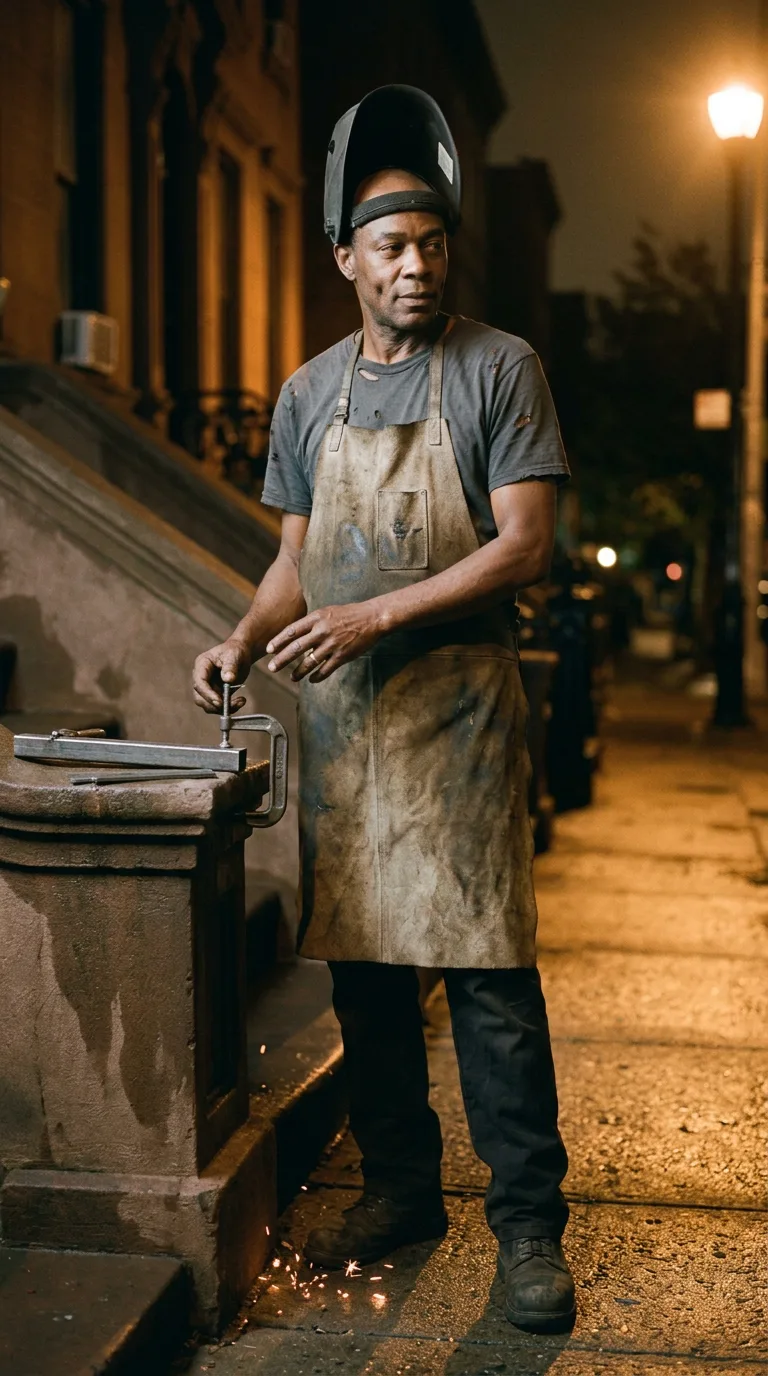
Rarest thing about him: Welder — uncommon, 1 in 83
Season 0seed 916200077 · engine v10
Character card
lineage EN1F2L
His body-swap story
@justin.moy, wearing Brendan Foss, rolled the wheel on and woke up as Marlon Adderly, spent 3 minutes in him, then spun the wheel and woke up as Roy Tackett
You are standing at the front of a classroom that smells like dry-erase marker and radiator dust, and Brendan Foss's hazel eyes are looking at a clock that says the period should have ended six minutes ago. Nobody has noticed. The kids are packing bags in that slow underwater way teenagers do at the end of a Monday. You have been Brendan for four minutes and you already know you are not staying. It isn't boredom, not exactly — it's that his life fits you like a coat still on the hanger, and somewhere under the ribs is the old itch, the one that doesn't care what a body has, only what it hasn't given you yet. You feel for the phone in his blazer pocket without anyone seeing, thumb already knowing the site by heart though the hand has never opened it before. You spin because you can. That's the whole reason, and it's enough.
The wheel turns somewhere that isn't a place.
Your hand is closing on a C-clamp, and the metal is warm from your own grip a second ago that wasn't yours. Sparks are cooling into little black commas on the concrete at your feet. The motion is halfway done — tightening, a quarter turn wrong, the clamp biting crooked on the rail bracket — and you feel it correct itself before you've decided anything, the wrist twisting back, easing, seating true. You do it again. And again. Ten more turns of ordinary hardware, each one checked like it might bite you, on a job hands like these have not needed to check since some Clinton-era summer. Somewhere above you a welding helmet is shoved back on a sweated hairline. Somewhere behind you a brownstone stoop holds the last heat of the day, though the streetlamp already says otherwise — sodium orange, moths, an hour that argues with the light in your chest, which still thinks it's a Philadelphia afternoon. Nights on a job like this run long, and this one runs later than usual.
The apron is what opens first — stiff leather gone soft in patches, a map of forty other jobs baked into it, and under your palm where it hits the pocket, a callus of memory: measuring square footage for the balustrade repair on a building three doors down, a super who wanted it done off the books and paid cash, good cash, and you — he — took it because June's tuition payment was due and welding never quite covers everything twice a year, though it covers it. The shirt against your back gives you the morning: grey cotton, a hole at the shoulder he keeps meaning to retire, pulled on in a bedroom with the blinds already letting in enough gray light to dress by without waking anyone, though she stirred anyway, said *be careful with that machine tonight, Marlon,* not looking up, the way she's said it eleven hundred Mondays running, not because she thinks he's careless but because thirty-one years of marriage is built out of small useless warnings that mean *come back.* Sharon. The name arrives with the smell of her side of the bed, coffee going before he leaves.
The wedding band is cold first, then warm, the way metal always goes on him, and it gives you a wedding in a church basement in East New York, humidity, a pastor who ran long, Sharon's mother crying happy tears into a paper fan. It gives you an ex before that too — Denise, a girl from two blocks over with a laugh he still hears sometimes in traffic, no malice left in it, just a door that closed correctly a long time ago, the kind of memory that comes without an ache, only a small respectful nod as it passes.
Your knees know this concrete — fifty-six years old and the left one complains on the cold nights, complains now. Your chest knows the mask that isn't down yet, knows the particular tiredness of eleven at night when the body wants the CPAP machine and the dark and Sharon's breathing beside it, and instead there's one more piece to true up before the shift closes out. Your face — you feel it before you see it, the two dimples set into your cheeks like they were pressed there with a thumb before you were finished baking, showing now even though there's nothing to smile about, just the shape a face settles into at rest. Your hands know steel the way another man's hands know piano keys — where it wants to go before it's told, where the bead should sit, when a weld is going to hold and when it's lying to you.
There is a daughter, nineteen, at Hunter, calling every Sunday whether she has anything to say or not. There is a son, younger, still figuring out what he wants that his father's trade can't give him, and a soft old worry about that, worn smooth from handling.
You lower the clamp. Look down. The hand is dark-knuckled, ashed with weld dust, ring loose enough to spin with a thumb, and for a second it is entirely someone else's hand doing something you didn't ask it to do, wonder at itself.
You lift your eyes to the street, the stoop, the sparks going gray on the pavement, and you say, out loud, to no one:
"Whose night is this."