Bobby Rusnak
Fictional. Generated by AI — not a real person, and no likeness of one is intended.
40, furniture mover in Dallas · rolled by @colin.hasbrook · card — no film
History
who has worn him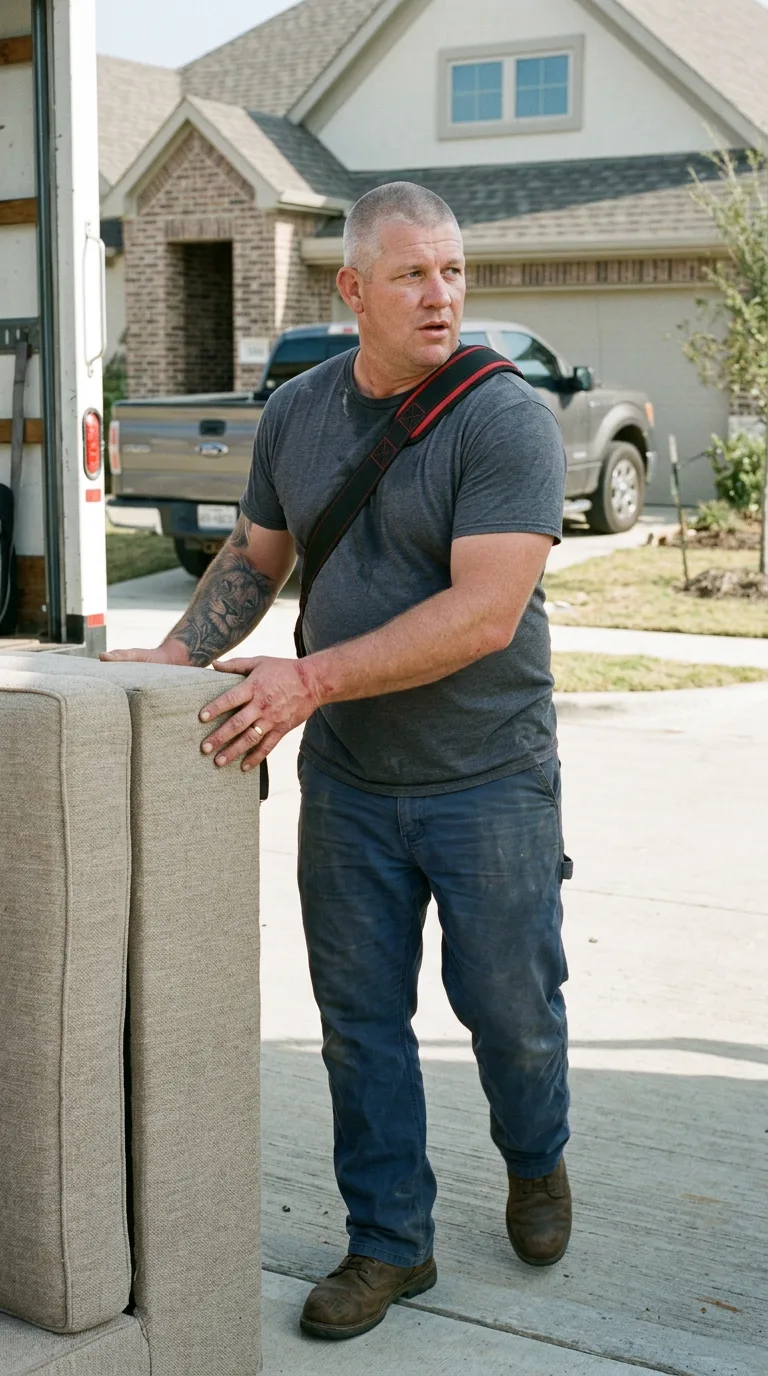
Rarest thing about him: Prosthetic eye — legendary, 1 in 954
Season 0seed 2055181857 · engine v10
Character card
lineage 2NZHHJ
His body-swap story
@colin.hasbrook, wearing Aman Rehani, rolled the wheel on and woke up as Bobby Rusnak, spent under a minute in him, then spun the wheel and woke up as Sami Rusnak
Aman Rehani's hands are wrong in the mirror — too small, too clean, ink still healing under plastic wrap on a stranger's shoulder — and that is the whole problem with him tonight. It has been less than a minute. The apartment smells like green soap and the guy who owns it, whoever that was, left a half-finished piece on the tattoo table downstairs, someone's back turned to art forever, and none of it is yours. You spun into this Tuesday evening and it fits like a rental. Twenty-eight years old, skinny, brown eyes that see fine, and you already know you're not staying. You didn't come back to the wheel because Aman is broken. You came back because he is small and soft-handed and you want, tonight, to be something that could pick a couch up off the ground without thinking about it. That's the whole reason. It doesn't have to be a good one.
You spin. There's no drop, no falling — the world just changes its terms.
You are bent at the knees with your arms wrapped around a mass of cushion and frame, a canvas strap biting diagonally across your chest, and the couch is heavier than any weight Aman's body ever knew, and this body takes it without complaint, the way you'd take a breath. Sun is low and orange down a street of houses that all have the same brick. A truck door hangs open behind you. Your hand — thick-fingered, scarred at the knuckle, a plain gold band on it — is flat against the arm of the couch, holding it steady on the lip of the ramp. For half a second the grip is wrong, fingers spread too wide, and you correct it, slow, deliberate, like a man relearning his own name. Then again. And again, ten more times, checking a motion that hasn't needed checking since some year long before you arrived.
The strap comes first. Nylon-red edge, worn soft in the middle where it always sits — a thousand mornings of throwing it over the left shoulder, over the collarbone, cinching it with a tug that means *go*. It gives you a flash: a warehouse before dawn, coffee in a paper cup balanced on a tailgate, a foreman named Dale who's been dead four years and whose voice you can still hear yelling *watch the doorframe*. Then the shirt. Gray cotton, damp through the back already though the day isn't done, soft from three hundred washes, and it gives you a bathroom mirror at 5:40 AM, this body — heavier now than it used to be, gut soft over a frame that used to be all muscle, both knees complaining before coffee — pulling the shirt over its head one arm first because the left shoulder doesn't lift right anymore, hasn't since a dresser shifted wrong on a stairwell in 2019. You feel that shoulder now, a low grinding ache that never fully leaves, background noise the man learned to move through the way other men move through weather.
The jeans, stiff with old paint and someone else's move-out dust, bring back the closet — a wife's voice from the next room, half asleep, saying *don't wake the kids* while he laced steel-toes by the bed. Three kids, or more; you get a boy's height chart penciled on a doorframe, a girl's soccer cleats by the door, a baby monitor's green light from beyond a cracked door, and none of the faces come clear, only the shapes of them, only the fact of a house too full for money to ever quite stretch across, a bank app checked too often, a number that never gets comfortable. He isn't unhappy about it. That's the strange, warm thing that comes through the denim at the knee — he is not unhappy. Tired in the joints, tired in the wallet, and not unhappy.
The prosthetic eye doesn't send anything back — it's glass and plastic, it has no nerves to hold a memory — but the tattoo does, half-hidden under the sleeve, a black-and-gray face rendered close enough to breathing that you feel the hours in the chair before you feel who it's of: someone he sat still for six sessions to keep on his arm, someone gone, someone whose name arrives a half-second behind the ache of the memory and then doesn't arrive at all, just the shape of missing, worn into skin instead of said out loud.
His hand — without you asking it to — drifts up and touches his own face, three fingers along the jaw, a habit so old it isn't a thought, and in that touch there's a decade of mirrors, a decade of *you're fine, you look fine*, said to no one, before every job.
The couch is heavier than it looks and it does not care what you feel. Your lower back — his lower back — sends up its familiar signal, dull and constant, the toll paid for twenty-two years of stairs and doorframes and other people's belongings. It is a good pain, in the sense that pain you understand is better than pain you don't. You stand there wearing all four hundred months of it.
You look down. The hand on the couch's arm is scarred, ringed, thick-veined, twenty years older than any hand you've worn in months, and you turn it over slow, watching the light catch the gold band, and something in your chest — his chest, wide and solid, aching low in the back — settles the way a truck settles when you finally cut the engine.
You lift your eyes to whoever's watching and say, rough, a little short of breath:
"Almost home, buddy — grab the other end."