Aman Rehani
Fictional. Generated by AI — not a real person, and no likeness of one is intended.
28, tattoo artist in Philadelphia · rolled by @colin.hasbrook · card — no film
History
who has worn him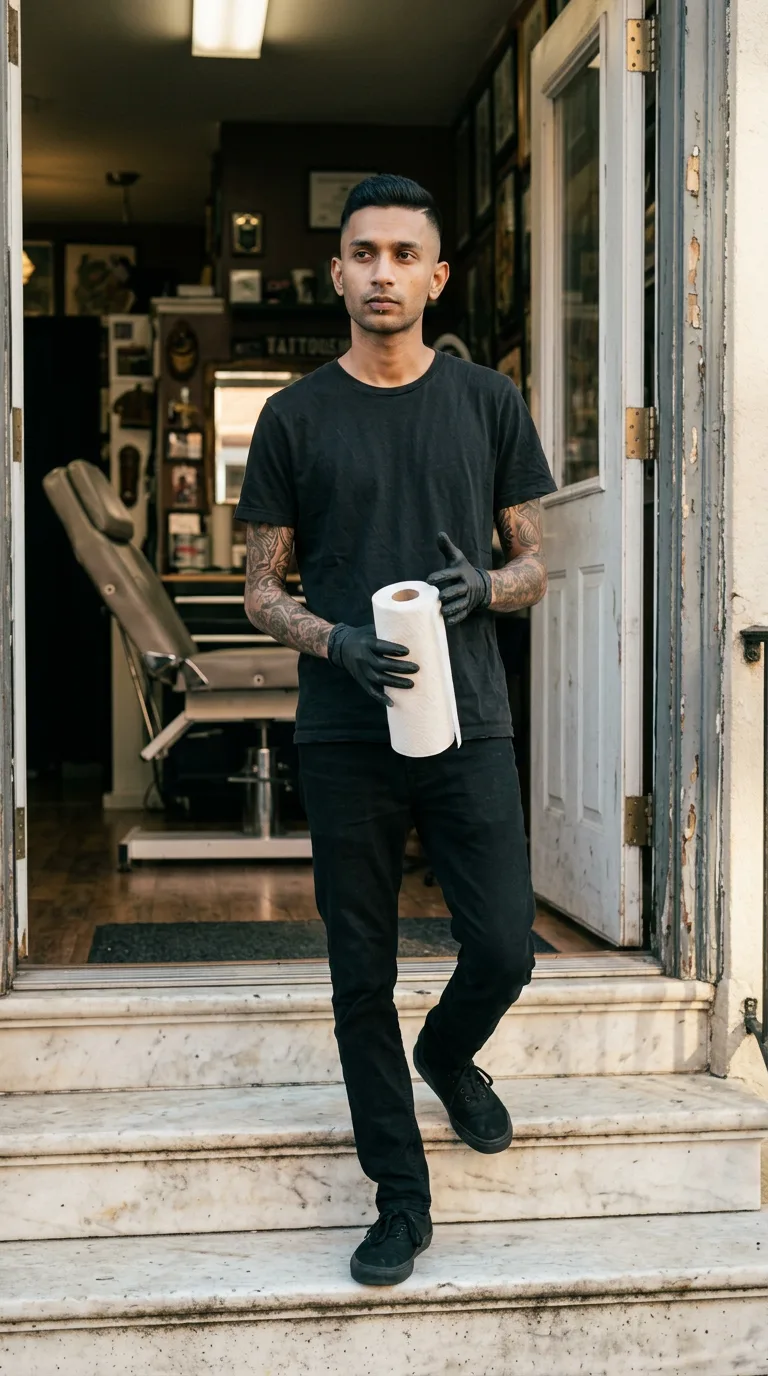
Rarest thing about him: Lip — legendary, 1 in 139
Season 0seed 1280523539 · engine v10
Character card
lineage 2NZHHJ
His body-swap story
@colin.hasbrook, wearing Damon Whitfield, rolled the wheel on and woke up as Aman Rehani, spent under a minute in him, then spun the wheel and woke up as Bobby Rusnak
The soot never fully leaves Damon's knuckles. You've noticed that for weeks now, the black grit worked so deep into the whorls of his fingerprints that no amount of scrubbing gets it out, and tonight, standing in his kitchen with his phone in his hand and the shop closed for the day, you decide you don't want to notice it anymore. Two hundred and fifty-nine men before him and you still remember the exact feeling of a body going stale — not bad, not unbearable, just finished, the way a song is finished the third time it repeats. Damon is good — the dimples, the forearms, the way strangers looked at him on the street with something like want — but he has been good for eleven months and eleven months is longer than you have stayed inside anyone since the fourth spin. You open the site. The wheel is already spinning by the time you've decided anything, which is how you like it, so you don't have to hear yourself choose.
The line breaks first, a half-second stutter in a motion that has never once needed a second thought — the needle drifting a hair off the guide, the hand correcting, slow, deliberate, like a man relearning where his own wrist ends. You are standing bent over a stranger's calf, the tattoo machine humming against your palm, a chair reclined under fluorescent light gone amber with evening, and the next ten strokes come out checked, one at a time, black ink laid down like you are afraid of it. Nobody in the room notices. The man in the chair has his eyes shut and earbuds in. You are aware, before anything else, of how light this body is — narrow shoulders, no weight to plant your feet with, a mouth that has something metal caught low in the lip, cold against your tongue when you press it there without meaning to.
The glove is the first thing that gives you anything — thin nitrile, snug, the smell of powder and old ink ground into the seams — and it opens into a memory of pulling it on that same morning, over and over, five thousand mornings compressed into the single gesture: the snap of latex at the wrist, the small private ritual of becoming someone who is allowed to hurt people carefully. Then the machine itself, heavier in feeling than in fact, its hum traveling up through Aman's fingers into a memory of the first tattoo he ever finished alone, eleven years old in this feeling, twenty-eight in fact, sweat on his neck and his teacher watching from behind him saying nothing, which had been the whole compliment.
The shirt against your back — his back, thin cotton gone soft from a hundred washes — gives you this morning whole: standing in the bedroom with the blinds still down, Priya's voice from the shower down the hall, the shirt already sitting inside-out on the chair from last night's laundry and him turning it right-side-through with the automatic annoyance of a man who has done this every day of his adult life. One arm in, the tattoo underneath disappearing into black sleeve, and a thought that isn't quite a thought, just a body doing its own small maintenance: eat something before the first client, don't forget the vape, tell her the thing about Sunday before she leaves for work and forgets to ask. The wedding band is already home to that hand and it comes with its own small flash — not the wedding itself but three years into it, an ordinary Tuesday much like this one, Priya asleep against his shoulder on the couch with the TV still on, and him not moving for forty minutes so he wouldn't wake her, his arm gone dead and him grinning about it privately in the dark. Nothing dramatic in any of it. That is what surprises you — how much of a life can be spent enjoying nothing in particular.
The floor under his shoes brings the shop itself, the smell of green soap and antiseptic and the particular staleness of old carpet, fifteen hundred appointments logged in a book he still keeps on paper because his mentor did. There is an ache low in the shoulders that belongs to nobody else you have worn — years of leaning, the specific fatigue of small precise motions held for hours — and a strength in the fingers that has nothing to do with size, everything to do with steadiness, a control you can feel sitting there waiting the second you stop overriding it. You let the hand go back to itself for one line and it's better than you are, better than you've been in anyone yet, gliding without your interference like it knows something you don't and never will.
You look down at the gloved hand still holding the machine, ink-black at the fingertip seams, and turn it over slow enough that the man in the chair opens one eye at the pause.
"Sorry — hang on," you say, in a voice you don't recognize as anyone's, and you can't tell yet if that's an apology to him or to no one, or just a thing to say while you decide, quietly, how long you intend to keep this steady little pair of hands.