Sami Rusnak
Fictional. Generated by AI — not a real person, and no likeness of one is intended.
22, veterinarian in High-desert Nevada · rolled by @colin.hasbrook · card — no film
History
who has worn him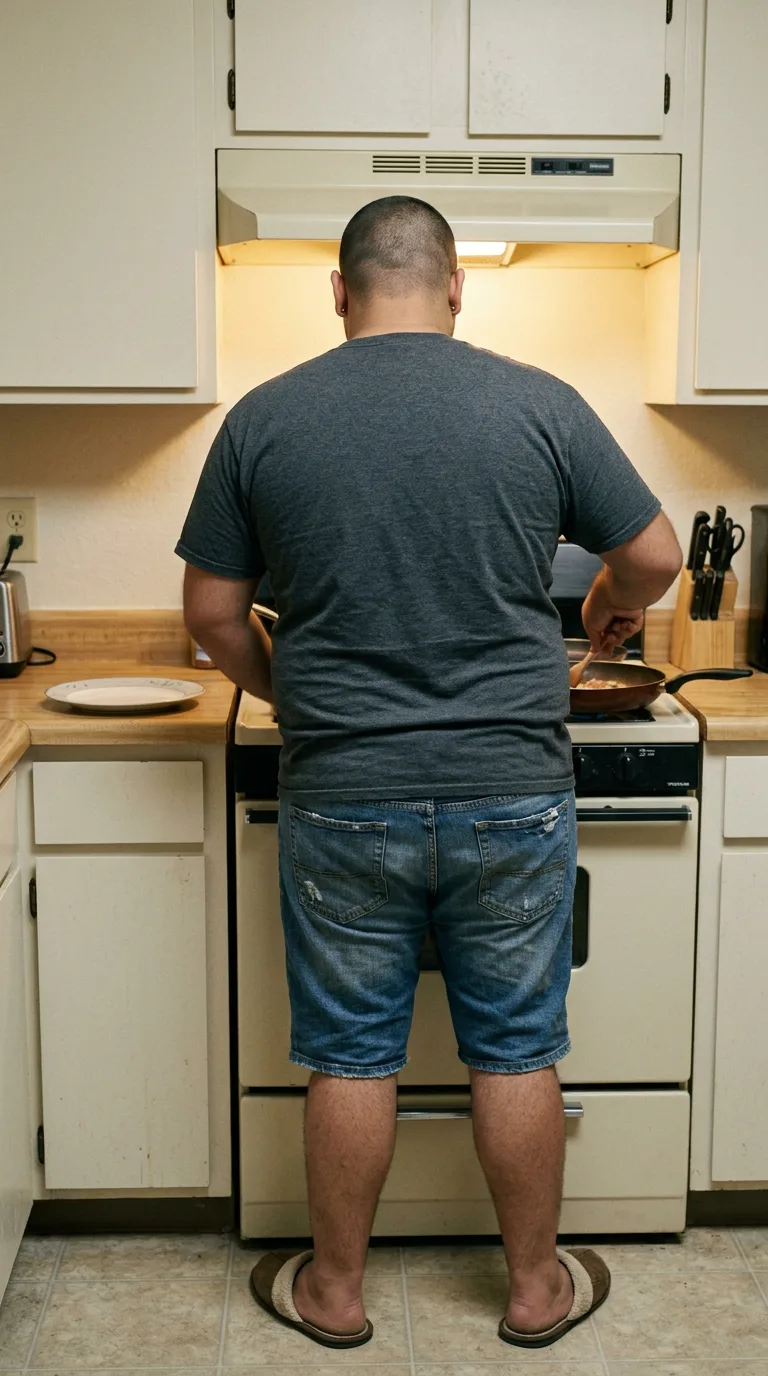
Rarest thing about him: Middle Eastern — rare, 1 in 34
Season 0seed 1826887706 · engine v10
Character card
lineage 2NZHHJ
His body-swap story
@colin.hasbrook, wearing Bobby Rusnak, rolled the wheel on and woke up as Sami Rusnak, spent under a minute in him, then spun the wheel and woke up as Gary Wetzel
HIS LAST NAME IS Rusnak. He is Bobby Rusnak's son, and they share it.
HOOK: A man cooking dinner for one sets down a second plate — and someone else is holding the spoon.
---
The truck key is still in Bobby's pocket when you decide, and that's the thing about this body — it decides things with its hands before its head catches up. You've been him fifty-one seconds. You already know the knee that goes first getting out of the cab, the way the glass eye sits half a beat behind the real one when he turns his head fast, so the world doubles for a second, then settles. You know there's a woman two exits from here who hasn't called back in nine days, and a stack of invoices in the glovebox that say the move went bad, the client's furniture is in a warehouse in Plano and won't be released till somebody pays, and it isn't going to be Bobby. Forty years old and gray already and one eye made of plastic and none of it his fault this week, particularly, just this week's version of always his fault. You feel the specific tiredness of him like a coat that's too heavy for the weather. It isn't boredom that sends you back. It's simpler than that — you have been broke men before, more than two hundred and sixty of them by now if you count them all, and something in you, something that isn't Bobby and isn't quite you either anymore, just wants to not be holding this particular invoice for one more minute. The wheel doesn't care why. You open the site on his phone with his thumb, because his thumb is what you have, and you spin.
The spoon is already turning when you arrive, and for a half-second you turn it with it, his hand and yours the same hand, no seam. Then the motion breaks — stutters — and comes back the other way, and something salts a pan that didn't ask to be salted, and doesn't taste it, and you are standing at a stove in shorts and a gray T-shirt with your back to a room you have never seen and your front to a window going the flat orange of a desert evening. Heavy in a different way than Bobby was heavy — younger, denser, a body that carries itself like it still expects to be asked to do something athletic and hasn't been in a while. Your scalp prickles under a buzz cut you can feel with your eyes closed. There is a plate already on the counter. Your hand — his hand — reaches up into the cabinet without you and takes down a second plate and sets it beside the first, and you didn't tell it to do that, and that's the first true thing you learn about him: some of him is still in here, doing things out of habit, like a light left on in a house you've just moved into.
The apron string against your stomach — no, not an apron, just the shirt, worn thin at the hem — gives you the first flash: him buying three of these gray shirts at the Walmart in Pahrump because they were on a rack by the register and he liked that they didn't need thinking about, and thinking, distinctly, in his own voice, *I have got to stop buying things because they're near the register,* and laughing once, alone, in the parking lot, because that was a joke he'd have told her if she still picked up. The shorts came from a different year — a birthday, his mother's handwriting on the tag though the tag's long gone, and under that a flash of the morning he actually put these exact shorts on: sitting on the edge of the bed with the light coming through the trailer's thin curtain already hard and white even though it was early, pulling them up over the same thick thighs you're standing in now, the elastic biting a little at the waist the way it always does after a day of clinic food eaten standing over the break-room sink, and a thought that wasn't really a thought, just a body clocking its own weight the way it does every morning, no judgment in it, just information. His hands know this. His hands know a lot of things without being told — the particular grip that pins a struggling cat's scruff without hurting it, the way two fingers find a vein in a trembling leg on the first try, muscle memory built over three years of vet school and two more since, calluses in places Bobby's hands didn't have them.
The spoon in your fist opens further — an afternoon, unbidden, whole: the exam room, fluorescent and cold, a German shepherd on the table shaking so hard its collar tags rang, and him — you — talking low and steady to an old man who couldn't stop crying, and something in your chest that isn't yours settling into a warm, practiced calm that has nothing to do with confidence and everything to do with having done this exact kind of terrible so many times it's worn a groove. You feel, for a second, actually good at something. It's disorienting after Bobby, whose competence was all in his back and shoulders and none of it in rooms like that.
The ring. There's a ring on this hand — you feel it turn, feel his thumb push it round and round the same finger the way it must do a hundred times a day without him noticing, and the touch of the metal opens a name you don't ask for: Priya, two years now, a laugh that comes easy, a key to this trailer that she has and uses, a plan for Saturday that is already half-forgotten in the part of him that's gone quiet. And under that, further down, another name, older, softer at the edges — an ex he doesn't let himself think about on purpose but who arrives anyway, the way exes do, uninvited, whenever his hands are idle. She is not gone. She is just further back. You feel both of them at once, the way you can feel two rooms of a house from a hallway.
There's an itch, low-grade, constant, that you recognize now as his — a mind that keeps sliding off the pan, off the salt, off the plate, onto six other things at once, snagging and slipping, the exact texture of the ADHD he got diagnosed at twenty, sitting in a stranger's office being told a word for something he'd lived his whole life already. The relief of the word. The stove clock he's ignored twice already. The second plate he just set down — for her, for Priya, though it's not her night, and he doesn't correct it, some part of him already reaching for company that isn't going to walk through that door.
You feel the debt too, distant and dull, the way a man feels a bruise on someone else's leg — school loans stacked high as the ceiling, a number that would frighten Bobby, who has his own numbers to be frightened of. Two broke men, back to back, and you the only thing that's ever stood in both of their shoes.
Your — his — hands come up in front of your face, involuntary, the gesture underneath all the others. Wide, blunt-fingered, a thin white scar you don't have a story for yet crossing one knuckle, the ring catching the stove light. You turn them over once, palms up, like you're checking them for something that isn't there.
You look up, off the hands, into the dark window over the sink where his reflection is doing something his face never quite does on its own.
"Who's the second plate for," you say, out loud, to nobody, in his voice, and you don't answer yourself, because you don't know yet, and there's no telling how long you'll be the one who has to find out.